The short version
- Families remain divided across borders with no clear path to reunification due to ongoing conflict and travel restrictions.
- Displaced individuals in Egypt struggle with poverty, lack of income, and inability to afford essential medical care for injured relatives.
- The psychological toll of separation is severe, with many reporting exhaustion and despair over the loss of family members and future prospects.
Three years into the conflict in Gaza, the fragmentation of Palestinian families has become a defining feature of the humanitarian crisis. Couples are unable to marry or reunite, fathers are separated from their children, and relatives scattered across borders face mounting economic and psychological distress. The prolonged nature of the war has transformed initial displacement into a permanent state of uncertainty for thousands who remain divided between Gaza and neighboring countries like Egypt.
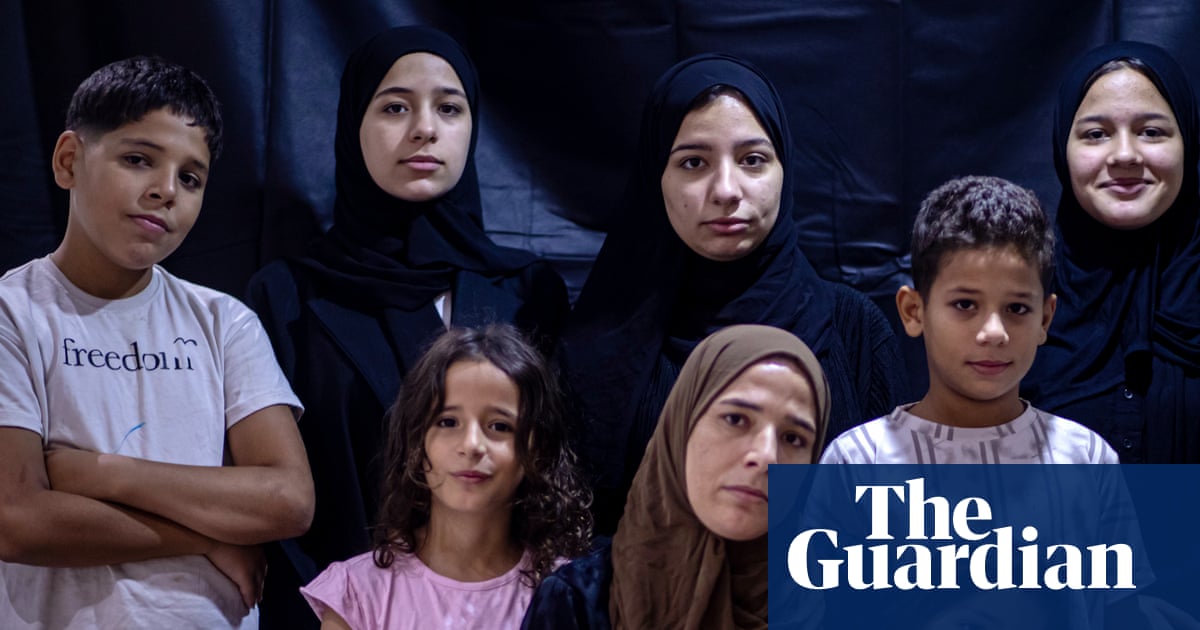
Wijdan Abu Matar, 43, exemplifies this enduring separation. She was forced to leave Gaza in November 2023 with her eight children to seek medical treatment after an Israeli strike injured her family. The attack occurred near their home in the Nuseirat refugee camp, collapsing the ceiling of their building and causing serious injuries to multiple family members. Her daughter Nour suffered a fractured skull and brain bleeding, while another child sustained severe burns. The family was initially scattered across different hospitals before Wijdan managed to consolidate them in an apartment in Egypt.
Despite reuniting with her children, Wijdan remains separated from her husband, Hatem, who stayed behind in Gaza with a serious leg injury that limits his mobility. He is currently displaced in a tent in Nuseirat. Communication between them is difficult due to unreliable internet connections in Gaza, but when they do connect, the emotional toll is evident. Wijdan describes feeling completely helpless and exhausted by the dual responsibility of being both mother and father to her children while worrying constantly about her husband’s safety and health.
The economic situation for displaced families like Wijdan’s is dire. She has no regular source of income and relies on donations to survive. Hatem stopped receiving a salary ten months ago, and his injury prevents him from working. In Egypt, Wijdan cannot afford transportation to send five of her children to school, leading her to fear that their future is slipping away. Nour still requires ongoing medical treatment, but Wijdan often lacks the funds for necessary medication. The financial strain adds to her psychological exhaustion, compounded by the loss of 35 family members in the war.
Sami Abu Tabaq, a 29-year-old photojournalist, faces a similar reality of forced separation. He left Gaza in April 2024, leaving behind his fiancée, Ola, and his family. The couple had planned to marry in November 2023, but the war destroyed their home in Tal al-Zaatar and the house they intended to share. Sami fled south with his sister and her children but could not reach Ola to say goodbye. For days and sometimes weeks, he did not know if she was alive, experiencing intense helplessness when reports indicated bombing near her residence in Gaza City.
Sami eventually confirmed through a brother that Ola and her family were alive, but the separation remains unbearable. He describes loneliness as a daily killer and expresses desperation to be reunited with the woman he loves. His work as a photojournalist has also been perilous; four journalists who shared his tent in southern Gaza were later killed, including Hamza al-Dahdou. The danger of their profession underscores the broader risks faced by those remaining in or fleeing the conflict zone.
The scale of human suffering is reflected in official figures. Since the war began with Hamas’s attack on Israel that killed 1,200 people, at least 73,783 Palestinians have been killed and 174,738 wounded, according to the health ministry. An independent UN inquiry earlier this year found that Israel continues to commit genocide by deliberately targeting Palestinian children in Gaza. These findings highlight the systemic nature of the violence and its disproportionate impact on vulnerable populations.
For those like Wijdan and Sami, the prospect of return or reunion remains uncertain. Wijdan sometimes considers returning to Gaza to be with Hatem but fears exposing her children to further suffering. The lack of a clear timeline for peace or safe passage means that families must endure indefinite separation. The psychological burden of carrying this weight alone is overwhelming, with many reporting feelings of despair and exhaustion as they navigate the complexities of survival in exile.
The crisis extends beyond immediate physical safety to encompass long-term social and economic stability. Displaced individuals face barriers to education, healthcare, and employment, which threaten their future prospects. The destruction of homes and livelihoods in Gaza has left many without resources, while those in Egypt struggle with poverty and dependency on aid. The separation of families disrupts social structures and exacerbates mental health issues, creating a cycle of trauma that may persist for generations.
As the conflict continues, the international community faces pressure to address not only the immediate violence but also the long-term humanitarian consequences. The stories of Wijdan Abu Matar and Sami Abu Tabaq illustrate the human cost of prolonged war, where personal tragedies unfold against a backdrop of widespread devastation. Without significant progress toward peace or effective humanitarian intervention, these separations will likely continue to deepen, leaving families fractured and communities destabilized.
Sources behind this briefing
Go to the original reporting
- The Guardian US↗‘I cannot carry all of this alone’: the couples kept apart by the war in Gaza