The short version
- Coco Gauff defeated fifth-seeded Mirra Andreeva in three sets to advance to the US Open semifinals for the first time since her breakthrough three years ago.
- Gauff dropped the opening set and faced two match points in a tense second-set tiebreaker, committing 12 double faults and 42 unforced errors during the struggle.
- The American cited Frances Tiafoe’s earlier comeback victory as inspiration for her resilience, expressing confidence in her long-term development despite technical inconsistencies.
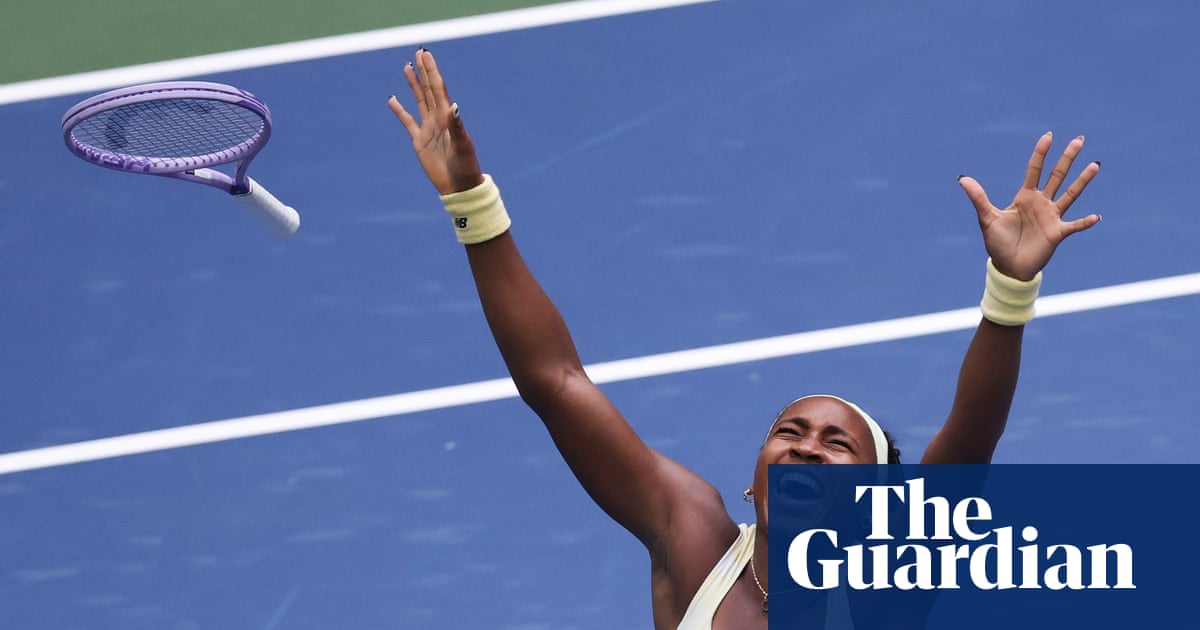
Coco Gauff advanced to the US Open semifinals on Wednesday after a dramatic three-set victory over fifth-seeded Mirra Andreeva. The match marked a significant departure from the American’s previously smooth progression through the tournament, as she encountered severe difficulties early in the contest inside Arthur Ashe Stadium. Gauff lost the first four games and surrendered the opening set in just 26 minutes, ending a streak of twenty consecutive sets won that had lasted nearly a month.
The performance was statistically rough, with Gauff committing twelve double faults and forty-two unforced errors. The majority of these mistakes occurred on her forehand, which appeared to be functioning poorly during the initial stages of the match. She found herself one point away from elimination twice during a critical second-set tiebreaker, creating a tense atmosphere before she managed to stabilize her game and win the set 7-6.
Gauff ultimately secured the victory with a scoreline of 2-6, 7-6 (7), 6-2. This result extends her winning streak to ten matches and marks her first appearance in the last four at New York since her initial Grand Slam breakthrough three years ago. The win underscores her ability to recover from significant deficits, a skill that has become increasingly evident in her recent performances on the women’s tour.
Reflecting on the match, Gauff acknowledged that Andreeva played at a high level initially, forcing errors and applying pressure that caused Gauff to attempt to end points prematurely. She noted that she was giving away points unnecessarily due to this pressure but managed to reset her focus. The turning point came during the second-set tiebreaker, where her primary goal shifted from winning to simply avoiding defeat.
Gauff credited Frances Tiafoe’s earlier comeback victory on the same court as a source of inspiration. Tiafoe had recovered from being two sets down and facing match points against Alex Michelsen to reach the men’s semifinals. Gauff observed the end of that set and felt that seeing another player survive such a precarious situation provided her with the necessary mental boost to continue fighting in her own match.
Once the third set began, Gauff reported feeling confident in her ability to close out the contest. She emphasized that while she did not have a clear plan for how to win initially, her determination to avoid losing helped her navigate the crisis. This resilience highlights a broader evolution in her perspective on professional tennis, moving away from immediate frustration toward a more long-term view of career development.
The American reflected on her growth over the past year, noting that she now possesses a better understanding of the inevitable highs and lows of a tennis career. Despite what she described as one of her worst serving performances, with twelve double faults in a three-setter, she remained calm and optimistic. She contrasted this reaction with how she might have responded to similar struggles last year, suggesting a significant improvement in her mental fortitude.
Gauff’s record at major tournaments continues to be impressive, having reached seven Grand Slam semifinals before turning twenty-three. This total is surpassed only by Venus Williams and Serena Williams among active players at that age. Her ability to maintain self-belief even when technical aspects of her game falter has become a key component of her success, allowing her to persist through difficult matches.
Looking ahead, Gauff will face second-seeded Elena Rybakina in the semifinals on Saturday. Rybakina is poised to become the new world number one following the tournament’s conclusion. Gauff acknowledged the challenge posed by Rybakina’s powerful serving and aggressive play, noting that she expects to face aces and winners. However, she remains committed to giving her full effort and continuing to fight throughout the match.
The upcoming final against Rybakina presents a significant test for Gauff, who lost their most recent meeting in Toronto. Despite the technical inconsistencies displayed against Andreeva, Gauff’s confidence in her long-term progress remains intact. She believes that continued work and refinement will lead to better performances, even if individual matches do not always showcase her best form.
Sources behind this briefing
Go to the original reporting
- The Guardian US↗Coco Gauff draws on Tiafoe and ‘delusional’ self-belief in US Open escape

