The short version
- Coco Gauff defeated Iva Jovic in straight sets to reach the US Open quarterfinals for the first time since her previous major title win.
- Gauff’s performance highlighted improved consistency and strategic variety, marking a significant turnaround from her struggles during the same tournament last year.
- A victory in New York could propel Gauff to the world No. 1 ranking, contingent on results involving other top contenders like Elena Rybakina.
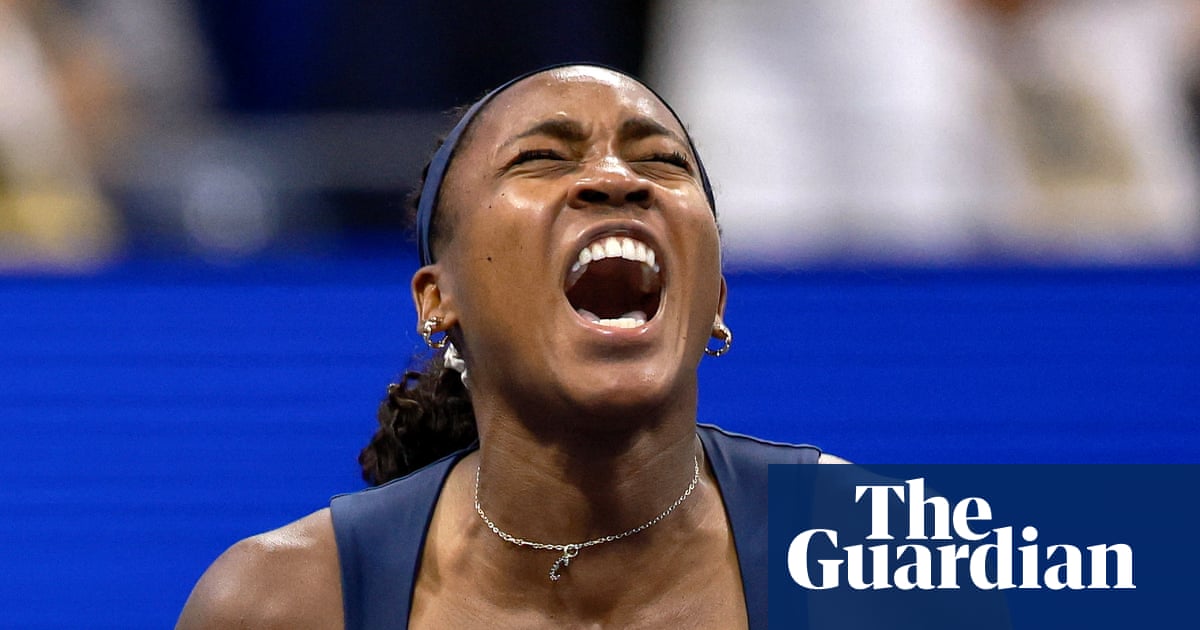
Coco Gauff advanced to the quarterfinals of the US Open on Monday night, delivering a commanding performance against fellow American Iva Jovic. The fourth-seeded player secured a 6-1, 6-4 victory in approximately one hour and twenty minutes, marking her return to the last eight in New York since capturing her first Grand Slam title three years ago. This result continues a late-summer surge that has reestablished Gauff as a primary contender on the tour, contrasting sharply with her uncertain form during the previous year’s tournament.
The match statistics underscored Gauff’s control over the proceedings. She recorded eighteen winners compared to Jovic’s nine while committing only fifteen unforced errors, half the number of her opponent. This efficiency allowed Gauff to dictate play from the baseline, utilizing deep returns and a balanced mix of aggressive shots and defensive retrieval. The performance was described as her most complete of the tournament thus far, demonstrating a level of assurance that had been absent in earlier stages of her career development.
Jovic, an eighteen-year-old rising star and fourteenth seed, faced a formidable challenge after surviving a grueling three-hour battle against Alexandra Eala just days prior. The young Californian had established herself as one of the most promising prospects in American tennis, reaching the second week of three major tournaments in a single season—a feat not achieved by an American since Venus Williams in 1998. Despite her recent success and resilience, Jovic struggled to find rhythm against Gauff’s consistent pressure, managing only brief moments of disruption in the middle of the second set.
Gauff’s approach emphasized mental clarity and strategic flexibility. She noted that playing without regret has allowed her to enjoy the game more fully, leading to greater success on court. Rather than dwelling on missed opportunities or lost games, she focused on immediate adjustments and future points. This mindset contributed to a streak of nine consecutive victories and twenty straight sets won, reinforcing her status as one of the most dangerous players remaining in the draw.
The contrast with Gauff’s position twelve months ago is stark. Last year, she entered the US Open dealing with serve reconstruction issues and exited quietly in the fourth round against Naomi Osaka. Since then, work with biomechanics expert Gavin MacMillan has yielded tangible improvements, including semifinal runs at Wimbledon and in Canada, culminating in her first title of the year in Cincinnati. These developments have transformed her from a player searching for answers into a confident competitor capable of handling high-pressure environments.
Looking ahead, Gauff will face Mirra Andreeva, the reigning French Open champion and fifth seed, in the quarterfinals. Andreeva reached this stage by overcoming Anastasia Potapova in a three-set match earlier on Monday. Although Gauff holds a five-match winning streak against Andreeva, she acknowledged that their previous encounters have been closely contested. The upcoming clash promises to be physically demanding, given Andreeva’s current momentum and recent Grand Slam success.
Beyond the immediate challenge of advancing further in the tournament, Gauff remains in contention for the world No. 1 ranking. Achieving this milestone would require her to win the US Open while Elena Rybakina, who defeated Naomi Osaka to reach the quarterfinals, fails to advance beyond her next match. The stakes extend beyond personal accolades, as securing the top spot would solidify Gauff’s position at the pinnacle of women’s tennis.
The path forward requires maintaining focus and adaptability. Gauff emphasized the importance of having multiple strategic options during matches, noting that comfort comes from knowing alternative plans exist if initial approaches fail. This versatility has been crucial in navigating tough opponents and varying court conditions. As she prepares for Andreeva, the emphasis remains on executing these strategies effectively while managing the physical demands of deep tournament runs.
The broader implications of Gauff’s resurgence extend to the landscape of American tennis. Her success provides a model for younger players like Jovic, illustrating how technical refinement and mental resilience can lead to sustained high-level performance. While Jovic’s future looks bright based on her recent achievements, the gap between emerging talent and established stars remains evident in matches such as this one.
As the tournament progresses, attention will shift to how Gauff handles the increased intensity of later rounds. Her ability to maintain consistency against diverse playing styles will be tested, particularly against a seasoned champion like Andreeva. The outcome of their quarterfinal match could significantly influence the dynamics of the remaining draw and set the stage for potential semifinal matchups.
Sources behind this briefing
Go to the original reporting
- The Guardian US↗Coco Gauff dismantles Iva Jovic to reach quarter-finals in confident US Open run

