The short version
- Student anger over deteriorating school conditions has sparked wider protests across France involving hundreds of thousands of participants.
- Government officials cite high deficits and a deadlocked parliament as barriers to addressing public demands for better services.
- Analysts warn that right-wing narratives linking violence to migration are misleading, obscuring the core issues of institutional distrust.
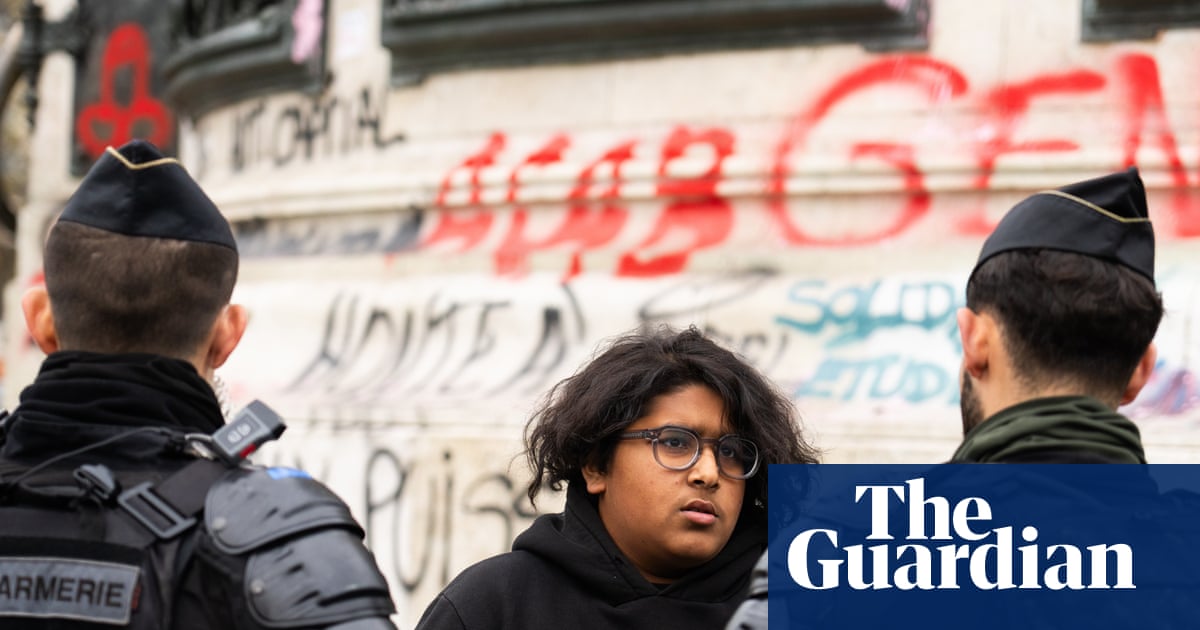
Student demonstrations in France have escalated from localized grievances regarding education infrastructure into a broader wave of social unrest. The initial signs of discontent were visible at school entrances, where piles of wheelie bins were stacked as symbols of anger over crumbling classrooms and severe teacher shortages. These specific educational complaints served as the catalyst for larger gatherings that have since drawn significant public attention.
The scale of the mobilization became apparent on Saturday, when approximately half a million people took to the streets. While the protests originated with student concerns, they quickly broadened to encompass wider dissatisfaction with the rising cost of living and the general deterioration of public services. This expansion suggests that the education crisis is being viewed by many as part of a larger systemic failure rather than an isolated sectoral issue.
Government officials have struggled to respond effectively to these demands. Célia Belin, head of the Paris office of the European Council on Foreign Relations, noted that the administration faces high levels of discontent among high school students but lacks viable solutions. She attributed this paralysis to financial pressures, including a high deficit and debt-to-GDP ratio, as well as political limitations imposed by a deadlocked parliament.
The official response has largely centered on fiscal constraints. According to Belin, the government’s position is essentially that there are no funds available to address the issues, leaving them unable to act. This stance has been echoed by Sophie Binet, secretary general of France’s CGT union, who highlighted the disconnect between public fury and governmental capacity after the large-scale protests.
Violence has emerged on the fringes of these demonstrations, drawing significant media coverage. President Emmanuel Macron addressed the unrest on Sunday, stating that the unbridled violence was carried out by French people. Officials in France have explicitly dismissed any link between the violent incidents and immigration, rejecting narratives that attempt to attribute the disorder to migrant populations.
Despite official denials, right-wing and far-right voices have sought to exploit the violence. Policy analyst Alberto Alemanno reported receiving an unprecedented number of calls from xenophobic outlets attempting to frame the protests as a pan-European revolt linked to migration. He described this narrative as misleading, noting that it ignores the diverse causes and political objectives of the demonstrators.
Alemanno argued that while the demonstrations across Europe do not share identical goals, their rapid spread points to a common vulnerability: widespread doubt among young Europeans regarding the ability of existing institutions to deliver security, opportunity, and a voice. He characterized the protests as a powerful warning from angry youth in France and across the continent.
The situation reflects a growing perception, particularly among younger generations, that governments are either unable or unwilling to provide affordable housing, social equality, and robust public services. Similar scenes of protest have emerged in Belgium, Italy, Portugal, Spain, and Albania, suggesting a continental pattern of discontent rather than an isolated French phenomenon.
As the protests continue, the central challenge remains the government’s inability to offer concrete answers to public demands. With financial resources stretched and political maneuvering limited by parliamentary deadlock, authorities appear hamstrung. This lack of response risks further entrenching public distrust and potentially fueling additional waves of unrest in the coming months.
The long-term implications of these demonstrations are still unfolding. While the immediate triggers involve education and cost-of-living concerns, the underlying issue is a crisis of confidence in political institutions. Whether this discontent will lead to meaningful policy changes or further fragmentation remains unresolved, with analysts warning that continued government inaction could exacerbate the situation.
Sources behind this briefing
Go to the original reporting
- The Guardian US↗‘A powerful warning’: will Europe’s angry protests lead to real political change?
- Northeastern Global News↗France’s student protests have spiraled into a broader crisis