The short version
- The French government is implementing new restrictions on public demonstrations, distinguishing between authorized groups and those lacking legitimate authority.
- Recent unrest has resulted in significant property damage, including looted shops and burned buildings, prompting a tough security response involving arrests and curfews.
- Authorities are preparing for further protests scheduled for the upcoming weekend while seeking political cooperation to restore order ahead of presidential elections.
The French government has moved to restrict public demonstrations in an effort to curb escalating civil unrest that has erupted across the country. President Emmanuel Macron announced on Thursday that protests organized by individuals or groups without legitimate authority would be banned over the coming days. This decision follows a period of intense street violence and looting, which officials attribute partly to political actors aiming to destabilize the republic. The administration is framing these measures as necessary steps to protect city centers, businesses, and public infrastructure from further damage.
Under the new guidelines, demonstrations organized by recognized entities, such as trade unions, will still be permitted but may face route changes or other logistical adjustments. Macron emphasized that the rules are designed to be commonsense and focused on maintaining order. However, he issued a general recommendation against holding any demonstrations in the immediate future. The president is scheduled to chair a defense council meeting on Friday to determine concrete next steps regarding nationwide protests planned for Saturday and subsequent days.
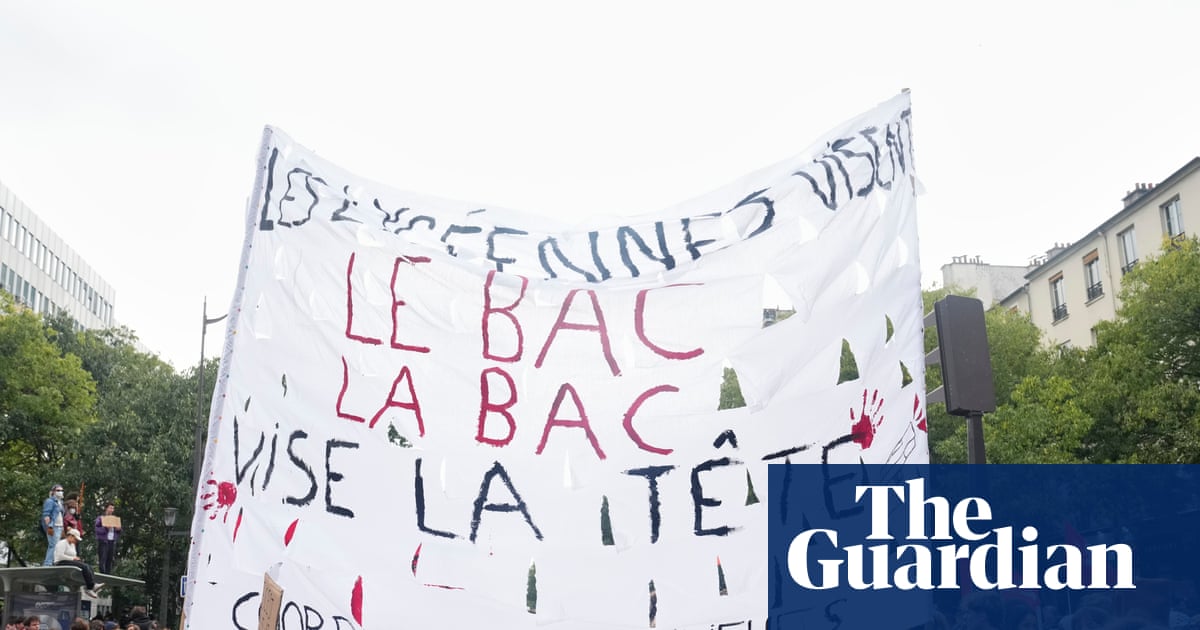
The unrest began last month at a high school in Créteil, located southeast of Paris, where students protested staff shortages and poor building conditions. These initial demonstrations quickly spread nationwide, evolving into broader strikes and blockades involving high school pupils. The movement has since morphed into larger protests driven by soaring living costs, reflecting deep-seated economic anxieties among the population. This surge in public anger comes just six months before next year’s presidential elections, which will determine Macron’s successor.
Violence peaked during the previous weekend, with reports of some of the worst street disturbances in years. In Lyon, France’s third-largest city, between 200 and 300 shops were ransacked and looted, and the local tourist office was set ablaze. Similar incidents occurred in other cities, prompting authorities to declare bans on all protests in central Lyon for Saturday. Nice and Toulon have announced comparable restrictions for the same day. In Paris, a march planned to start at Place de la Bastille has been authorized but is prohibited from entering the city center.
Not all protest plans have faced uniform treatment. A separate march through Paris organized by students and members of the yellow vests movement was denied permission by capital authorities. The yellow vests previously rocked France with fuel price protests in 2018 and 2019. Meanwhile, an initial police ban on a student protest in Paris for Thursday was overturned by a court, though marches scheduled for that day in Grenoble, Rouen, Le Havre, and Toulon were halted. The main student union, UNEF, has also called for rallies on Saturday, adding to the complexity of the security situation.
The government’s response has included partial nighttime curfews in parts of several cities, including Paris. Bans on gatherings have been imposed around sensitive locations such as the Elysée presidential palace, parliament, and major train stations. Businesses in central Paris and other urban areas have begun boarding up windows and hiring private security firms in anticipation of further violence. These precautionary measures highlight the severity of the threat perceived by both authorities and commercial entities.
Justice Minister Gérald Darmanin reported that 174 of the 2,500 people arrested since the weekend’s rioting have been remanded in custody. More than 900 individuals are currently facing prosecution. Two additional arrests were made after the town hall in Limoges was set on fire. The rapid processing of cases has led to frustration among lawyers and confusion for defendants, as the judicial system struggles to keep pace with the volume of incidents.
Prime Minister Sébastien Lecornu is engaging with key figures from France’s main political parties to seek cooperation and hear their views on the crisis. He is also scheduled to meet with mayors of major cities later in the day. These diplomatic efforts aim to build a broader consensus on how to handle the unrest. The administration remains focused on restoring calm while navigating the delicate balance between maintaining public order and respecting democratic rights.
Macron blamed much of the recent violence on rioters who came expressly to loot, but he identified ultra far-left groups as responsible for the most severe acts of political sedition. He argued that these actors aimed to bring down the Republic through coordinated disruption. The government’s stance is firm: while legitimate grievances exist, the methods used to express them must not threaten national stability or public safety. The coming days will test whether these new restrictions can effectively contain the unrest.
As France prepares for more protests, the situation remains volatile. The intersection of economic hardship, political dissatisfaction, and security concerns creates a complex challenge for policymakers. Authorities are closely monitoring developments to ensure that any further demonstrations do not escalate into widespread violence. The outcome of this crisis could have lasting implications for social cohesion and political stability in the lead-up to next year’s elections.
Sources behind this briefing
Go to the original reporting
- The Guardian World↗Macron bans ‘illegitimate‘ protests in France as he tries to get a grip on unrest