The short version
- France has recorded over three hundred drownings since June, marking a fourteen percent increase from the previous year.
- Officials warn that many victims entered unsupervised bodies of water or private pools without assessing physical risks associated with sudden temperature changes.
- The broader heatwave has caused wildfires displacing hundreds of thousands and forced temporary shutdowns of critical infrastructure like nuclear power plants.
France is grappling with a sharp increase in drowning incidents this summer, with government officials linking the rise directly to prolonged periods of extreme heat. Sports and Youth Minister Marina Ferrari announced that three hundred one people have drowned since June nineteenth, a figure that represents a fourteen percent jump compared to the same period in twenty twenty-five. The minister described the death toll as tragic, noting that the surge coincides with intense heatwaves affecting not only France but also neighboring countries such as Spain and Italy.
Authorities are emphasizing that many of these fatalities occurred in locations lacking proper safety measures. Ferrari indicated that a significant number of accidents happened in areas not authorized or supervised for swimming, including open water bodies like canals. There is particular concern regarding individuals who venture into rivers and canals to cool off without fully understanding the dangers involved. The minister had previously warned in June about the risks associated with such behavior, highlighting a pattern of people underestimating the hazards of unsupervised water activities during hot weather.
The physiological risks of sudden immersion in cold water on extremely hot days are also a major factor. Officials note that the shock from temperature differentials can be severe, and some individuals may exceed their physical capabilities when attempting to swim or wade. This risk appears to extend beyond public bodies of water; Ferrari pointed out that many drownings, especially among older adults, have taken place in individual swimming pools. These incidents suggest that the heatwave is driving people to seek relief in various forms of water exposure, often without adequate precautions.
The government is responding by collaborating with regional authorities to enhance safety at swimming areas and improve overall conditions for public recreation. Efforts are underway to make designated swimming zones safer and more accessible, aiming to reduce the likelihood of accidents in unsupervised environments. This coordinated approach seeks to address both the immediate dangers posed by the heatwave and the longer-term need for better infrastructure to handle extreme weather events.
Beyond the drowning statistics, the heatwave has had widespread impacts on public health and infrastructure across France. Provisional figures from public health authorities indicate that there have been seven thousand three hundred excess deaths between late May and July twenty-second. This broader mortality spike underscores the severe strain that high temperatures place on vulnerable populations, particularly the elderly and those with pre-existing health conditions.
The extreme weather has also disrupted critical infrastructure. In June, a nuclear power plant in southwestern France temporarily ceased operations because water temperatures in the River Garonne exceeded twenty-eight degrees Celsius. French regulations mandate that cooling water for reactors at facilities like the Golfech plant must remain below this threshold to ensure safe operation. This shutdown highlights the vulnerability of energy systems to climate-driven temperature spikes.
Wildfires have further compounded the crisis, scorching thousands of hectares of land across France, Spain, and Italy. The Gironde region, located near Bordeaux in the southwest, has been particularly hard hit. In late July, more than two hundred thousand people were forced to evacuate their homes due to the spreading fires. These evacuations illustrate the immediate human cost of the dry conditions and high temperatures that characterize the current heatwave.
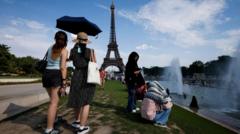
Even cultural landmarks have not been immune to the effects of the heat. The Eiffel Tower in Paris was among the monuments that decided to close earlier than usual during peak temperature periods in June. Such closures reflect the broader societal adjustments required to cope with extreme weather, as institutions prioritize visitor safety and staff well-being over normal operations.
Climate change is identified as a key driver behind these escalating temperatures. According to the Copernicus climate service, Europe is warming at twice the global average rate, making it the fastest-warming continent. This accelerated heating trend suggests that extreme weather events like the current heatwave may become more frequent and intense in the future, necessitating ongoing adaptation strategies.
As the summer continues, the focus remains on mitigating the immediate dangers while preparing for long-term climate challenges. The combination of increased drowning risks, infrastructure disruptions, and public health emergencies presents a complex set of issues for policymakers. Addressing these problems will require sustained efforts to improve safety measures, enhance infrastructure resilience, and support communities affected by extreme weather events.
Sources behind this briefing
Go to the original reporting
- BBC World↗France links sharp rise in drownings to heatwaves

