The short version
- A nationwide strike involving rail, air traffic, hospital, and teaching staff is expected to cause significant disruptions across France.
- Protests are driven by opposition to proposed budget cuts, deteriorating school conditions, and the rising cost of living.
- Rights groups and union leaders criticize heavy policing and restrictions on demonstrations as an authoritarian overreach.
France is preparing for a day of extensive industrial action as trade unions coordinate a nationwide strike that spans multiple critical sectors. The mobilization includes hospital personnel, air traffic controllers, postal workers, teachers, and railway staff, all joining forces to express dissatisfaction with current government policies. This convergence of labor groups signals a broad-based challenge to the administration’s approach to public spending and social services.
The immediate trigger for the unrest involves the government’s attempt to pass a budget characterized by significant spending reductions. Union representatives argue that these fiscal measures will exacerbate poverty levels, reduce social security benefits, and freeze wages for state employees. They further contend that the cuts will eliminate necessary investments in environmental initiatives, thereby undermining long-term sustainability goals.
Education remains a central point of contention. High school students have been blockading schools to protest overcrowded classrooms and deteriorating infrastructure. While the government has proposed capping class sizes and providing loans to regional authorities for repairs, students and teachers argue these steps are insufficient. University students have also joined the movement by blockading certain faculties, extending the disruption beyond secondary education.
The strike is expected to cause substantial logistical challenges. The national rail operator has warned of disturbances on regional lines and within the greater Paris area. Port workers have indicated disruptions in French ports, while the education ministry anticipates that nearly 18 percent of nursery and primary school teachers will participate in the walkout. Secondary school teachers are also expected to join the strike, further amplifying the impact on the education system.
Political context adds urgency to the protests. President Emmanuel Macron is in his final months in office, facing domestic crises that have overshadowed his tenure. The government is struggling to secure passage for its belt-tightening budget in a divided parliament, even as public debt nears 120 percent of economic output. This fiscal pressure has intensified tensions between the executive branch and various social groups.
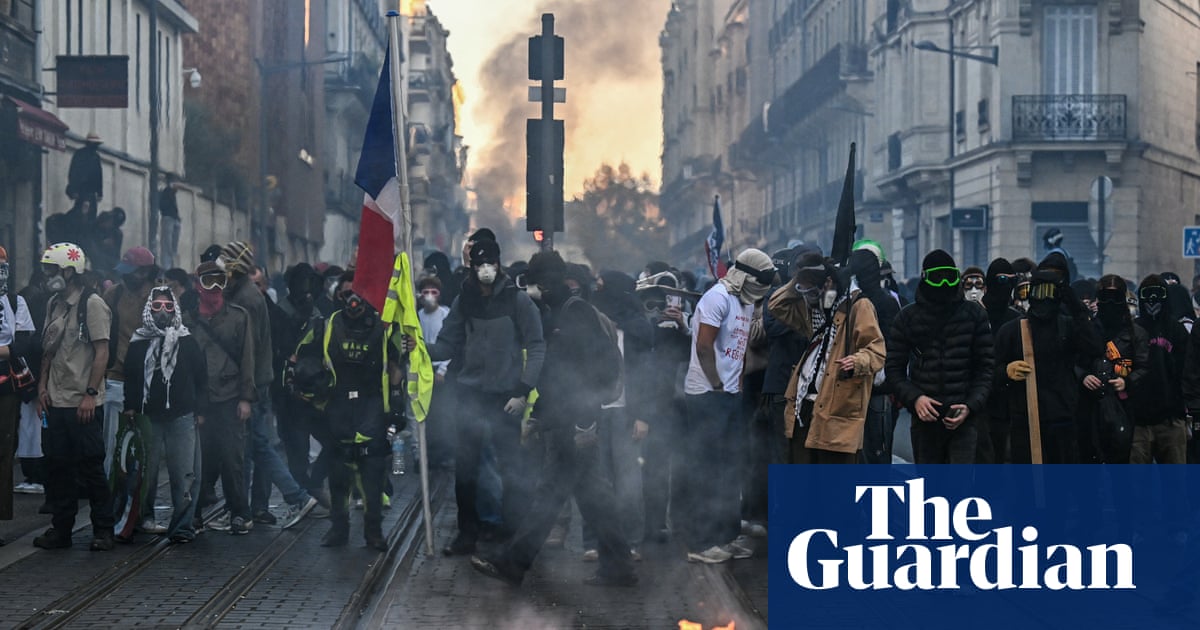
Rights organizations have raised concerns about the government’s response to the demonstrations. The French Human Rights League describes an authoritarian shift aimed at stifling dissent through heavy policing and restrictions on where protests can occur. Authorities have imposed curfews in certain areas and pushed demonstrations out of city centers, actions that critics say violate the right to assemble.
Union leaders from across the political spectrum have condemned these measures. Sophie Binet, head of the left-leaning CGT union, characterized the situation as a dangerous authoritarian drift, citing decisions in cities like Rennes, Toulouse, and Lyon to restrict protest locations. Marylise Léon, leader of the moderate CFDT union, emphasized that visibility is essential for demonstrations to be effective, suggesting that restrictions undermine the purpose of public dissent.
The unrest also carries implications for future political dynamics. Marine Le Pen, a far-right candidate known for her anti-immigration stance, is polling strongly for the presidential election scheduled for next spring. The ongoing domestic crises and public dissatisfaction with current policies may influence voter sentiment as the country approaches this pivotal electoral moment.
As the strike unfolds, the government faces the dual challenge of managing immediate disruptions while addressing underlying grievances related to cost of living and public service quality. The effectiveness of proposed budget measures will likely be tested by the scale and persistence of these protests, which reflect deep-seated concerns about economic stability and social equity.
Looking ahead, the resolution of this conflict will depend on whether the government can negotiate with union leaders or enforce its fiscal agenda despite widespread opposition. The outcome may set a precedent for how future administrations handle labor disputes and budgetary constraints in an era of high public debt and political polarization.
Sources behind this briefing
Go to the original reporting
- The Guardian World↗Protesters to join nationwide march as France braces for day of strike action


