The short version
- Official projections indicate French wine output will fall to its lowest level in three decades due to extreme heat and drought conditions.
- Industry representatives challenge the accuracy of early government data, citing significant variations between different wine-producing regions.
- Compounding factors include potential smoke damage from wildfires and a long-term decline in domestic and international consumption.
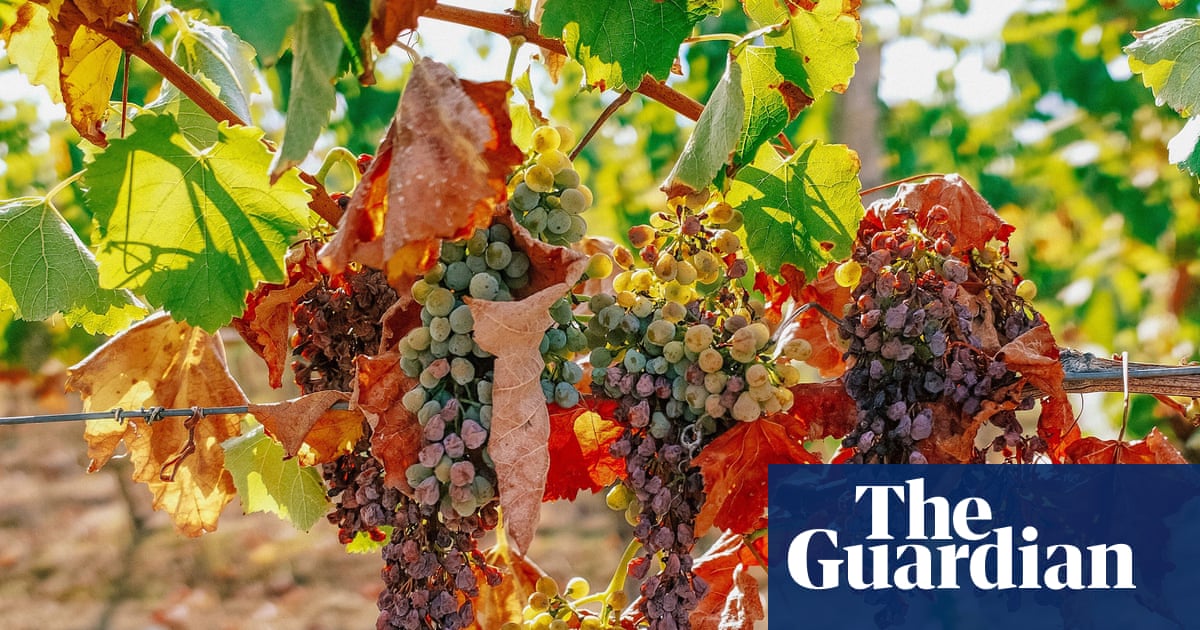
French vineyards are bracing for a historic contraction in output after enduring the hottest summer ever recorded in the nation. Government statistics suggest that total wine production will fall to approximately 34 million hectolitres, marking a thirty-year low. This figure represents a six percent decline from the previous year and stands seventeen percent below the average production levels seen between 2021 and 2025. The agriculture ministry attributes this sharp reduction primarily to extreme weather events, although it also notes a gradual decrease in the total area dedicated to vineyards.
The meteorological conditions driving this downturn were severe and widespread. Summer temperatures averaged twenty-four degrees Celsius across June, July, and August, with nearly half of the country experiencing heat reaching or exceeding forty degrees Celsius. These intense heatwaves caused localized sun scalding, defoliation, and wilting of grapevines. Soil drought intensified throughout the nation, undermining the initial optimism generated by heavy spring rains that had previously encouraged robust grape growth. The deterioration in weather conditions effectively reversed earlier positive forecasts for the season.
Regional impacts have been uneven, creating a complex picture of the harvest. Champagne, which began its unusually early mid-August picking schedule, faces a predicted production cut of nearly fifty percent compared to last year. The Jura region in the east is also severely affected, with estimates pointing to a thirty-seven percent loss. Burgundy and Beaujolais are expected to see their output drop by one-third. In contrast, areas such as Bordeaux, Languedoc-Roussillon, and parts of the south-east and south-west reported higher yields than in previous years, though most remain below their five-year averages.
Despite these official projections, significant skepticism exists within the wine industry regarding the finality and accuracy of the data. Cécile Mathiaud, representing Burgundy producers, expressed surprise at what she described as disastrous government figures. She emphasized that while a full harvest is unlikely, there is no consensus on the extent of the loss. Some vineyards in her region have reported poor yields, while others have exceeded expectations. Mathiaud noted that definitive numbers are not yet available and questioned how the ministry arrived at such specific estimates so early in the process.
The timing of the harvest has shifted noticeably due to climate pressures. Traditionally occurring between September and mid-October, grape picking has moved earlier each year for the past four decades. This season, the timetable advanced by at least a week nationwide compared to last year, with some Bordeaux vineyards starting two weeks ahead of schedule. Agreste, the government’s statistical agency, acknowledged that these figures are preliminary estimates. Definitive results will only be known after regions submit official harvest declarations later in the year, highlighting the current uncertainty surrounding the final totals.
Beyond volume concerns, quality issues pose another threat to the industry. Wildfires have raised alarms about potential smoke taint, a phenomenon where smoke particles penetrate grape skins and alter the flavor of the finished wine. While no major Bordeaux vineyards suffered direct flame damage, fires came within fifteen kilometers of the city. The proximity has led to fears that smoke exposure could compromise the taste profile of wines from some of France’s most prestigious regions. This quality risk adds another layer of complexity to an already challenging season.
The agriculture ministry delayed its usual early-August release of harvest estimates at the request of wine industry stakeholders. Officials cited a high level of uncertainty caused by the volatile weather and wildfire activity. This postponement reflects the difficulty in assessing damage while harvests are still underway and conditions remain fluid. The delay underscores the unprecedented nature of this year’s challenges, forcing both government bodies and producers to wait for more concrete data before making final assessments.
These production issues arise against a backdrop of broader structural pressures on the French wine sector. Domestic consumption has plummeted from one hundred twenty-seven liters per person annually in the 1960s to just forty liters today. International markets, particularly the United States, France’s largest export destination, are also seeing declining demand. Additionally, trade tensions involving tariffs imposed by Donald Trump have further strained the industry’s financial outlook. The combination of climate-driven supply shocks and weakening global demand presents a formidable challenge for French winemakers in the coming years.
Sources behind this briefing
Go to the original reporting
- The Guardian World↗French winemakers forecast 30-year low harvest after severe drought and heat

