The short version
- Former employees allege that Kennedy Center officials delayed critical roof repairs despite having secured congressional funding and prior knowledge of structural defects.
- Executive Director Matt Floca denies the accusations, stating that recent inspections revealed the extent of internal damage only this summer and that previous plans were halted due to excessive contractor costs.
- The dispute unfolds amid ongoing legal battles between the Trump-aligned board and federal judges regarding the building's physical alterations and indefinite closure for repairs.
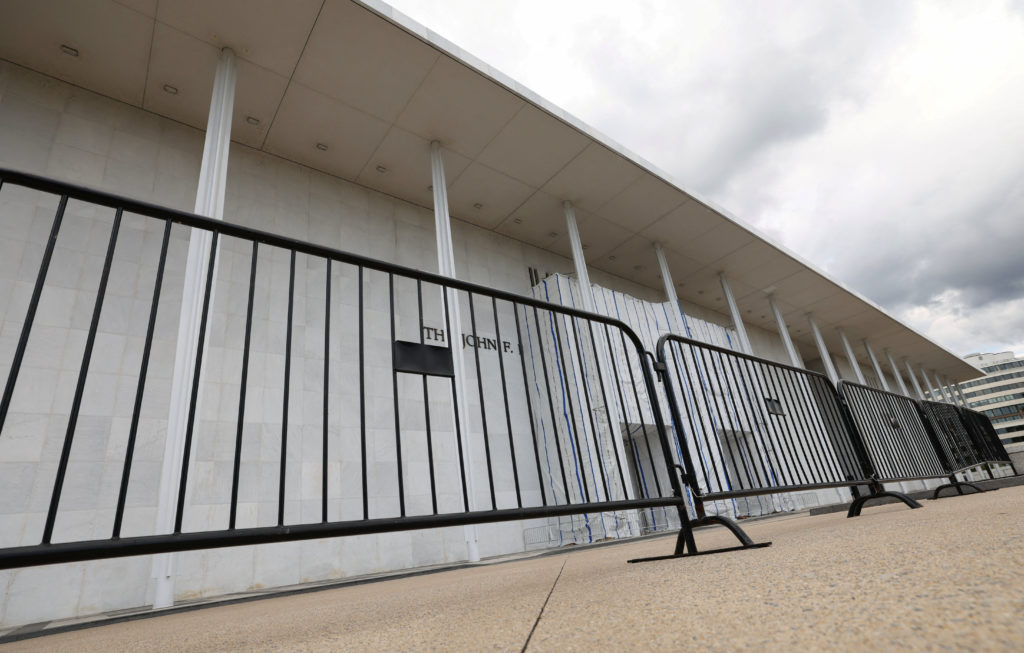
A group of former employees has formally accused Kennedy Center leadership of neglecting known structural deficiencies at the iconic Washington, D.C., performing arts venue. In a letter submitted to Congress, the whistleblowers assert that officials were aware of serious safety issues long before the center’s abrupt closure this month. The allegations challenge the official narrative that recent inspections uncovered acute hazards for the first time, suggesting instead that remediation efforts were deliberately stalled despite available resources.
The complaint, represented by attorney David Seide, identifies Matt Floca, the center’s executive director and chief operating officer, as the central figure in these delays. According to the letter, Floca did not prioritize roofing issues and halted a funded repair plan in April. The former staff members claim that Floca had previously requested and received necessary funds to address these problems, citing legislation signed by President Donald Trump in the summer of 2025. This bill earmarked $257 million specifically for the Kennedy Center’s maintenance and improvement.
Floca has firmly rejected these allegations. In a written statement provided through a center spokesperson, he emphasized that patron and staff safety remains his primary concern. He acknowledged that the roof overhang had leaked for years but argued that the severity of the internal damage was not fully understood until this summer. Floca stated that recent investigations exposed new hazards within the building’s structure, which necessitated the temporary shutdown following an inspection of a deteriorating roof terrace canopy and a partial ceiling collapse.
Regarding the specific claim that repair work was stopped in April, Floca offered a different explanation. He asserted that he did not halt the project because it was unnecessary, but rather because the contractor’s quote for the initial plans was nearly three times the expected cost. According to Floca, this financial discrepancy led to a reassignment of the work toward a more comprehensive procurement and delivery strategy. He characterized this shift as a change in approach rather than a decision to abandon the repairs.
The whistleblower letter arrives amidst heightened political and legal tensions surrounding the Kennedy Center. The venue has become a focal point for President Trump’s efforts to reshape the nation’s capital during his second term. Trump appointed new leadership to the center’s governing board and previously had his name added to the building’s exterior. However, U.S. District Judge Christopher Cooper ruled that this addition was illegal and ordered its removal. The judge has also mandated that the center provide 30 days’ notice before making any major physical changes, including potential demolition.
Earlier this month, the Trump-aligned board voted to close the Kennedy Center indefinitely for repairs. This decision came just hours after Judge Cooper blocked the board’s plans to return Trump’s name to the building. The timing of the closure has drawn scrutiny, with critics suggesting it may be linked to the ongoing legal disputes over the facility’s physical integrity and branding. The center is now required to file a status report on the temporary closure and emergency repairs by Friday.
Senator Sheldon Whitehouse, the top Democrat on the Senate Committee on Environment and Public Works, responded to the whistleblower letter with strong criticism. In a communication to Floca, Whitehouse alleged that Kennedy Center leadership had hoarded congressionally appropriated funds while shifting blame for the building’s condition onto previous administrations. He described the documents as evidence of deeper financial mismanagement, adding to his initial investigations into cronyism and corruption under Trump’s chairmanship.
The Republican majority on the committee did not immediately respond to requests for comment regarding these allegations. As the situation develops, the Kennedy Center remains closed, with its future dependent on the outcome of both the repair assessments and the ongoing judicial oversight. The conflict highlights broader questions about accountability in federally funded cultural institutions and the intersection of political influence with infrastructure management.
Thousands of protesters have gathered outside the venue, expressing concerns that the administration might use the structural issues as a pretext to tear down the historic building. While Floca maintains that the closure is strictly for safety reasons, the whistleblower accounts suggest a more complex history of decision-making regarding the center’s maintenance. The coming weeks will likely see further scrutiny from Congress and the courts as the full scope of the structural damage and administrative actions becomes clearer.
Sources behind this briefing
Go to the original reporting
- PBS NewsHour↗Kennedy Center put off planned repairs despite known structural issues, former employees allege

