The short version
- Enes Kanter Freedom was ejected from an Indiana Fever versus Chicago Sky game after a confrontation with guard Natasha Cloud.
- The incident occurred as the league faces growing debate over its policies regarding transgender athletes, despite no such player currently competing in the WNBA.
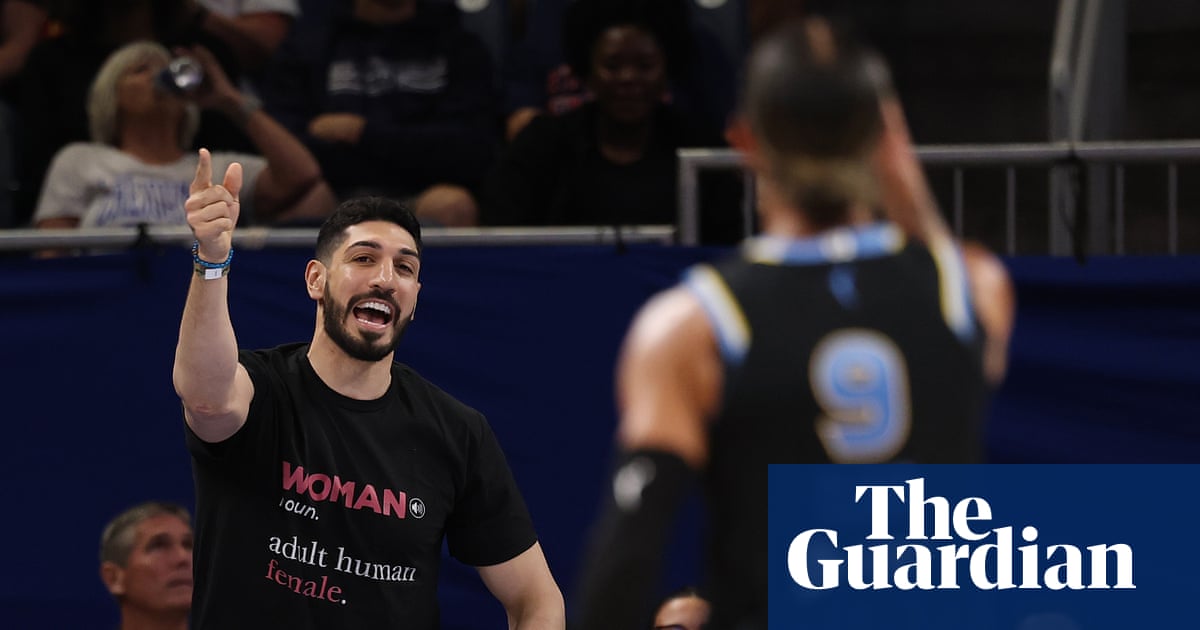
- Chicago coach Tyler Marsh defended Cloud’s actions as protective of the team, while Kanter displayed a shirt defining womanhood biologically before his removal.
A dispute between a former NBA star and a current WNBA guard led to an ejection during Sunday night’s matchup between the Indiana Fever and the Chicago Sky. Enes Kanter Freedom, who has publicly criticized the league’s approach to transgender participation, was removed from Wintrust Arena after a tense encounter with Chicago guard Natasha Cloud late in the third quarter. The incident underscored the intensifying cultural and political pressures surrounding women’s professional basketball as debates over gender identity in sports continue to draw national attention.
Freedom had been seated along the baseline wearing a black shirt that defined 'woman' as an adult human female. With just over a minute remaining in the third quarter, Cloud scored inside the paint, prompting the Fever to call a timeout. After celebrating with teammate Aicha Coulibaly, Cloud turned toward Freedom’s section. She began yelling and pointing in his direction as she approached the sideline area. Freedom stood up, extending his arms and taking a step onto the court before security personnel and several Sky players intervened to separate the two individuals.
Security escorted Freedom from the court area after he attempted to plead his case while holding out his shirt for the crowd to see. He engaged in a conversation with police officers near the front lobby before departing the venue. The physical altercation was brief but disruptive, drawing immediate attention from league officials and team staff. Chicago forward Azura Stevens described the event simply as a fan incident that security handled appropriately, noting that the team intended to focus solely on the remainder of the game following the interruption.
Chicago head coach Tyler Marsh addressed the confrontation by framing Cloud’s behavior as an act of protection for her teammates. Marsh stated that he assured Cloud she was not a distraction and emphasized that the organization supports her role in safeguarding the team environment. He suggested that former players should understand the importance of allowing current athletes to enjoy their games without external interference. Marsh praised the league and its participants, implying that spectators should respect the space earned by the players on the court.
The confrontation occurred against a backdrop of ongoing controversy regarding transgender eligibility in women’s sports. Although no player assigned male at birth has ever competed in the WNBA, the league’s collective bargaining agreement restricts participation to women without providing specific language on gender identity or sex assigned at birth. This ambiguity has fueled recent debates among players, fans, and former athletes. Freedom and Royce White, another former NBA player, have declared themselves eligible for the WNBA draft, asserting that they identify as women.
Player reactions to the broader issue remain divided. Indiana guard Sophie Cunningham recently expressed opposition to transgender girls and women competing in female sports categories during an ESPN profile published last month. Meanwhile, Cloud did not speak with media members after the game but met with team and league security personnel. Indiana star Caitlin Clark stated she did not witness the incident, as she was focused on strategy discussions within her team’s huddle at the time. She deferred questions about the event to Chicago representatives.
The Chicago Sky ultimately defeated the Indiana Fever 113-90, but the final score was secondary to the off-court drama that dominated post-game coverage. The incident highlights the challenges league officials face in managing fan conduct while navigating sensitive cultural issues. As Freedom and others continue to advocate for their right to compete under their identified gender, the WNBA remains under scrutiny to clarify its policies. The lack of explicit guidelines in current agreements leaves room for interpretation and potential future conflicts.
This event marks another escalation in the public discourse surrounding gender identity in athletics. While the immediate impact was limited to a single game disruption, the symbolic weight of the confrontation resonates beyond the arena. Teams and leagues must balance inclusivity with competitive integrity concerns raised by various stakeholders. The absence of a clear precedent for transgender participation in the WNBA means that each new development, such as Freedom’s draft declaration or this sideline altercation, contributes to an evolving and contentious narrative.
Going forward, the league may need to address these ambiguities more directly to prevent similar disruptions. Whether through policy updates, clearer communication, or mediation strategies, stakeholders are watching closely. The incident serves as a reminder that sports arenas have become focal points for broader societal debates. As the season progresses, how teams and officials manage such situations will likely influence public perception and player safety protocols moving forward.
Sources behind this briefing
Go to the original reporting
- The Guardian US↗Enes Kanter Freedom ejected from WNBA game after confrontation with Natasha Cloud

