The short version
- Staff records identify Thomas Teepell, a former operations director for Senator Josh Hawley, as the attendee who interrupted Abdul El-Sayed’s town hall.
- El-Sayed addressed the interruption by comparing the implication of dual loyalty to historical doubts about John F. Kennedy’s Catholicism and affirming his constitutional commitment.
- The incident follows a pattern of Republican efforts to link El-Sayed to the Muslim Brotherhood, despite his denials and lack of evidence regarding personal involvement.
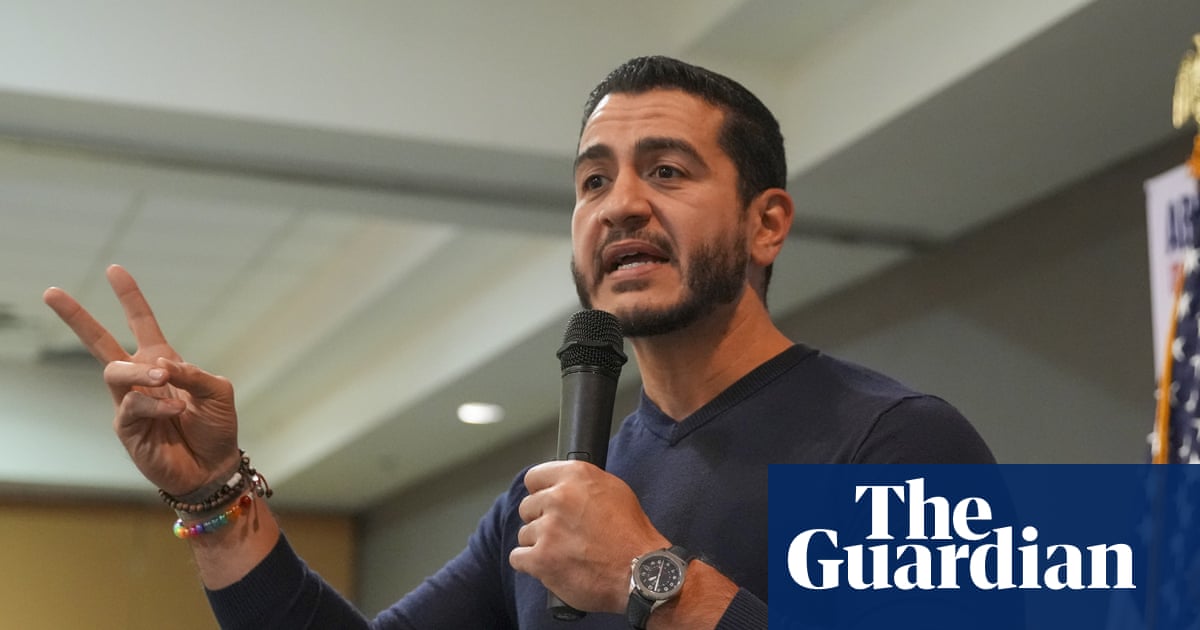
A man who interrupted a Michigan town hall event for Democratic Senate candidate Abdul El-Sayed has been identified through congressional staff records as Thomas Teepell, a former aide to Republican Senator Josh Hawley. The incident occurred on Saturday when an attendee, initially known only as Tommy, shouted from the crowd demanding that El-Sayed disavow the Muslim Brotherhood. El-Sayed responded affirmatively to the demand but then challenged the underlying premise of the question, asking whether the heckler assumed he would not reject such ties.
Teepell’s professional history reveals a direct connection to Hawley’s political operations. Records indicate that Teepell joined Hawley’s office as an intern in 2023 and advanced to the position of operations director before departing in February. Following his tenure with the senator, Teepell served as political director for Philip Sarnecki’s campaign for governor of Kansas, which ended when Sarnecki lost the Republican primary in August. Teepell is also the son of Timmy Teepell, a longtime Republican strategist who has advised both Hawley and former Louisiana Governor Bobby Jindal.
During the exchange at the town hall, El-Sayed spent several minutes addressing the implication behind the heckler’s question. He drew parallels between the current scrutiny of his faith and the historical doubts raised about President John F. Kennedy’s Catholicism, framing the issue as one of dual loyalty rather than policy. El-Sayed emphasized that he is running for the Senate and happens to be Muslim, asserting that his religious identity does not conflict with his constitutional duties.
The candidate then turned the question back on Teepell, asking whether he would disavow any attempt to read religious doctrine into American law. When Teepell declined to do so, El-Sayed argued that it was the heckler who needed to better understand the Constitution. The exchange drew cheers from the audience, after which Teepell left the room. This confrontation highlights the personal nature of the attacks being leveled against El-Sayed in the final weeks of the campaign.
The interruption echoes a broader strategy employed by Republican opponents to question El-Sayed’s ties to the Muslim Brotherhood, an Islamist movement designated as a foreign terrorist organization by the United States under certain administrations. Republican nominee Tudor Rogers raised alleged connections during a recent debate, prompting El-Sayed to clarify on NBC’s Meet the Press that neither he nor his family has any such affiliations. Conservative outlets have since resurfaced social media posts by El-Sayed’s half-sister, Eman Abdelhadi, describing their mother’s activism in the group during the 1970s.
El-Sayed has consistently rejected these characterizations, noting that he was born in the 1980s and was not raised by his birth mother. He has described the suggestion that anyone in his family participated in the Brotherhood as an unreasonable assumption. In interviews, he has dismissed the line of questioning as unserious and suggested that opponents are motivated by a desire to repeat the word Muslim rather than engage with substantive policy issues.
Former President Donald Trump has also amplified these claims without providing evidence. At a White House lunch, Trump stated that El-Sayed is completely affiliated with the Muslim Brotherhood and called him a fraud. In another instance, Trump mispronounced El-Sayed’s name and labeled him a jihadist. These remarks appear designed to exploit religious anxieties among voters, adding a layer of controversy to an already tight electoral contest.
The Michigan Senate race remains highly competitive, with El-Sayed holding a narrow lead in recent polling averages. Data from RealClearPolitics shows El-Sayed ahead by approximately 2.6 percentage points, while a survey from InsiderAdvantage conducted in early October indicated a two-point margin. Most current leads fall within or near the margin of error, suggesting that every interaction and media cycle could influence voter perception.
As election day approaches on November 3, El-Sayed is scheduled to campaign with former President Barack Obama in Detroit on October 24. This rally coincides with the start of in-person early voting and will also feature Democratic gubernatorial nominee Jocelyn Benson. The presence of high-profile allies underscores the national significance of the Michigan contest and the intensity of the efforts to secure victory in this pivotal state.
The identification of Teepell adds a new dimension to the narrative surrounding El-Sayed’s campaign, linking a specific act of disruption to established Republican political networks. While El-Sayed has sought to deflect these attacks by focusing on constitutional principles and historical precedents, the persistence of such questions suggests that religious identity will remain a central theme in the closing days of the election. Voters in Michigan are now faced with evaluating these claims alongside policy positions as they prepare to cast their ballots.
Sources behind this briefing
Go to the original reporting
- The Guardian World↗Man who heckled Abdul El-Sayed is former Josh Hawley aide, records show