The short version
- Sean Grayson, the former Sangamon County sheriff’s deputy convicted of second-degree murder in the death of Sonya Massey, has died at age thirty-two while serving his sentence.
- Grayson had been diagnosed with stage three colon cancer that spread to his liver and lungs, though no official cause of death was immediately released by authorities.
- The case prompted significant legal reforms in Illinois, including stricter background checks for law enforcement hires and a ten-million-dollar settlement for Massey’s family.
Sean Grayson, the former Illinois sheriff’s deputy convicted of killing Sonya Massey in her home, has died at the age of thirty-two. His attorney, Daniel Fultz, confirmed the death on Sunday to multiple news outlets. Grayson was serving a twenty-year prison term for second-degree murder when he passed away. While no specific cause of death was provided by officials, his legal team had previously disclosed that he was diagnosed with stage three colon cancer in 2023.
The cancer had progressed significantly before his incarceration, spreading to both his liver and lungs according to information presented during his sentencing hearing in January. Grayson was only six months into his sentence when he died. In July of the previous year, the Illinois prisoner review board denied his request for medical release, a decision that drew sharp criticism from prosecutors and support from Massey’s family attorneys.
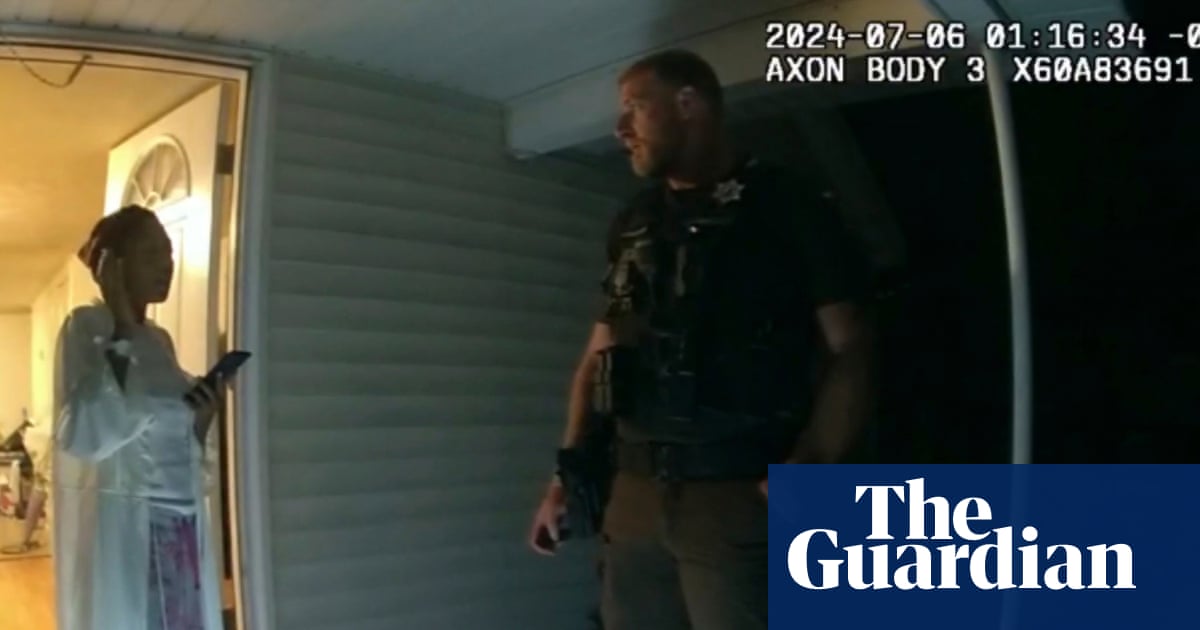
The incident that led to Grayson’s conviction occurred on July 6, 2024, in Springfield, Illinois. Body-worn camera footage captured the encounter after Massey, a Black woman, called 911 to report a possible prowler near her residence. Grayson and another deputy entered her home to investigate the call. Court testimony indicated that Massey picked up a pot of boiling water from her stove during the confrontation, prompting Grayson to back away.
Grayson testified at trial that he perceived Massey’s actions as an imminent threat. He stated that she said, “I rebuke you in the name of Jesus,” twice, which he interpreted as a warning that she intended to throw the boiling water on him. Video evidence showed Grayson pointing his firearm at Massey and threatening to shoot her. Massey apologized and dropped to the floor, but Grayson fired three shots, striking her in the face.
Prosecutors highlighted Grayson’s refusal to provide medical assistance after the shooting. Illinois prosecutor Mary Beth Rodgers noted during the trial that Massey’s final words were an apology before she was killed. The case drew national attention and sparked protests regarding systemic racism within law enforcement agencies. It also triggered a review by the United States Department of Justice into policing practices in Sangamon County.
In the aftermath of the verdict, Illinois Governor JB Pritzker signed the Sonya Massey Act into law. This legislation mandates stricter background checks for individuals seeking employment in law enforcement roles. Additionally, Sangamon County officials agreed to a ten-million-dollar settlement with Massey’s family in early 2025. The settlement was part of broader efforts to address the legal and financial consequences of the shooting.
Grayson had apologized for Massey’s death during his January sentencing hearing. However, in his petition for early medical release, he claimed that Massey had attacked him with the pot of boiling water. Sangamon County State’s Attorney John Milhiser strongly opposed the release request, describing it as a miscarriage of justice and an insult to Massey’s memory and her family.
Attorneys representing Massey’s family, including Ben Crump and Antonio Romanucci, supported the review board’s decision to deny Grayson’s medical release. They emphasized that accountability should apply regardless of professional status or health conditions. Governor Pritzker acknowledged the legal requirements for considering medical release requests but reiterated the profound loss suffered by Massey’s community.
Pritzker described Massey as an innocent, unarmed individual who had contacted law enforcement for help. He characterized the shooting as a painful reminder of the violence faced by many Black Americans and stressed that justice remains a critical priority. Grayson’s death marks the end of a legal chapter that has significantly influenced public discourse on police accountability and reform in Illinois.
The case continues to resonate beyond the courtroom, influencing policy discussions and community relations in Springfield. While Grayson is no longer serving his sentence, the legal precedents and financial settlements established by his conviction remain in effect. The outcome underscores the complex intersection of criminal justice, health crises, and civil rights advocacy in contemporary American society.
Sources behind this briefing
Go to the original reporting
- The Guardian World↗Former Illinois sheriff’s deputy who killed Sonya Massey in her home dies aged 32

