The short version
- David Rivera received a ten-year prison term for failing to register as a foreign agent and conspiring to launder money while working for the Maduro government.
- Prosecutors argued Rivera betrayed public trust by hiding his role in a fifty-million-dollar campaign to influence U.S. policy toward Venezuela during the first Trump administration.
- Defense attorneys maintain the work was exempt commercial consulting aimed at attracting ExxonMobil, not political lobbying, and plan to appeal the verdict.
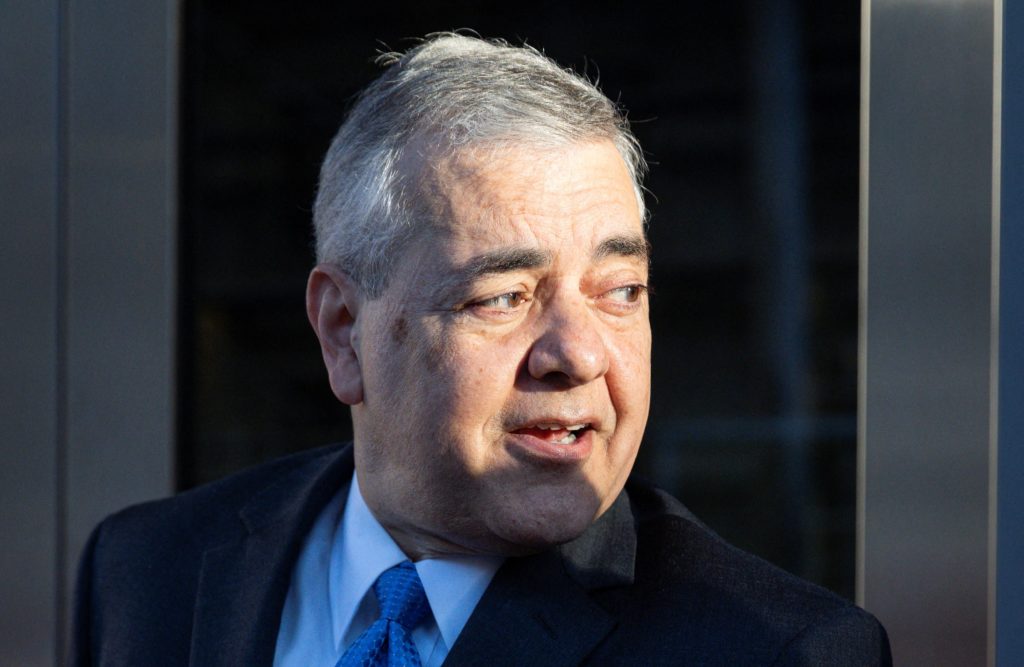
Former Republican Representative David Rivera was sentenced to ten years in prison on Friday for his role in a clandestine lobbying effort on behalf of Venezuela’s government. The sentence follows a May jury verdict that found him guilty on all counts, including conspiracy to commit money laundering and failing to register as a foreign agent under the Foreign Agents Registration Act. Rivera, who has been incarcerated since his conviction, appeared stoic during the proceedings in Miami, where Judge Melissa Damian delivered a sharp rebuke of his actions.
The case centers on a fifty-million-dollar contract Rivera secured through his one-person consulting firm with PDV USA, a U.S.-based affiliate of Venezuela’s state oil company. Prosecutors alleged that Rivera was recruited by then-Foreign Minister Delcy Rodríguez to leverage his political connections and persuade the first Trump administration to ease sanctions against the Maduro regime. The indictment claims this effort was designed to normalize relations between Washington and Caracas despite ongoing accusations of human rights abuses in Venezuela.
Judge Damian emphasized the severity of the betrayal, noting that Rivera’s actions would have been viewed even more harshly had the funds originated from Cuba rather than its allies in Venezuela. She stated there is no dispute regarding the source of the money, linking it directly to the Maduro government. The seven-week trial provided insight into Miami’s complex role as a hub for foreign influence campaigns targeting U.S. Latin American policy, highlighting both the city’s strong anti-communist sentiment and vulnerabilities to corruption within its exile communities.
Testimony during the trial revealed that several high-profile figures, including then-Secretary of State Marco Rubio and Representative Pete Sessions, felt deceived upon learning of Rivera’s arrangement with the Venezuelan government. These individuals had been approached by Rivera and co-defendant Esther Nuhfer as part of an effort to shift U.S. policy stance. Prosecutors argued that Rivera and Nuhfer deliberately concealed their lobbying activities because disclosure would have jeopardized Rivera’s political standing as a staunch anti-communist figure.
To coordinate these efforts without detection, Rivera established an encrypted messaging group referred to as MIA. Communications within this group utilized coded language to discuss sensitive topics; for instance, Nicolás Maduro was referred to as the bus driver, while payments were termed La Luz or The Light. Such measures were intended to obscure the nature of their interactions from public scrutiny and regulatory oversight.
Defense attorneys contested the characterization of Rivera’s activities as illegal lobbying. They argued that the primary objective of the contract was commercial, specifically aimed at enticing ExxonMobil to resume operations in Venezuela. Under this interpretation, such work would generally be exempt from registration requirements under FARA. Shohat, one of Rivera’s lawyers, asserted that filing the necessary paperwork would have rendered all actions legal and questioned whether a decade-long sentence was proportionate for an administrative oversight.
However, prosecutors maintained that the consulting contract served merely as a cover for illicit political lobbying. Assistant U.S. Attorney Roger Cruz described the scheme as a classic example of money laundering, emphasizing that Rivera exploited his position of trust to deceive both the government and the public. The judge agreed with this assessment, rejecting the defense’s argument that the meetings with Rubio and Sessions were unrelated to supporting Maduro’s interests.
Rivera faces additional federal charges in Washington, D.C., related to a separate foreign lobbying matter. His legal team has already applied for a presidential pardon and plans to appeal the current sentence. The case remains a significant example of the challenges involved in regulating foreign influence operations, particularly when they intersect with domestic political affiliations and personal relationships among policymakers.
The sentencing highlights broader concerns about transparency in diplomatic engagements and the potential for abuse when private citizens engage in unofficial negotiations with foreign governments. As Rivera begins his sentence, the implications of this case continue to resonate within discussions on ethics, accountability, and the integrity of U.S.-Latin America relations.
Sources behind this briefing
Go to the original reporting
- PBS NewsHour↗Former GOP Rep. David Rivera sentenced to 10 years for secret Venezuela lobbying