The short version
- Republican Byron Donalds and former Republican David Jolly have secured their respective party nominations for Florida governor.
- Progressive Angie Nixon won the Democratic Senate primary, setting up a general election against Republican Ashley Moody.
- The results highlight Florida's continued rightward shift while offering Democrats a chance to reclaim ground in key races.
Florida voters selected their candidates for governor and a U.S. Senate seat on Tuesday, establishing the matchups that will define the state’s political trajectory this November. Rep. Byron Donalds secured the Republican nomination for governor, while former Rep. David Jolly claimed the Democratic nod. These victories set the stage for a general election campaign aimed at replacing outgoing Gov. Ron DeSantis, who is term-limited and barred from seeking a third consecutive year in office.
The gubernatorial contest carries significant weight beyond state borders. It serves as a referendum on President Donald Trump’s influence within his adopted home state and tests whether Democrats can reestablish Florida as a competitive national battleground. The state has shifted noticeably to the right since 2016, though Democratic strategists hope to capitalize on declining approval ratings for the president to regain lost territory.
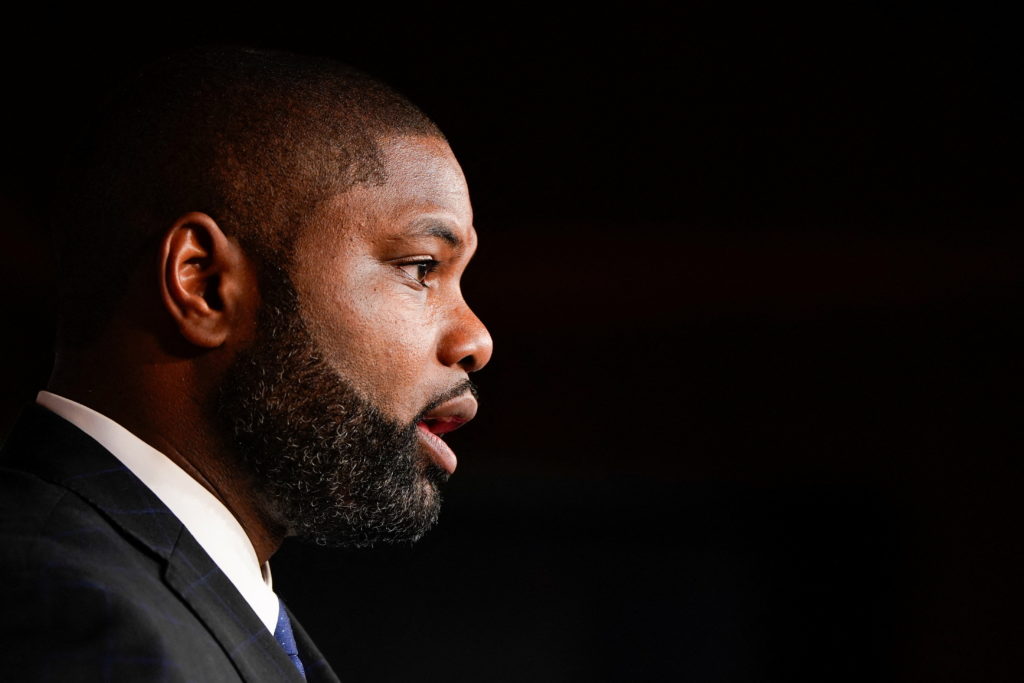
Donalds, a 47-year-old congressman, defeated several rivals including Lt. Gov. Jay Collins, who previously served as DeSantis’s running mate. If elected in November, Donalds would become Florida’s first Black governor. In his victory address at a Universal Studios resort hotel, he emphasized party unity, stating that the primary was over and that Republicans must now stand together. He acknowledged Trump’s substantial support base but cautioned that an endorsement alone does not guarantee victory.
The Republican nominee outlined a platform focused on economic issues, including tax cuts and reforms to Florida’s insurance regulations aimed at reducing consumer costs. He also pledged to pursue greater transparency in healthcare pricing. Donalds positioned himself as a candidate who respects the president’s standing within the party while maintaining that active campaigning remains essential for success.
On the Democratic side, Jolly presents a unique profile as a former Republican congressman who switched parties last year. His nomination marks the second consecutive cycle in which Democrats have selected a former Republican for governor, echoing the 2018 selection of Charlie Crist, who ultimately lost by a wide margin to DeSantis. Jolly addressed his partisan history directly, thanking Democratic supporters for their welcome while framing his policy views around limited government and free-market principles.
Jolly’s campaign message seeks to bridge ideological divides by advocating for lean governance that still addresses specific social needs such as education and housing. He characterized his approach as rooted in traditional Republican and Libertarian values, arguing that government should refrain from interfering in personal lives. This positioning aims to appeal to moderate voters while distinguishing himself from the progressive wing of his party.
In the U.S. Senate race, state Rep. Angie Nixon won the Democratic primary for a special election intended to fill the remainder of Marco Rubio’s term. Rubio vacated the seat last year to serve as secretary of state under President Trump. Nixon’s victory was notable given that she was heavily outspent by her opponent, retired Army Lt. Col. Alexander Vindman, a former National Security Council official who testified during Trump’s first impeachment.
Nixon will face Sen. Ashley Moody in November. Moody, a former state attorney general appointed by DeSantis, is running to complete the two-year term left open by Rubio. If Nixon wins, she would become Florida’s first Black U.S. senator. Vindman conceded gracefully, announcing his support for Nixon in the general election against Moody. This race remains an uphill battle for Democrats, as the state has not elected a Democrat to the Senate since 2012.
Additional primary results included Debbie Wasserman Schultz retaining her House seat in a redrawn South Florida district. She defeated former Rep. Sheila Cherfilus-McCormick and other challengers in a district that is now plurality Black. The redistricting effort, pushed by DeSantis, was designed to bolster Republican prospects in midterm elections. These outcomes collectively underscore the complex realignments occurring within Florida’s political landscape as the general election approaches.
Sources behind this briefing
Go to the original reporting
- PBS NewsHour↗GOP Rep. Donalds will run against Democrat Jolly in Florida's race for governor

