The short version
- James Robertson was executed in Florida, marking the state's seventeenth lethal injection this year and resuming a high volume of capital punishment cases.
- Governor Ron DeSantis withdrew the death warrant for William Lee Thompson hours before his scheduled execution, citing concerns that the inmate may be insane.
- The proceedings occurred against the backdrop of international criticism following a failed execution attempt in Tennessee earlier this month involving Christa Pike.
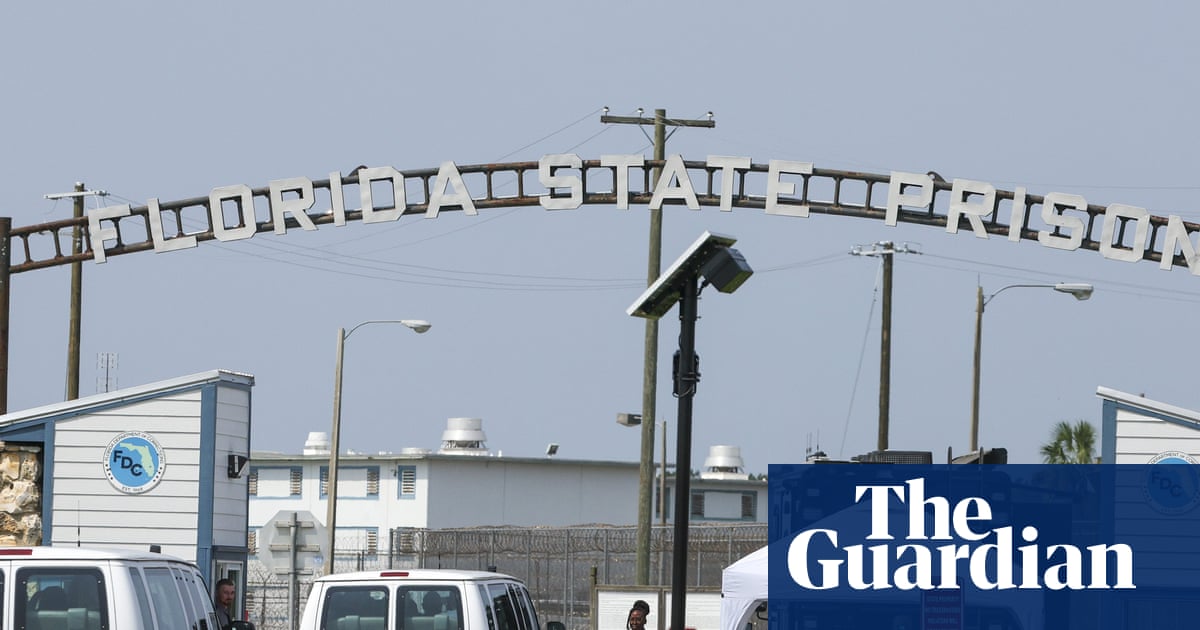
Florida authorities carried out an execution on Tuesday, pronouncing James Robertson dead at a state prison in Raiford after he received a series of lethal injections. The event marked the seventeenth time the state has put a prisoner to death in 2026, continuing an aggressive pace of capital punishment under Governor Ron DeSantis. Officials confirmed that Robertson, aged sixty-three, died at 12:32 p.m., bringing closure to a case involving the 2008 killing of a fellow inmate.
The execution took place amid heightened scrutiny following a botched lethal injection attempt in Tennessee on September 30. In that incident, authorities were forced to abandon the execution of Christa Pike after administering two doses of pentobarbital failed to kill her. Pike was discharged from a hospital and returned to prison ten days later. Her legal team has requested that her sentence for the 1995 murder of a classmate be commuted to life without parole, while Tennessee officials have not yet announced plans for another execution date.
Florida’s corrections department emphasized its commitment to humane protocols during a press conference held immediately after Robertson’s death. Spokesperson Jordan Kirkland stated that the state maintains a sound lethal injection process involving a sedative, a paralytic, and a drug that stops the heart. When asked how officials could guarantee no repeat of the Tennessee incident, Kirkland declined to comment on another state’s procedures but affirmed Florida’s dedication to dignity in its own operations.
The global reaction to Florida’s decision included condemnation regarding the plan to livestream the execution. International observers criticized the broadcast, adding to the pressure on U.S. states employing capital punishment. Despite the controversy, Florida proceeded with Robertson’s case after a Charlotte County circuit court accepted his request to withdraw all appeals on October 5. Robertson had pleaded guilty to first-degree murder and confessed that he killed his cellmate, Frank Hart, unprovoked because he desired to be on death row.
In a significant development during the same day, Governor DeSantis issued an executive order withdrawing the death warrant for William Lee Thompson. Thompson, aged seventy-four, was scheduled to be executed several hours after Robertson for the 1976 kidnapping and murder of a twenty-three-year-old woman. The governor’s order cited a medical evaluation and legal assessment suggesting that Thompson may be insane. Attorneys for Thompson argue he suffers from dementia and holds delusional beliefs, such as thinking George W. Bush is still president. Thompson remains on death row, and a new warrant could potentially be signed in the future.
Robertson’s execution contributes to Florida’s record-setting use of the death penalty this year. If two additional scheduled executions proceed, the state will tie its modern-day record of nineteen executions set in 2025. William Reaves, aged seventy-seven, is slated for execution on October 20 for the 1986 murder of a sheriff’s deputy in Indian River County. Jesse Guardado, aged sixty-four, is scheduled to die on November 5 for the 2004 murder of a seventy-four-year-old woman in Walton County.
The personal impact of these proceedings was evident at the post-execution briefing. Rebecca Hart, the daughter of victim Frank Hart, witnessed the execution and spoke emotionally to the media. She stated that the event would not bring her father back but emphasized her need to honor his memory and ensure he is not forgotten. Hart had been imprisoned since 2003 for a sexual battery conviction when Robertson killed him in 2008.
Independent journalist John Koch, who has witnessed over one hundred Florida executions, provided details from the execution chamber. He reported that the process lasted approximately ten minutes and that Robertson appeared calm. When asked if he had any final words, Robertson reportedly replied, “Nah, I’m straight.” Koch noted that Robertson looked around the room and acknowledged people in the gallery before the first injection was administered. Robertson had a long history with the prison system, having been sentenced at age seventeen in 1980 for burglary and assault, followed by additional time for assaults committed while incarcerated.
As DeSantis prepares to leave office in January, his administration’s approach to capital punishment remains a defining feature of his tenure. The rapid succession of executions, coupled with the withdrawal of Thompson’s warrant due to mental health concerns, highlights the complex legal and ethical challenges facing the state. While Florida continues to move forward with its scheduled cases, the contrast between Robertson’s execution and the aborted attempt in Tennessee underscores ongoing debates about the reliability and morality of lethal injection protocols.
Sources behind this briefing
Go to the original reporting
- The Guardian World↗Florida carries out execution amid scrutiny over botched Tennessee attempt