The short version
- The union representing flight attendants has raised alarms about the safety implications of a proposed arch structure near Washington National Airport.
- President Trump announced plans to convert the memorial into a military complex capable of hosting drones and storing ammunition.
- Federal agencies have issued conflicting assessments regarding the project's impact on aviation safety and historical preservation.
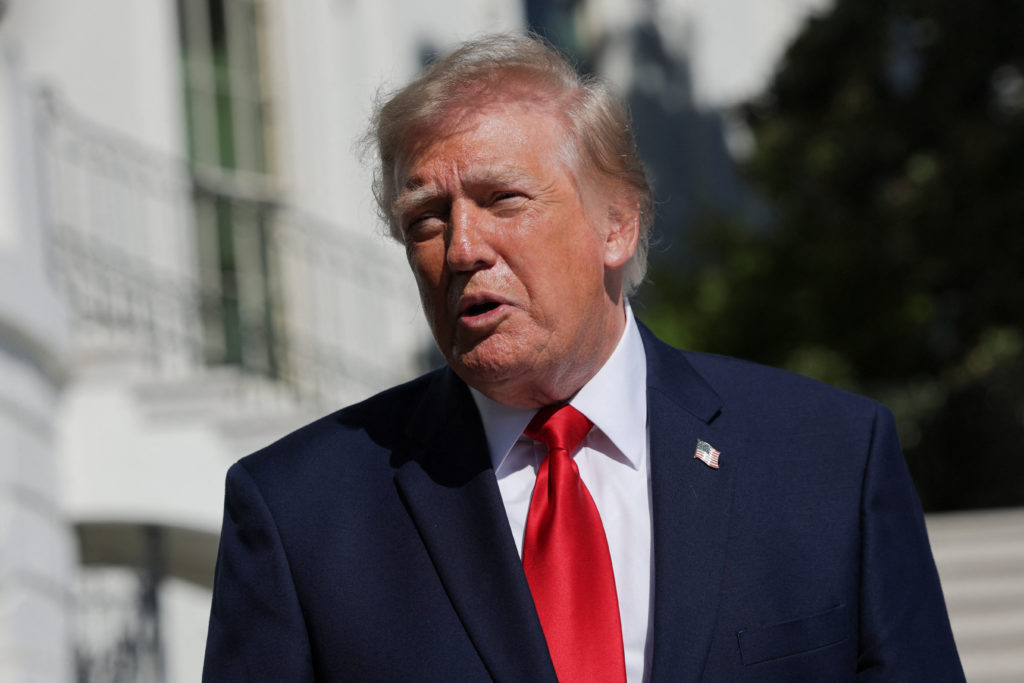
The labor organization representing thousands of flight attendants has formally expressed safety concerns regarding President Donald Trump’s proposal to construct a triumphal arch near Ronald Reagan Washington National Airport. Sara Nelson, president of the Flight Attendants Association-CWA, stated that the structure poses significant risks to commercial aviation operations in an already congested airspace. The union argues that the project exacerbates unresolved safety issues stemming from a fatal crash over the Potomac River in January 2025, which resulted in sixty-seven deaths.
Nelson emphasized that the airport is currently operating at maximum capacity and cannot accommodate additional obstacles in its flight paths. She specifically criticized the administration’s decision to designate the site as a high-level military complex. According to Nelson, commercial aircraft should not be required to navigate around military drones, missiles, or snipers during takeoff and landing procedures. The union represents approximately fifty-five thousand flight attendants across twenty airlines, giving its statement considerable weight in the ongoing debate.
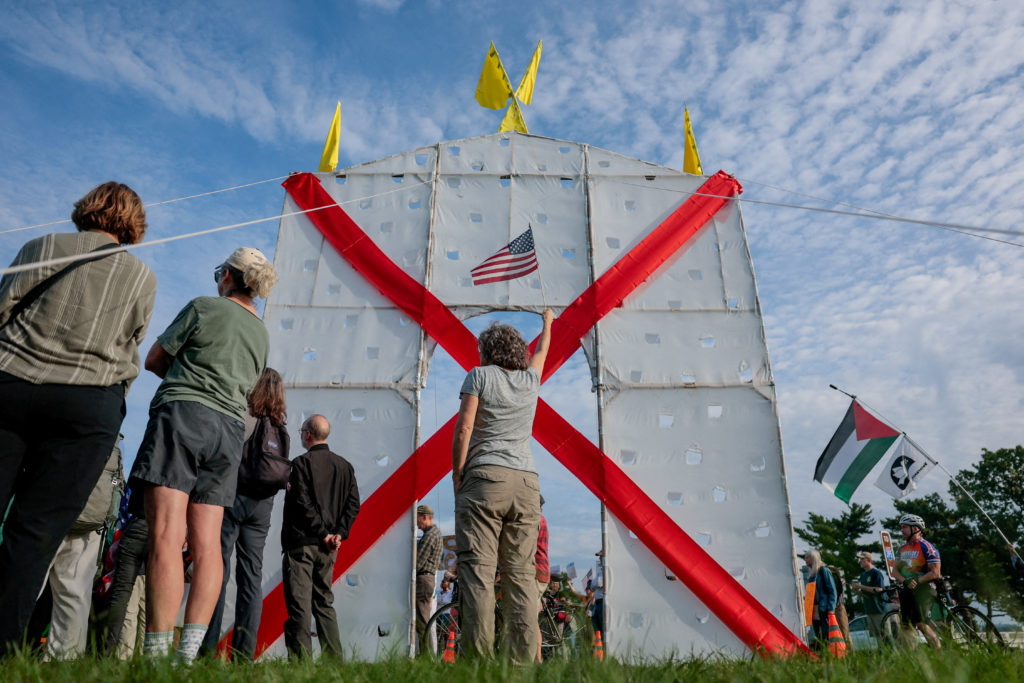
The controversy centers on a recent announcement by President Trump that he agreed to convert the planned two-hundred-fifty-foot memorial into a military facility at the request of defense officials. This shift in purpose has drawn sharp criticism from veterans’ groups, members of Congress, and aviation safety advocates. Critics argue that the structure threatens historic sightlines between key landmarks in Washington, D.C., while introducing new hazards to one of the busiest airspace corridors in the United States.
Despite these objections, the U.S. Commission of Fine Arts has granted early approval for the project. All members of this commission were appointed by President Trump, raising questions about the independence of the review process. A coalition comprising three veterans and an architectural historian has filed a lawsuit challenging the approval. The plaintiffs contend that such a significant alteration to the national capital’s landscape requires explicit authorization from Congress rather than executive action alone.
Federal regulatory bodies have presented mixed evaluations of the project’s risks. The Federal Aviation Administration previously determined that the arch would not constitute a direct hazard to aircraft, provided it is properly marked. The agency recommended installing a non-standard eternal flame on top of the structure and using floodlight projectors to ensure visibility for pilots. However, this assessment was made before the president announced the conversion of the site into a military complex, potentially altering the risk profile.
The National Park Service conducted an independent assessment concluding that the memorial arch could disrupt the historical significance of dozens of nearby sites. Despite identifying these preservation concerns, the agency ultimately approved the project. Interior Secretary Doug Burgum announced in early October that excavation work at Memorial Circle would commence within weeks. The Interior Department did not immediately respond to inquiries regarding the current status of construction activities.
This dispute is part of a broader pattern of urban development initiatives undertaken by the Trump administration in Washington, D.C. Recent projects have included renovations to public golf courses and threats to demolish the John F. Kennedy Center for the Performing Arts. The proposed arch represents one of the most contentious efforts to reshape the city’s physical and symbolic landscape.
As legal challenges mount and safety concerns persist, the future of the project remains uncertain. The intersection of aviation safety, historical preservation, and military expansion creates a complex policy dilemma. Stakeholders continue to monitor developments closely as excavation plans move forward amidst ongoing litigation and public scrutiny.
Sources behind this briefing
Go to the original reporting
- PBS NewsHour↗Flight attendants' union raises safety concerns over Trump's Washington arch