The short version
- The Taliban has banned girls from secondary and higher education, making Afghanistan the only country with such a total prohibition.
- Female employment has dropped to seven percent as women are barred from many workplaces, contradicting regime claims of rising entrepreneurship.
- Public corporal punishments have resumed, with survivors describing severe physical trauma and psychological distress for their families.
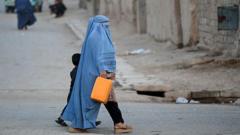
Five years after the Taliban reclaimed power in Afghanistan, the daily existence of the country’s twenty-two million women has undergone a profound and largely negative transformation. Interviews conducted across Kabul and rural areas reveal that the hard-line Islamist regime has systematically eroded rights established during the previous two decades. The changes are not merely administrative but have fundamentally altered the social fabric, leaving many women feeling that their lives are no longer recognizable compared to the pre-2021 era.
Education remains one of the most stark areas of restriction. Afghanistan is currently the only nation in the world where girls are officially prohibited from attending secondary school and universities. A United Nations Children’s Fund report indicates that approximately 2.6 million girls can no longer pursue schooling beyond the sixth grade. While some individuals have managed to complete secondary education through online platforms, describing this as a significant personal victory, broader professional aspirations remain out of reach. One woman who dreamed of becoming a pilot noted that her ambitions now feel impossible, with the sky representing a freedom she can no longer access.
The Taliban leadership disputes the severity of these constraints. Amir Khan Muttaqi, the foreign minister, stated in an interview that women are not totally restricted in all aspects of life. He argued that only a small portion of their affairs is limited and cited figures claiming that three million girls are currently attending schools or religious centers focused on Islamic teachings. When questioned about how religious institutions could produce doctors, Muttaqi maintained that the restrictions are partial and temporary, insisting that women continue to serve as teachers, civil servants, and entrepreneurs.
Economic data presents a sharp contrast to the regime’s narrative. The United Nations reports that female employment has plummeted to just seven percent following bans on many workplaces and fields of study. This stands in direct opposition to Muttaqi’s claim that the number of female entrepreneurs has risen from thirty thousand in 2020-2021 to one hundred twenty thousand today. For those who lost their jobs, the impact is deeply personal. A former news anchor described the loss of her profession as a loss of identity, noting that her days are now defined by confinement at home rather than the pride she once felt while broadcasting.
Beyond education and employment, the regime has resumed the public implementation of corporal punishments. Official records indicate that hundreds of people have been flogged since 2021, though survivors suggest the true number is significantly higher. These punishments are often carried out in public settings with large crowds of male onlookers. Survivors describe being forced to confess to crimes such as apostasy or collaborating with foreigners before being whipped. The physical scars are accompanied by severe psychological trauma that extends to family members, including young children who wake up frightened by memories of the violence.
The atmosphere of fear has permeated daily life, forcing many women to abandon their real names when speaking to international media due to concerns about reprisals. Poverty and daily hardships have become overwhelming priorities, leaving little energy for long-term planning or hope for the future. One resident from Kabul noted that survival has replaced education and dreams as the central focus of existence. The anniversary of the government’s fall in August is described by some as a painful reminder of lost opportunities, reopening old wounds and reinforcing a sense of defeat.
The restrictions on movement further isolate women, requiring a male chaperone for travel and limiting their ability to navigate public spaces freely. New laws have also been introduced that imply legal approval for child marriage, adding another layer of vulnerability for young girls. The combination of educational bans, economic exclusion, and physical intimidation has created an environment where dissent is dangerous and visibility is risky. Many women who once challenged the Taliban or maintained independent social connections now live under constant surveillance and threat.
As the five-year mark passes, the gap between the Taliban’s official statements and the lived reality of Afghan women remains wide. While the regime insists that restrictions are limited and temporary, the evidence from across the country points to a comprehensive dismantling of women’s rights. The international community continues to monitor the situation, but access remains limited for most organizations. For the women on the ground, the immediate concern is not political debate but basic survival in a society where their presence in public life has been severely curtailed.
The long-term implications of these policies are still unfolding, but the current trajectory suggests a deepening entrenchment of gender-based restrictions. With millions of girls out of school and women excluded from the workforce, the country faces significant human capital losses. The psychological toll on families, particularly children witnessing public punishments, adds to the societal strain. As Afghanistan moves further into this new era, the question remains how these profound changes will shape the next generation and whether any space for advocacy or reform can emerge within such a constrained environment.
Sources behind this briefing
Go to the original reporting
- BBC News↗Afghan women tell the BBC their lives are unrecognisable after five years of Taliban rule

