The short version
- Five British nationals were released on bail after their vans blocked access to RAF Fairford, a key US air force base, without charges being filed.
- Authorities found no explosives or viable devices during searches, contradicting earlier political claims of imminent high-level threats.
- The incident underscores the difficulty in linking specific domestic incidents to state-sponsored actors like Iran, despite broader regional hostilities.
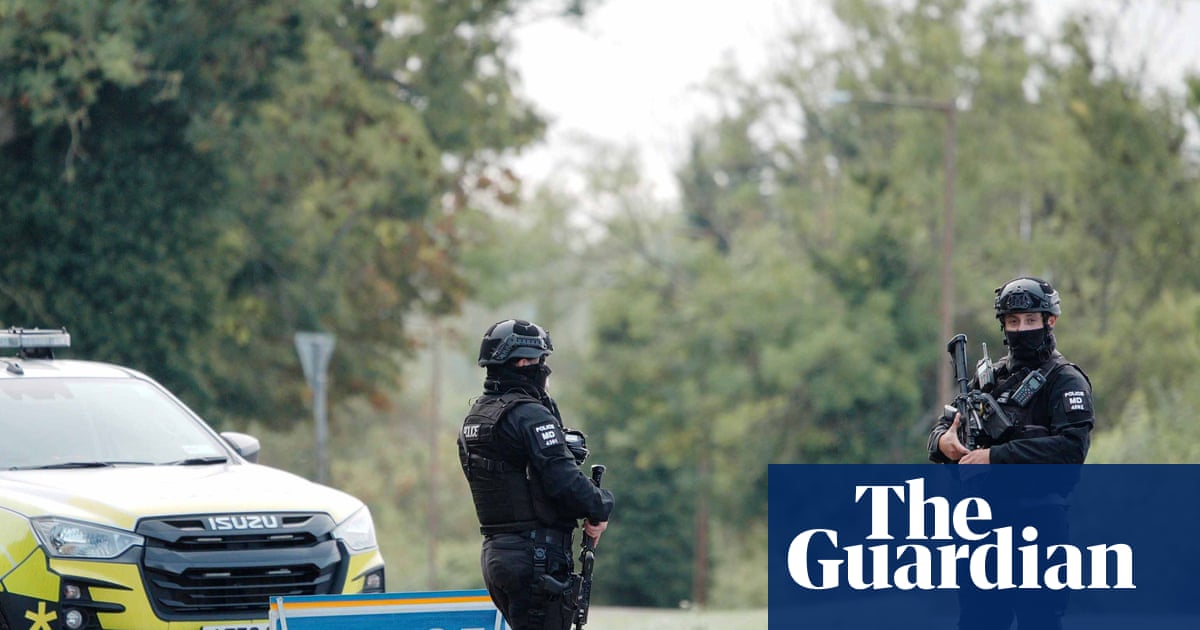
Five men have been released on bail following an unusual incident at RAF Fairford in Gloucestershire, where three vans blocked a local driveway near the military base in the early hours of Sunday. The suspects, all identified as UK nationals from London, were initially detained on suspicion of carrying explosives and involvement in a terror plot. However, after more than twenty-four hours of intensive searching by counter-terror police, investigators discovered no materials that would justify further detention or immediate charging.
The decision to release the men without charge suggests that authorities do not view them as posing an immediate violent threat, despite the sensitive nature of the location. RAF Fairford serves as a primary European hub for United States Air Force bombers and has been central to recent military operations against Iranian targets. The base’s strategic importance was underscored when former Prime Minister Keir Starmer authorized American strikes on Iranian missile launch sites earlier this year, following the escalation of conflict initiated by President Donald Trump in the spring.
The timeline of the event reveals a reactive rather than intelligence-led response. British officials acknowledged that the arrests were triggered by last-minute warnings on the ground rather than prior surveillance. Counter-terror units became aware of three vehicles heading toward the base at 12:45 am, while a local farmer contacted emergency services at 1:36 am after finding her drive blocked. This lack of prior intelligence awareness contrasts sharply with claims made by US President Trump, who asserted that American and British agencies had been monitoring the individuals for an extended period and that they intended to cause significant damage.
UK sources have clarified that the elevated threat level at Fairford in the days preceding the incident was related to broader concerns regarding threats to US bases generally, rather than specific intelligence about this particular group. This distinction is crucial in understanding the operational context; while the base has been explicitly named as a legitimate target by Iran’s Islamic Revolutionary Guard Corps, there is no firm evidence linking these five Londoners to Tehran or any state-sponsored network.
Political reactions to the incident have varied significantly. Nigel Farage, leader of the Reform party, attempted to use the event to bolster arguments against immigration and to assert Iranian involvement in domestic security breaches. However, his claims were undermined by police confirmation that all suspects were British citizens from London, rendering arguments about small boat arrivals irrelevant to this specific case. The disconnect between political rhetoric and factual findings highlights the challenges of interpreting security incidents through a partisan lens.
The broader context involves Iran’s ongoing efforts to project power against Western targets since the expansion of Middle East conflicts in late 2023. While Iranian state media and affiliated groups have issued threats against bases like Fairford, their operational track record remains inconsistent. MI5 has reported tracking numerous potentially lethal plots backed by Iran over the past year, including a stabbing attack on an Iranian journalist in London. Yet, these cases often involve complex investigations with limited public evidence of direct state coordination.
In this specific instance, the absence of discovered explosives or chemicals leaves questions about the sophistication and intent behind the van blockade. Rational actors targeting a heavily guarded military installation would likely anticipate severe legal penalties and low survival rates, making such an attempt seem ill-conceived if driven by conventional terrorist logic. The lack of viable devices found in the vans suggests that if there was a plot, it may have been rudimentary or abandoned before execution.
As the investigation continues, the focus remains on determining whether any external actors influenced the men’s actions. While Iran has sanctioned groups responsible for previous attacks in the UK, such as the burning of Jewish community ambulances, prosecutors have yet to present full evidence in court regarding terrorist connections. The release of the Fairford suspects marks a de-escalation from initial fears of a major terror attack, reflecting the cautious approach taken by authorities when concrete evidence is lacking.
The incident serves as a reminder of the persistent anxiety surrounding national security in times of geopolitical tension. While threats from state actors like Iran are real and monitored closely, not every suspicious activity near military installations translates into a credible plot. The handling of this case demonstrates the importance of distinguishing between perceived risks based on broader conflicts and actual, actionable intelligence regarding specific domestic incidents.
Sources behind this briefing
Go to the original reporting
- The Guardian World↗Questions remain over Iran’s link to alleged RAF Fairford bomb plot

