The short version
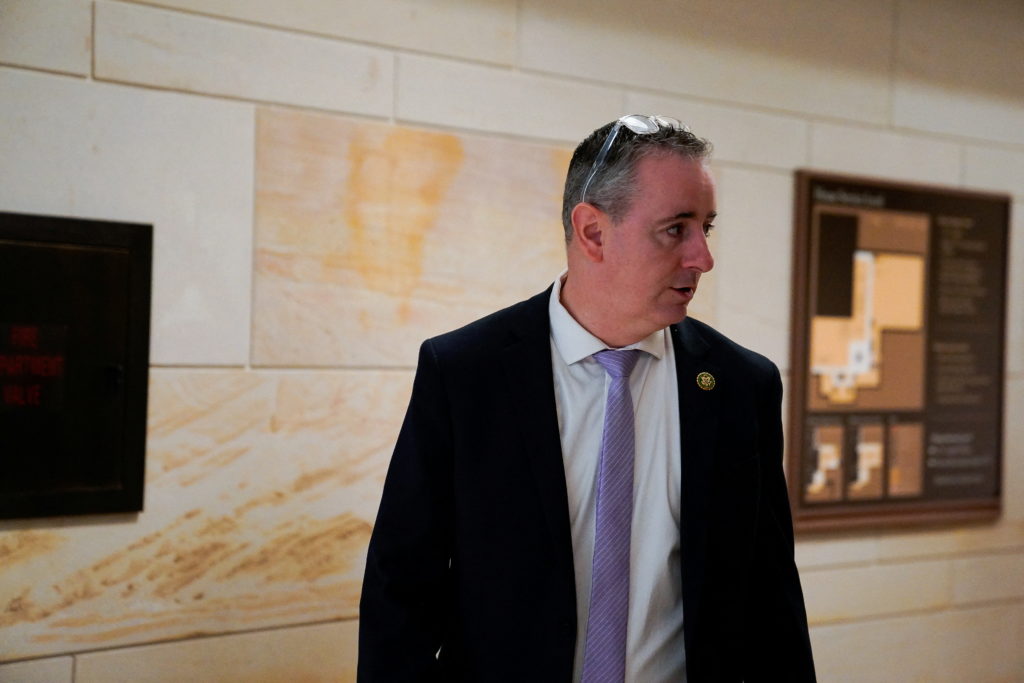
- Rep. Brian Fitzpatrick has consistently opposed President Trump on key legislative matters, including tariffs and military action in Iran.
- Some Republican voters in the district are breaking with their party to support Democratic challenger Bob Harvie due to dissatisfaction with national leadership.
- Fitzpatrick’s historical resilience in this swing district may be challenged by economic pressures and a candidate with deep local ties.
In Pennsylvania’s First Congressional District, the political calculus for five-term Republican Rep. Brian Fitzpatrick is shifting under the weight of national dissatisfaction. While the congressman has made a concerted effort to distinguish himself from President Donald Trump, that strategy faces an uphill battle against broader economic anxieties and voter fatigue. The race has become a bellwether for how much independent voting power can withstand the gravitational pull of presidential approval ratings in a midterm election.
Fitzpatrick’s record shows a pattern of dissent from his party’s leadership. He voted against Trump’s signature tax legislation, opposed new tariffs, and rejected granting the president unilateral authority to wage war against Iran without congressional approval. He also notably skipped the recent Republican midterm convention in Dallas. These actions have positioned him as a moderate voice in Washington, a label he has cultivated for years. However, constituents are increasingly questioning whether legislative independence translates into tangible benefits for their daily lives.
For some voters, the answer is no. Mary Ryan, a registered Republican and medical writer from the Philadelphia suburbs, represents a growing segment of the electorate that is breaking ranks. Ryan has never voted for Trump, citing his chaotic governing style, but she has consistently supported Fitzpatrick in previous cycles. This year, however, she plans to vote for Bob Harvie, the Democratic challenger. Her decision underscores how the president’s grip on Congress and his sagging approval numbers are creating collateral damage for allied lawmakers, even those who maintain a critical distance.
Harvie, a former social studies teacher and twice-elected county commissioner, frames the election in existential terms. He argues that the current political climate has eroded trust in government and deepened societal divisions based on identity and voting history. Harvie emphasizes his deep roots in the district as a key differentiator from previous Democratic opponents. He contends that unlike past challengers who needed to introduce themselves to voters, he is already known within the community, potentially altering the dynamic of a race where Fitzpatrick has historically held a strong advantage.
Fitzpatrick’s electoral history suggests resilience that defies conventional vulnerability metrics. In 2024, he won by thirteen percentage points in a district where President Harris secured less than one point. Similar margins held true in 2022 and 2020, despite Democratic gains in other statewide races. Robert Speel, a political science professor at Penn State Erie, notes that Democrats frequently label Fitzpatrick as vulnerable every two years, only for him to win anyway. This pattern has led some observers to view his reelection chances as robust, regardless of the national headwinds.
Yet, the current economic environment introduces new variables. Soaring fuel prices, exacerbated by the ongoing conflict in Iran, are weighing heavily on voters. While Fitzpatrick argues that he always considers what is best for his constituents when casting votes, critics like Jean Dolan, a Democratic voter from Newtown, remain unconvinced of his independence. Dolan expresses frustration with Trump’s immigration policies and concerns about anti-vaccine sentiment within the administration, viewing Fitzpatrick as insufficiently detached from party leadership despite his personal likability.
Conversely, some voters continue to support Fitzpatrick based on his professional background rather than his political alignments. Jim Rachau, a registered independent photographer from Doylestown, plans to vote for the incumbent again. Rachau acknowledges dissatisfaction with the war and the economy but cites Fitzpatrick’s prior service as an FBI agent and assistant U.S. attorney as evidence of his commitment to public good. This perspective highlights the complex mix of factors driving voter decisions in this mixed district.
Fitzpatrick has also engaged in direct criticism of Trump, such as when the president made disparaging remarks about Pope Leo XIV. In a podcast with Democratic Rep. Tom Suozzi, Fitzpatrick acknowledged the pervasive anger and noise in politics, suggesting that voters are tired of the conflict. Whether this message resonates enough to overcome the practical concerns of inflation and geopolitical instability remains uncertain. The outcome in this district could signal broader trends for Republicans holding narrow majorities in the House.
As the election approaches, the tension between local loyalty and national discontent defines the race. Fitzpatrick’s team has not provided extensive commentary on these challenges, with representatives declining requests for a full interview. Instead, the congressman continues to campaign on his record of service and independence. The coming weeks will reveal whether his historical durability can withstand the combined pressures of a polarized electorate and an economy strained by war and policy disputes.
The stakes extend beyond this single seat. If Fitzpatrick loses, it could indicate that distancing oneself from Trump is no longer a sufficient shield against midterm backlash. Conversely, a victory would suggest that local incumbency and personal reputation can still triumph over national trends. For voters like Ryan and Rachau, the decision reflects a nuanced assessment of leadership, policy, and trust. The result will offer critical insights into the future of Republican strategy in swing districts.
Sources behind this briefing
Go to the original reporting
- PBS NewsHour↗This swing state Republican is distancing himself from Trump, but it may not save him in the midterms

