The short version
- Gianni Infantino has officially confirmed his intention to run for re-election as FIFA president in March 2027, seeking a final term that would extend his tenure through 2031.
- The announcement follows intense backlash against a scrapped plan to sell equity stakes in World Cup tournaments to private investors, which triggered threats of boycotts from UEFA and withdrawal of support from several national associations.
- While Infantino retains backing from African and South American confederations as well as Saudi Arabia, former ally Victor Montagliani is emerging as a likely challenger amid growing legal and political tensions.
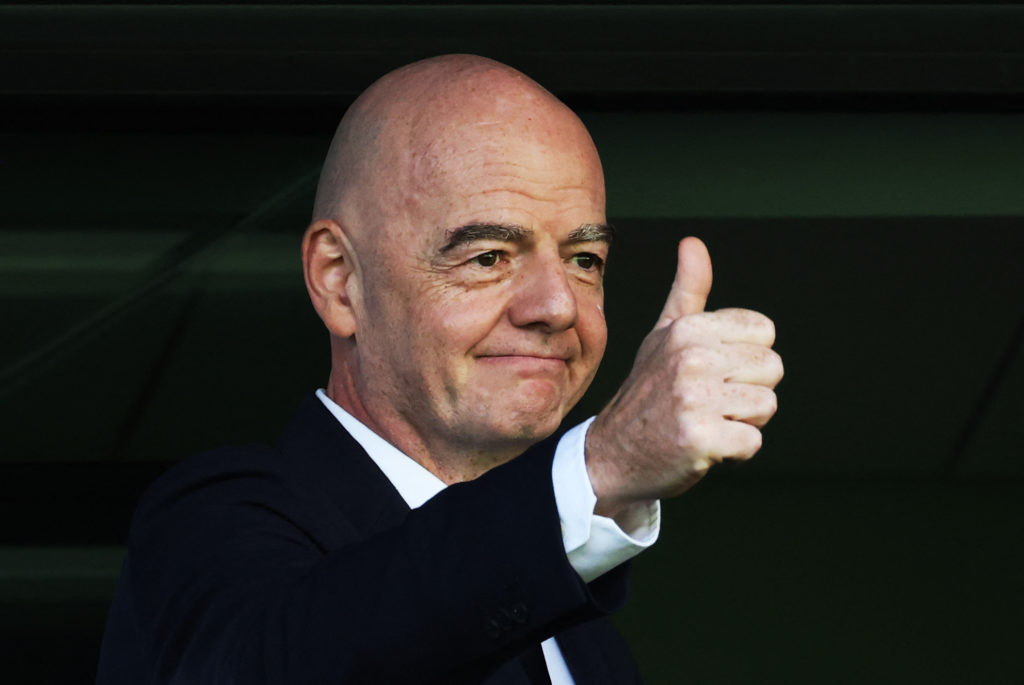
FIFA has formally announced that President Gianni Infantino will seek re-election in March 2027, defying mounting pressure to step down following the collapse of a controversial commercial initiative. The governing body stated on Sunday that nothing has changed regarding his candidacy, confirming he will pursue a fourth and final term in office. If successful, the 56-year-old Swiss national would continue to lead world football until 2031, maintaining control over the organization he has headed since replacing Sepp Blatter in 2016.
The decision comes against a backdrop of severe institutional strain. Infantino’s plan to sell stakes in FIFA competitions, including the World Cup, to private investment firms sparked immediate and widespread outrage across the global football community. The proposal was abandoned after facing seismic backlash, but the damage to his standing appears lasting. UEFA, the European governing body, has led the charge against him, declaring a loss of confidence in his leadership and previously threatening to boycott FIFA tournaments, including the World Cup itself.
Support for Infantino’s re-election has fractured significantly since the commercial plan was unveiled. As recently as mid-July, he was considered a virtual certainty to win another term, with all but a handful of member associations endorsing him. However, major national bodies, including the Football Associations of England, Scotland, Wales, and the Republic of Ireland, have publicly withdrawn their support. This shift marks a dramatic reversal from the unified front that characterized his previous election cycles.
Despite the erosion of support in Europe, Infantino still commands significant backing in other regions. The Confederation of African Football (CAF) and South America’s CONMEBOL remain supportive, as does Saudi Arabia, which is set to host the 2034 men’s World Cup. These alliances provide a crucial base of votes within the 211-member federation structure. To win re-election, Infantino requires a simple majority, meaning he needs at least 106 votes from member associations.
The political landscape is further complicated by emerging challenges from within FIFA’s own leadership ranks. Victor Montagliani, president of CONCACAF and a FIFA vice-president, is widely viewed as the most likely contender to oppose Infantino. Although Montagliani was long regarded as a close ally, he has distanced himself from the scrapped investment plan. Reports suggest he views FIFA’s purpose differently than his Swiss counterpart, positioning him as a serious alternative for members disillusioned with Infantino’s direction.
Tensions have escalated beyond political maneuvering into legal confrontations. UEFA recently filed legal papers in the United States seeking disclosure of evidence and documents related to the disputed commercial plan. The European body warned it could lodge a criminal complaint in Switzerland, signaling a willingness to pursue aggressive legal remedies. In response, FIFA accused UEFA of conducting a smear campaign against its leadership, highlighting the deepening animosity between the two organizations.
Infantino himself has remained largely silent on the controversy during recent public appearances. When asked about his future at the opening of the Under-20 Women’s World Cup in Poland on Saturday, he declined to comment, stating that there would be a right time and place to address such matters but not today. FIFA issued an apology for errors made regarding the commercial subsidiary plan, committing to ensure similar mistakes do not recur, though this gesture has not eased the pressure on his position.
The path to March 2027 is now defined by uncertainty and division. UEFA has abandoned efforts to force a vote of no confidence, recognizing that such a motion would require an unrealistic three-quarters majority of members following recent statutory changes. Instead, the focus has shifted to finding a viable candidate to challenge Infantino. Nominations for the presidential contest must be submitted by November 18, setting a tight deadline for potential challengers to organize their campaigns and secure the necessary endorsements.
The outcome of this election will likely determine the future trajectory of global football governance. The rift between European powers and other confederations underscores broader disagreements over how FIFA should manage its commercial assets and maintain institutional integrity. As the nomination deadline approaches, the question remains whether Infantino can consolidate enough support to overcome the opposition led by UEFA and its allies, or if the controversy will finally force a change at the helm of world soccer.
Sources behind this briefing
Go to the original reporting
- PBS NewsHour↗Infantino to stand for re-election as FIFA president despite failed World Cup sell-off plan
- The Guardian US↗Embattled Fifa president Infantino declares intention to stand for re-election
- BBC News↗Fifa president Infantino will stand for re-election

