The short version
- Fifa issued a strong defense of President Gianni Infantino, characterizing recent criticism as an unsubstantiated effort to undermine the organization's democratic mandate.
- European football authorities maintain their opposition to Infantino’s aborted commercial proposal and continue to threaten boycotts until formal assurances are received.
- Support for Infantino remains solid in Africa, South America, and parts of North America, creating a sharp geographic divide within the global federation.
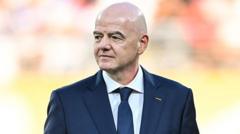
Fifa has launched a vigorous defense of its president, Gianni Infantino, condemning what it describes as a coordinated campaign to destabilize the organization. The governing body released a statement asserting that recent criticisms rely on unsubstantiated assertions and demonstrably false claims. This response follows intensifying pressure from European football associations and new media reports alleging personal misconduct involving Infantino.
The controversy centers on two distinct fronts: governance disputes over commercial reforms and allegations regarding Infantino’s private life. A recent report claimed that an individual alleged to be Infantino’s lover received a severance payment from Uefa after an affair occurred while the person served as general secretary. Fifa officials have categorically denied these allegations, labeling them untrue and insisting that speculation should not be presented as fact.
Simultaneously, tensions remain high over the aborted Fifa Forward Enterprise proposal. This plan would have established a new company to manage commercial and ticketing rights, with 21 percent of shares sold to a private investment firm. Although Infantino apologized for the proposal during a meeting in Rabat, Morocco, European bodies argue that the underlying issues regarding transparency and governance remain unresolved.
Uefa, the governing body for European football, has stated it has lost confidence in Infantino’s leadership. The organization maintains that its threat to boycott Fifa events remains active until it receives formal assurances that the commercial plan cannot be revived. Norwegian Football Federation president Lise Klaveness recently called for Infantino’s resignation, reflecting a broader sentiment among some European stakeholders who feel their concerns have been dismissed.
Despite the mounting criticism from Europe, Infantino retains significant support from other regions of the world. The Confederation of African Football unanimously backs the president, as does Conmebol, the South American governing body. These organizations argue that any attempt to remove Infantino must follow established democratic processes involving all 211 member associations, rather than through external pressure or allegations.
The Mexican Football Federation also broke ranks with its regional counterpart, Concacaf, to publicly support Infantino. This move highlights the fragmented nature of opposition to the current leadership. While European nations drive much of the criticism, other confederations view the attacks as illegitimate efforts to bypass democratic mandates and undermine institutional stability.
Fifa’s statement emphasized that change inevitably challenges established interests but argued that disagreement does not justify undermining the president’s mandate. The organization warned that it would challenge inaccurate or misleading reporting directly, framing the current situation as a battle between legitimate scrutiny and manufactured distractions designed to halt progress.
The standoff underscores deep divisions within global football governance. While European powers wield significant influence through their financial contributions and organizational weight, they lack the numerical majority needed to force leadership changes without broader international support. The coming weeks will likely see continued diplomatic maneuvering as both sides assess their leverage.
Infantino’s position appears secure for now, bolstered by his electoral mandate and regional alliances. However, the threat of a European boycott poses a substantial risk to Fifa’s commercial viability and operational cohesion. The organization must navigate these competing pressures while addressing concerns about transparency and accountability without conceding to what it views as illegitimate demands.
As the dispute continues, the focus remains on whether diplomatic solutions can be found or if the rift will deepen into a structural crisis. The outcome will have lasting implications for how global sports organizations balance regional interests with centralized governance structures in an era of heightened scrutiny.
Sources behind this briefing
Go to the original reporting
- BBC News↗Fifa criticises campaign to oust president Infantino

