The short version
- Ferguson Marine has invited employees to apply for voluntary redundancy, aiming to reduce its workforce by approximately 70 positions as construction on current vessels nears completion.
- The Scottish government has not yet confirmed previously announced contracts for four new ships, citing ongoing due diligence and regulatory engagement, leaving the yard without secured future work.
- Union leaders have condemned the job cuts as a failure of leadership, while government officials argue the reduction is necessary to modernize operations and ensure long-term viability.
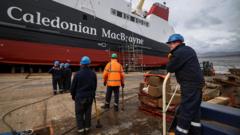
Ferguson Marine, Scotland’s only remaining commercial shipyard, has initiated a significant workforce reduction that could eliminate nearly a quarter of its current staff. The Port Glasgow facility, which operates under state ownership, has invited workers to apply for voluntary redundancy as the construction phase for its latest major projects draws to a close. This move comes at a critical juncture for the yard, which is currently navigating a period without confirmed future orders despite prior government assurances of new work.
The shipyard currently employs 283 individuals, including 34 apprentices. Management anticipates that approximately 70 positions will be removed through this voluntary process. Employees who choose to leave will receive a payment of £10,000 in addition to their statutory redundancy entitlements. The decision reflects the company’s assessment that immediate action is required to maintain financial stability and operational readiness while it awaits clarity on upcoming contracts.
The catalyst for these cuts is the impending completion of two long-delayed CalMac ferries. The first vessel, the MV Glen Sannox, was delivered in November 2024. The second, the MV Glen Rosa, is scheduled for completion by the end of this year and has already been moved to Inchgreen for final fitting out. With these projects nearing their conclusion, the main yard in Port Glasgow faces a gap in workload for the first time in twelve years, creating an urgent need to adjust staffing levels.
Government officials have previously indicated plans to directly award Ferguson Marine contracts for four smaller vessels, including two ferries, a fisheries research ship, and a marine protection vessel. These projects were intended to serve as a bridge to future stability for the yard. However, ministers state that due diligence is still underway, and no formal agreements have been signed. The Scottish government has emphasized that engagement with the Competition and Markets Authority remains a necessary step before any contracts can be finalized.
Stephen Flynn, the Economy, Tourism and Transport Secretary, defended the redundancy scheme as a measure to modernize the shipyard and place it on a more competitive footing. He stated that the leadership team’s actions are essential for securing a viable future for commercial shipbuilding on the Clyde. Flynn also assured that the reduced workforce would not impact the final stages of building the MV Glen Rosa, maintaining that the intention to award new vessels continues despite the delays in confirmation.
In contrast, union representatives have strongly criticized the situation. Louise Gilmour, Scotland secretary of the GMB union, described the move as a betrayal of a blameless workforce. She argued that ministers have failed to deliver on promised contracts while sending work elsewhere, attributing the current crisis to hubris and incompetence within the management of Scotland’s ferry network. Unions contend that skilled shipbuilders are being pushed out due to administrative failures rather than operational necessities.
Graeme Thomson, CEO of Ferguson Marine, acknowledged the difficulty of the situation but stressed the importance of continuity in shipbuilding capability. He noted that taking proactive steps now ensures the yard remains lean and modern, ready to begin work on new fleets as soon as contracts are secured. The company has updated its business plan based on the prospect of new orders, which may unlock £14.2 million in modernization funding announced more than two years ago.
Even if new contracts were awarded immediately, significant time would be required before production could resume. At least one year of design work is necessary before steel cutting can begin for any new vessels. Meanwhile, ground investigation work is proceeding with the goal of installing new equipment and software to improve productivity. The apprentice program remains unaffected by the current restructuring, with recent trainees continuing their education and preparation for entry into the workforce.
Sources behind this briefing
Go to the original reporting
- BBC News↗Scotland's state-owned shipyard to cut a quarter of its workforce

