The short version
- Federal authorities arrested over two dozen lawful permanent residents in California for allegedly voting illegally.
- The Justice Department is suing the state and threatening prosecution for election workers who process ballots from suspected noncitizens.
- California officials reject federal claims as unverified, noting that noncitizen voting remains statistically rare and difficult to prove.
Federal law enforcement agencies conducted a coordinated sweep across California on Monday, resulting in the arrest of more than two dozen foreign nationals. Authorities stated that these individuals, who are lawful permanent residents but not U.S. citizens, illegally registered to vote and cast ballots in American elections. The operation, designated as Operation Protect the Vote, marks a significant intensification of the Trump administration’s efforts to identify and prosecute noncitizen voting ahead of the upcoming midterm elections scheduled for next month.
The arrests are part of a broader federal strategy that has prioritized election integrity issues this year. Prior to Monday’s actions, the Justice Department had already charged approximately 90 individuals with various forms of election misconduct. Of those, 50 were accused of voting while lacking citizenship status. The current sweep adds to these figures, focusing specifically on crimes such as making false statements on naturalization applications and submitting fraudulent voter registration documents. This enforcement action occurs within a political landscape where over 23 million people are registered to vote in California alone.
Despite the aggressive posture of federal authorities, data indicates that noncitizen voting is an exceptionally rare occurrence. Historical records suggest that such instances are difficult to prove and have never been shown to alter the outcome of any election. The United States had more than 227 million registered voters during the 2024 presidential election, making the statistical likelihood of noncitizen ballots affecting results negligible. Nevertheless, the administration has made rooting out these cases a central component of its electoral policy.
The situation in California has evolved into a sharp legal confrontation between state and federal governments. Although the state is not typically viewed as a key battleground for presidential races, it contains several competitive congressional districts that could influence which party controls the U.S. House for the final two years of President Donald Trump’s term. This political significance appears to have driven the federal government’s focus on the region, leading to a lawsuit filed against California last week.
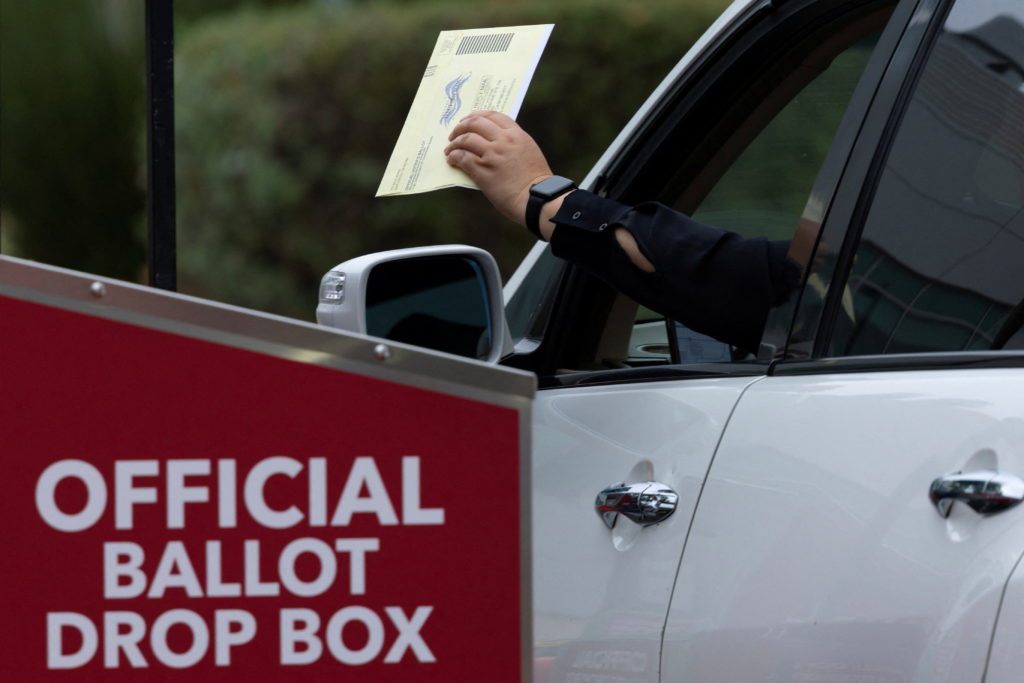
The Justice Department’s legal action seeks to prevent state officials from counting mail ballots sent to individuals identified by federal agencies as likely noncitizens until their immigration status can be verified. The complaint was filed after California failed to meet a 48-hour deadline to review a password-protected thumb drive containing a list of 20,000 names. Federal prosecutors argue these individuals are probable noncitizens who received ballots for the November 3 election. However, California’s Secretary of State has stated that the administration provided no evidence to substantiate these claims.
Tensions escalated further when the Justice Department issued a letter warning state election officials of potential criminal liability. Acting Deputy Attorney General Trent McCotter wrote that anyone knowingly processing or tabulating ballots from noncitizen voters risks becoming an aider and abettor to a federal crime. The letter, addressed to the Los Angeles County Counsel’s office and copied to Secretary of State Shirley Weber and Registrar Dean Logan, served as a formal notice to election workers across the state regarding the legal consequences of facilitating what the feds deem unlawful conduct.
In response to these threats, local officials have maintained that their primary focus is ensuring a fair and secure election with only 18 days remaining until Election Day. Dean Logan criticized the Justice Department for litigating unverified assertions about voter eligibility rather than addressing concrete evidence of fraud. He emphasized that such disputes should be resolved in court rather than through intimidation tactics aimed at election administrators who are working to uphold democratic processes.
The federal government has demanded detailed voter information from states, including dates of birth, addresses, driver’s license numbers, and partial Social Security numbers, to support its investigations. This data collection effort underscores the administration’s commitment to enforcing citizenship requirements for voting. However, the lack of substantial evidence linking noncitizen voting to election outcomes continues to fuel debate over the necessity and proportionality of these enforcement measures.
As the midterm elections approach, the conflict between federal prosecutors and state election officials highlights deeper disagreements about voter eligibility and administrative authority. While the Justice Department views noncitizen voting as a serious threat requiring immediate intervention, California officials argue that the current actions are politically motivated and lack factual basis. The outcome of these legal battles may set important precedents for how future elections are administered and monitored.
Observers note that the rarity of noncitizen voting makes it challenging to justify large-scale operations like Operation Protect the Vote. Critics argue that resources might be better spent addressing more common forms of election irregularities or improving voter education. Meanwhile, supporters of the federal crackdown contend that even isolated instances of illegal voting undermine public trust in democratic institutions and must be addressed decisively.
Sources behind this briefing
Go to the original reporting
- PBS NewsHour↗Justice Department charges more than 2 dozen foreign nationals in California sweep targeting noncitizen voters