The short version
- A federal safety board report indicates an inspection contractor flagged a chemical tank as unsafe ten months prior to the fatal rupture at a Washington state paper mill.
- The facility operator did not perform recommended repairs or remove the tank from service despite repeated findings that wall thickness fell below minimum safety standards.
- The catastrophic release of caustic liquid killed eleven people and injured others, prompting calls for accountability from families, labor unions, and government officials.
A federal investigation has revealed that a chemical storage tank at a paper mill in Longview, Washington, was identified as unsafe for operation ten months before it catastrophically failed, resulting in the deaths of eleven workers. The U.S. Chemical Safety Board released an update on Friday detailing how inspection contractors had repeatedly warned facility operators about critical structural deficiencies. Despite these clear warnings, the company did not implement recommended repairs or take the vessel out of service, allowing a dangerous situation to persist until the tank ruptured in May.
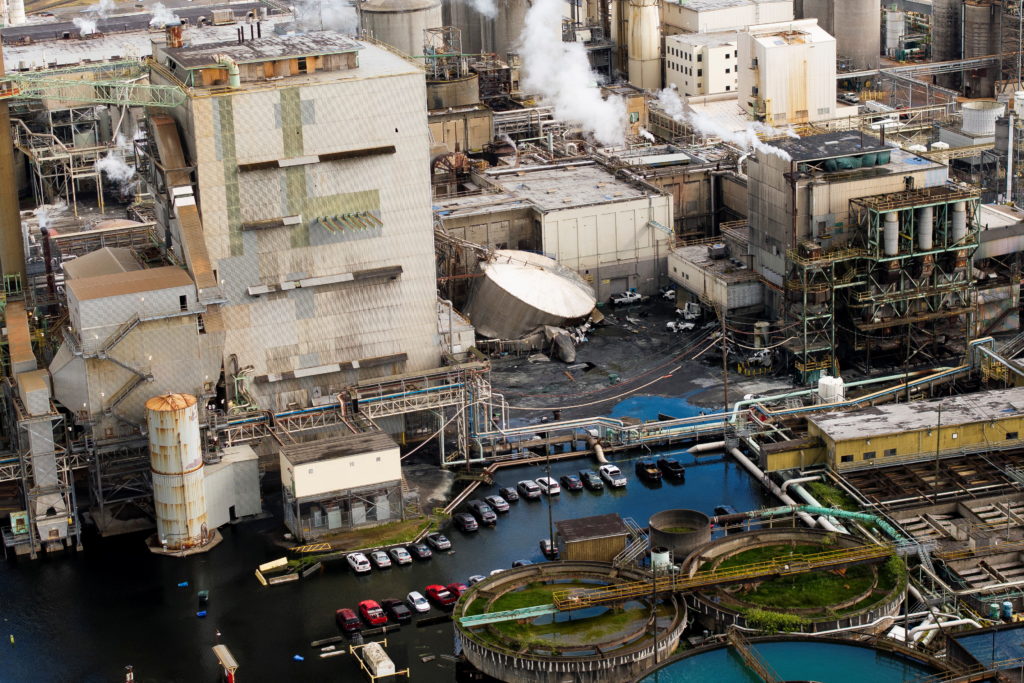
The failure occurred shortly after 7 a.m., just as employees were arriving for their shifts. The rupture expelled approximately 900,000 gallons of white liquor, a highly caustic liquid used in the papermaking process to break down wood fibers. This substance is known to cause severe chemical burns upon contact. The force of the release blew out building walls, flooded the facility courtyard, crushed vehicles, and inundated lower floors where workers were gathering for morning meetings. In addition to the eleven fatalities, several other employees and one firefighter sustained injuries during the incident.
According to the board’s report, an external inspection conducted in July 2025 by Applied Technical Services LLC identified significant thinning in the lower regions of the tank. The inspector noted that these areas had fallen below the minimum safe thickness required to contain the pressure of the liquid and support the structure’s weight. The assessment was marked with a Priority 1 rating, indicating the tank was not fit for continued service unless corrected. The report highlighted a high likelihood and consequence of failure, citing critical code or standard deficiencies.
The inspection recommendations were explicit. The contractor advised that an internal inspection should be performed to determine the extent of necessary repairs, suggesting that it was likely the entire shell course would need replacement. Despite this urgent guidance, Nippon Dynawave Packaging Company did not conduct any internal inspections or shell repairs between the July 2025 assessment and the May 2026 failure. The board emphasized that the company failed to derate the tank for reduced service or remove it from operation entirely.
Subsequent external inspections in October 2025 and February 2026 reinforced these concerns. Both evaluations identified that large portions of the tank remained thinner than the calculated minimum safe wall thickness. The federal agency noted that despite these repeated findings, no corrective actions were taken to address the structural integrity issues. The board’s chairperson, Steve Owens, expressed deep concern that the tank was not promptly removed from service or properly repaired after the clear findings in the initial inspection report.
The sequence of events leading up to the rupture involved operational changes at the facility. Shortly before 2 a.m. on the day of the disaster, a vessel known as a digestor was taken out of service for repairs. This change stopped the flow of white liquor from the storage tank into the digestor. However, more white liquor continued to flow into the tank, causing it to approach full capacity around 6:20 a.m. The tank failed less than an hour later, unable to withstand the pressure and structural stress.
Reactions to the report have been swift and critical. A lawyer representing the families of two brothers killed in the blast described the findings as alarming, stating that when safety inspections do not lead to action, danger becomes a devastating reality. The Association of Western Pulp and Paper Workers called the update deeply troubling, raising urgent questions about how technical findings were communicated and evaluated by company leadership. They demanded a complete accounting of the decision-making process regarding the tank’s continued operation.
Nippon Dynawave Packaging Company declined to comment on specific findings while the investigation remains ongoing. A spokesperson stated that the company’s focus remains on supporting affected families and employees and taking necessary steps toward fully reopening the Longview facility. The company affirmed its commitment to cooperating fully with the board. Meanwhile, Democratic Senator Patty Murray emphasized that every worker has the right to return home safely, underscoring the community’s demand for answers and accountability in the wake of one of the deadliest workplace disasters in recent U.S. history.
The investigation is still ongoing, with the federal agency working to determine the precise cause of the failure. The board continues to analyze documents and evidence to understand why critical safety recommendations were ignored. As the inquiry progresses, attention remains on how regulatory oversight and corporate decision-making intersected to allow a known hazard to persist. The findings underscore the vital importance of adhering to safety inspections and acting promptly on warnings to prevent future tragedies in industrial settings.
The incident has sparked broader discussions about workplace safety standards in the pulp and paper industry. Stakeholders are examining how technical data is translated into operational decisions and whether adequate safeguards exist to ensure compliance with safety recommendations. The human cost of this disaster, measured in lives lost and families devastated, highlights the severe consequences of neglecting structural integrity warnings. As the legal and investigative processes continue, the focus remains on ensuring that those responsible are held accountable and that systemic changes prevent similar failures.
Sources behind this briefing
Go to the original reporting
- PBS NewsHour↗Washington chemical tank was called unfit for service before deadly failure, investigators find

