The short version
- The US government is investigating whether Tesla’s new driverless Cybercab meets federal safety requirements after the company began public deployments in Texas without seeking a regulatory exemption.
- While competitors like Amazon’s Zoox have obtained exemptions to operate vehicles lacking traditional controls, Tesla asserts its designs comply with existing laws, prompting a formal audit of its internal compliance processes.
- The investigation highlights a broader regulatory tension as federal agencies update standards for autonomous driving while enforcing older rules that mandate components like steering wheels and brake pedals.
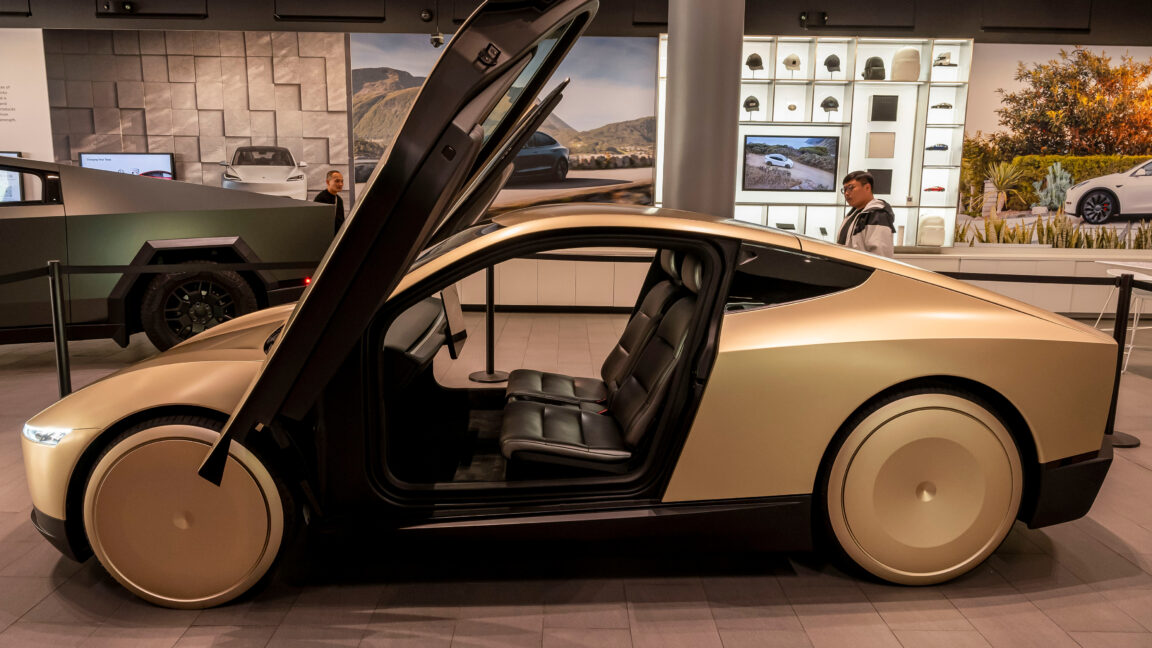
The United States federal government has initiated an investigation into Tesla’s newly deployed Cybercab, questioning whether the vehicle adheres to established safety regulations. This regulatory scrutiny emerged shortly after the electric automaker began offering public rides in Austin, Texas, marking a significant expansion of its driverless network. The probe focuses on the company’s assertion that its unique two-seater design, which lacks a steering wheel and brake pedals, satisfies current federal vehicle standards without requiring special permission.
The National Highway Traffic Safety Administration (NHTSA) has opened what it terms an Audit Query to examine the data and internal processes Tesla used to determine compliance. This action represents a direct challenge to the company’s strategy of bypassing the exemption process that other autonomous vehicle manufacturers have utilized. While NHTSA Administrator Jonathan Morrison stated that the agency supports the safe development of automated vehicles, he emphasized the necessity of ensuring all laws are followed. The investigation serves as a mechanism for regulators to verify whether Tesla’s self-assessment aligns with federal expectations.
The regulatory landscape for driverless cars is currently in flux. NHTSA is actively working to update eight specific vehicle standards to accommodate autonomous technology, aiming to remove requirements for components that are unnecessary for vehicles without human drivers. These updates include rules mandating brake pedals, windshield wipers, and rearview mirrors. However, until these new regulations are finalized, the existing, decades-old standards remain legally binding. This gap between outdated laws and modern technology has created a complex environment for automakers seeking to deploy innovative designs.
Competitors in the autonomous vehicle space have navigated this regulatory hurdle by applying for exemptions from federal rules before launching public services. Amazon’s subsidiary, Zoox, recently secured the first such exemption, allowing it to operate up to 2,500 vehicles without traditional controls this year. By following this established pathway, Zoox and similar companies have acknowledged the current legal framework while pushing for operational flexibility. Tesla’s decision to forego this process stands in stark contrast to industry norms, suggesting a belief that its vehicles do not fall under the categories requiring exemption.
Legal experts view the NHTSA’s move as a significant signal of frustration with Tesla’s approach. Ann Carlson, a former acting administrator at NHTSA and current law professor, described the investigation as an indication that the agency is deeply dissatisfied with the company’s disregard for established procedures. She noted that the Zoox case set a clear precedent for how driverless vehicle developers should engage with regulators. By ignoring this pathway, Tesla has effectively challenged the regulatory authority’s expectations, prompting a formal review of its compliance methods.
The consequences of such federal investigations can be severe for automakers. NHTSA possesses the authority to mandate changes to vehicle designs or internal processes and can pursue enforcement actions that include substantial civil penalties. In 2023, Volvo Group North America paid $130 million in fines following an investigation into its recall procedures, along with agreeing to three years of third-party oversight. While Tesla’s situation differs in nature, the potential for similar financial and operational repercussions underscores the seriousness of the current audit.
The Cybercab represents a pivotal moment in Tesla’s corporate identity and future strategy. CEO Elon Musk has repeatedly stated that the company should be viewed primarily as a robotics and autonomous vehicle enterprise rather than a traditional automaker. Currently, state databases indicate that 45 Cybercabs are part of Tesla’s fleet in Texas, but the company aims to scale production to millions of units annually. This ambitious expansion plan places immense pressure on regulatory bodies to ensure that rapid deployment does not compromise public safety.
As the investigation proceeds, the outcome could set a precedent for how future autonomous vehicles are regulated. If NHTSA finds that Tesla’s compliance determinations were flawed, it may require the company to seek exemptions or modify its vehicle designs. Conversely, if the agency accepts Tesla’s interpretation of existing standards, it could accelerate the deployment of unconventional autonomous vehicles across the country. The resolution of this dispute will likely influence how other tech companies approach regulatory compliance in the emerging era of driverless transportation.
Tesla has not yet provided a detailed response to requests for comment regarding the investigation. The lack of immediate clarification from the company leaves many questions unanswered about its internal reasoning and future plans. Meanwhile, the NHTSA continues to balance its support for innovation with its mandate to enforce safety laws. This tension between technological advancement and regulatory oversight remains a central theme in the ongoing evolution of autonomous vehicle policy in the United States.
Sources behind this briefing
Go to the original reporting
- Ars Technica↗Tesla’s Cybercab has been deployed, and it’s already under investigation
