The short version
- The Department of Justice intends to deploy more than 1,000 federal monitors to all fifty states for the upcoming midterm elections, significantly increasing the presence seen in previous cycles.
- Election officials and legal experts emphasize that state governments retain constitutional authority over election administration, limiting the president's ability to alter rules or halt voting processes through executive action.
- Investigations into claims of widespread voter fraud have found little evidence of irregularities, with expert reviews debunking statistical models used by groups alleging manipulation in recent elections.
As the midterm election approaches, a significant shift in federal involvement is underway. The Department of Justice has announced plans to dispatch more than 1,000 election monitors to all fifty states on Election Day. This deployment represents a substantial increase from the previous midterm cycle, where fewer than half that number of observers were sent. The move comes as state officials finalize preparations, including the implementation of new congressional maps and voting regulations, while simultaneously addressing heightened security concerns.
The expansion of federal monitoring occurs against a backdrop of persistent claims regarding election integrity. President Donald Trump has continued to assert that the electoral system is vulnerable to widespread fraud, repeating allegations that were previously unsubstantiated. These assertions have driven administrative actions aimed at scrutinizing voter rolls and expanding the role of the executive branch in election oversight. However, legal experts note that such efforts face significant constitutional constraints.
Under the U.S. Constitution, the authority to determine the time, place, and manner of elections rests primarily with state governments. While Congress holds legislative power over federal elections, no major new laws have been passed recently to alter this framework. Consequently, the president lacks express legal authority to dictate how states run their elections or to declare a national emergency that would suspend voting processes. Election officials across the country have indicated they will proceed with administration regardless of executive pressure.
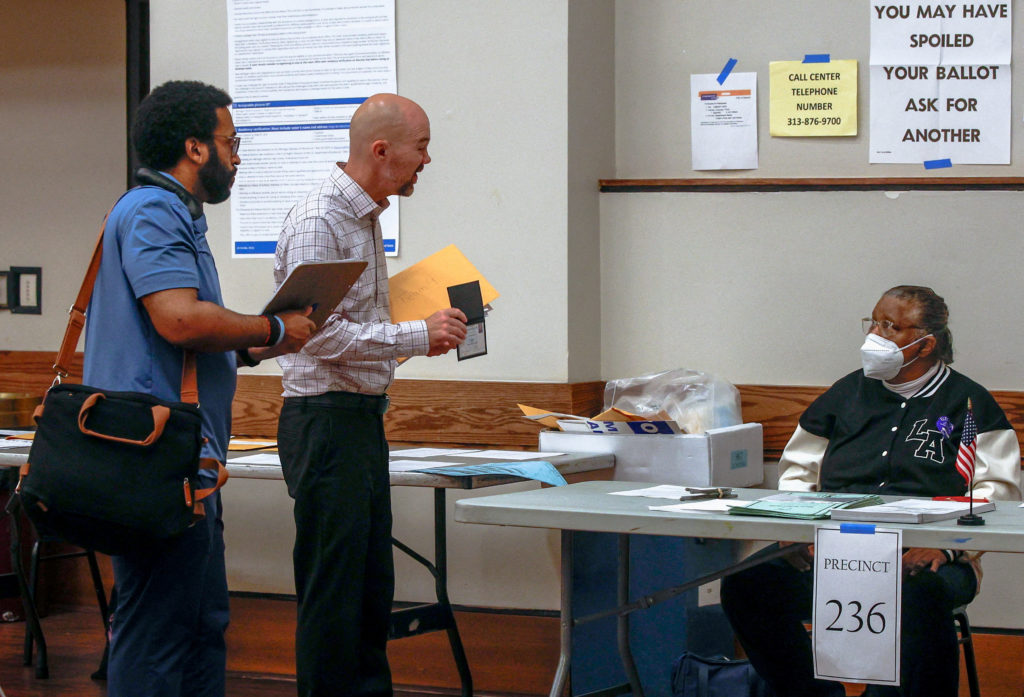
The practical impact of the federal monitors is expected to be limited. Their role at polling places is largely observational, and they do not possess the power to intervene in ballot counting or alter local procedures. This distinction is crucial as states work to fortify their own security measures. In locations like Durham County, North Carolina, officials have secured ballot storage facilities and increased physical protections for staff, reflecting a focus on internal safeguards rather than reliance on federal intervention.
Concerns about noncitizen voting have been a focal point of the administration's scrutiny. More than 100 subpoenas have been issued to over a dozen states requesting voter data in an effort to identify alleged illegal voting. Despite these aggressive measures, experts maintain that noncitizen voting is vanishingly rare. The high number of arrests resulting from these crackdowns has been cited by analysts not as evidence of a systemic problem, but rather as confirmation of how uncommon such violations actually are.
Skepticism toward claims of election manipulation has been reinforced by independent investigations. A nonprofit newsroom spent over a year examining allegations made by the Election Truth Alliance, which promoted statistical analyses suggesting vote tampering in Pennsylvania during the 2024 election. After consulting with nearly a dozen experts and subjecting the group's methods to peer review, investigators found that the statistical model used would flag fraud even in datasets intentionally constructed without any irregularities.
Despite the lack of empirical support for these claims, groups promoting such narratives have continued to raise significant funds. The Election Truth Alliance reportedly secured more than $400,000 in a single year based on analyses that did not withstand expert scrutiny. This disconnect between financial success and factual accuracy highlights the challenges election officials face in maintaining public trust amidst conflicting information.
Election administrators emphasize that the voting process is transparent and subject to multiple layers of verification. In areas where serious allegations have been made, audits, paper ballots, and human observers have consistently confirmed the accuracy of results. Officials argue that while scrutiny is necessary, it must be grounded in evidence rather than speculation. The system's resilience relies on these established checks and balances.
The current environment is described by experts as unprecedented due to the combination of executive pressure and traditional state-level administration. While the federal government increases its observational presence, the core mechanics of voting remain under state control. As Election Day nears, the focus remains on ensuring that logistical preparations are complete and that any claims of irregularities are evaluated through established legal and procedural channels.
Looking ahead, the interaction between federal monitors and state officials will be closely watched. The limited scope of the monitors' authority suggests that significant disruptions are unlikely unless local procedures are already compromised. For voters, the primary concern remains access and confidence in the count. Officials continue to reassure the public that the infrastructure is designed to withstand both logistical challenges and political pressure.
Sources behind this briefing
Go to the original reporting
- PBS NewsHour↗5 expert takeaways on 2026 midterm election security