The short version
- U.S. District Judge Indira Talwani issued a two-week stay on federal efforts to enforce new mail-in voting regulations.
- The ruling follows a Supreme Court decision that previously allowed the administration to proceed, prompting plaintiffs to refile suits based on newly finalized rules.
- Election officials warn that compliance with the Postal Service's demands would require impossible logistical changes before ballots are mailed.
A federal judge has temporarily blocked the Trump administration from enforcing new regulations governing the delivery of mail-in ballots, halting a directive just days before the first absentee votes are scheduled to be sent for the upcoming midterm elections. U.S. District Court Judge Indira Talwani issued the injunction on Thursday, preventing the government from implementing the order for a period of two weeks. This decision marks the second time the specific directive has been stalled in court, creating a significant legal pause as election deadlines rapidly approach.
The legal maneuvering stems from a recent procedural ruling by the Supreme Court, which declined to address the constitutionality of the president’s executive order targeting mail voting. Instead, the high court’s conservative majority determined that Judge Talwani had acted prematurely in her previous attempts to block the measure. In response to that decision, Democratic attorneys general and voting rights organizations refiled their lawsuits. They argued that the administration had now issued a formal rule detailing how the U.S. Postal Service would handle state mail ballots, thereby providing a concrete basis for judicial review.
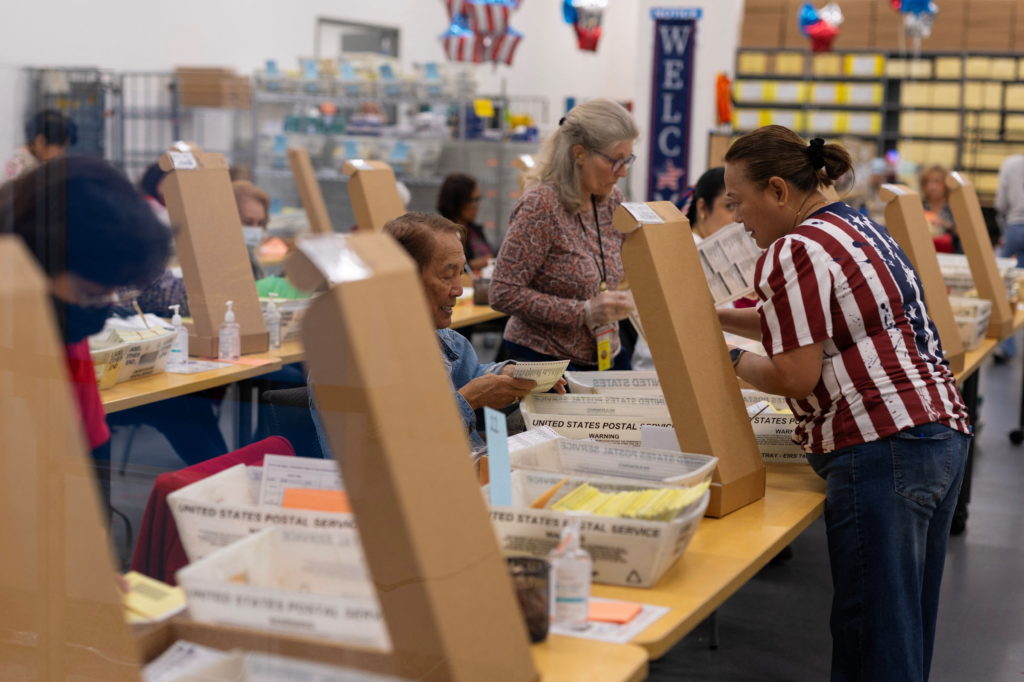
The new regulations impose strict conditions on states wishing to have their mail ballots delivered by the federal postal system. Under the proposed rules, states must provide the Postal Service with specific lists of voters eligible to receive ballots and format their envelopes according to federal specifications. Election officials across multiple states contend that these requirements are logistically unfeasible given the tight timeline. They argue there is neither the time nor the financial resources to redesign ballots, seek regulatory approval for new designs, order production, update election management systems, or train staff before the midterms.
Judge Talwani’s ruling emphasized the practical impossibility of compliance. She noted that plaintiff states cannot realistically design new mail ballots, secure approvals, manage production, and upload citizen data to a new Postal Service portal all within the remaining weeks before the election. The judge’s decision effectively preserves the current voting procedures for the immediate future, allowing states to continue using their existing systems without fear of federal interference during this critical window.
The conflict highlights a broader constitutional dispute over who holds the authority to regulate elections. Opponents of the executive order argue that the Constitution grants power over election rules to individual states and, in certain instances, to Congress, rather than to the president or the Postal Service. This interpretation led courts to block an earlier executive order issued last year, which sought to impose stricter documentation requirements for voter registration. Legal experts view the current battle as a test of federal versus state jurisdiction in electoral administration.
Political reactions to the injunction have been sharp. New York Attorney General Letitia James, representing one of two dozen Democratic attorneys general involved in the litigation, characterized the federal rule as an unconstitutional attempt to interfere in elections. She stated that the court’s action prevented potential chaos and protected the integrity of the voting process. Conversely, the White House did not immediately respond to requests for comment regarding the latest judicial setback, though the administration is expected to appeal the decision swiftly.
The backdrop to this legal fight includes long-standing political rhetoric surrounding mail-in voting. President Trump has frequently criticized absentee ballots, falsely attributing his 2020 election loss to widespread fraud in that system, despite evidence showing such incidents are exceedingly rare. A 2025 report by the Brookings Institution found that mail voting fraud occurred in only about four cases out of every ten million ballots cast. The president himself has utilized mail-in voting to cast his own ballot, underscoring the disconnect between his public statements and personal practice.
The case is likely to return to higher courts soon. A hearing is scheduled for September 3, and legal analysts anticipate that the administration will appeal Judge Talwani’s latest injunction. The Supreme Court’s earlier procedural decision opened a narrow path for the executive branch to move forward, but the refiled lawsuits present new arguments based on the finalized rules. As the midterms draw nearer, the uncertainty surrounding these regulations poses significant challenges for election administrators who must plan for multiple potential scenarios.
Nearly one-third of American voters cast their ballots by mail, making the outcome of this legal battle highly consequential for voter access. The whipsawing nature of the litigation has created an environment of instability for election officials who are already managing complex logistical operations. While the two-week stay provides temporary relief, it does not resolve the underlying constitutional questions or guarantee that the rules will remain blocked beyond that period. The coming weeks will likely see intensified legal activity as both sides seek to secure their positions before ballots are distributed.
This development underscores the fragility of election administration in the face of shifting federal policies. As states prepare for the midterms, they must navigate not only traditional logistical hurdles but also the threat of sudden regulatory changes. The current injunction offers a brief reprieve, allowing officials to proceed with established plans. However, the possibility of further appeals and conflicting court orders means that the legal landscape remains volatile, with significant implications for how millions of Americans will participate in the upcoming election.
Sources behind this briefing
Go to the original reporting
- PBS NewsHour↗Judge again blocks Trump mail ballot executive order in ruling that's likely to be swiftly appealed

