The short version
- The federal government has proposed a ten-year framework that mandates immediate water cuts of up to forty percent for lower-basin states, aiming to stabilize infrastructure before the current agreement expires in October.
- Upper-basin states continue to reject mandatory reductions, arguing that lower-basin users are primarily responsible for reservoir depletion, leaving the seven-state coalition deadlocked on a permanent solution.
- Experts warn that the proposed measures are insufficient to address the long-term overdraft of the river system, which supplies forty million people and supports vast agricultural and economic interests across the West.
The United States Bureau of Reclamation has formally unveiled a ten-year operational blueprint for the Colorado River, marking a significant shift in federal management of the waterway as the previous governing framework approaches its expiration in October. This new proposal introduces mandatory water reductions for California, Arizona, and Nevada, collectively known as the lower-basin states. Under the terms of the plan, these three states could face annual cuts totaling up to three million acre-feet, representing approximately forty percent of their current supply. The immediate mandate requires a reduction of 1.25 million acre-feet in 2027 and 2028, with provisions for further reductions depending on future hydrological conditions.
The release of this plan follows years of stalled negotiations and missed deadlines among the seven states that share the river’s resources. The federal agency describes the document as a stopgap measure designed to protect critical infrastructure, particularly the dams at Lake Mead and Lake Powell, while providing additional time for state officials to reach a comprehensive agreement. The blueprint establishes broad parameters for operating guidelines that will be reviewed and adjusted every two years, rather than locking in fixed allocations for the entire decade. This flexible approach aims to balance immediate conservation needs with the uncertainty of long-term climate projections.
Despite the federal intervention, deep divisions remain between the upper-basin states—Colorado, New Mexico, Utah, and Wyoming—and their southern counterparts. The upper-basin states have consistently resisted any mandatory cuts to their water shares, maintaining that the lower-basin states are primarily responsible for drawing down reservoir levels through excessive usage. Conversely, the lower-basin states, which have already agreed to substantial reductions, argue that a fair solution requires all seven states to share the burden of conservation. This fundamental disagreement has kept the basin in a state of impasse, with negotiators failing to iron out thorny disputes over allocation and responsibility.
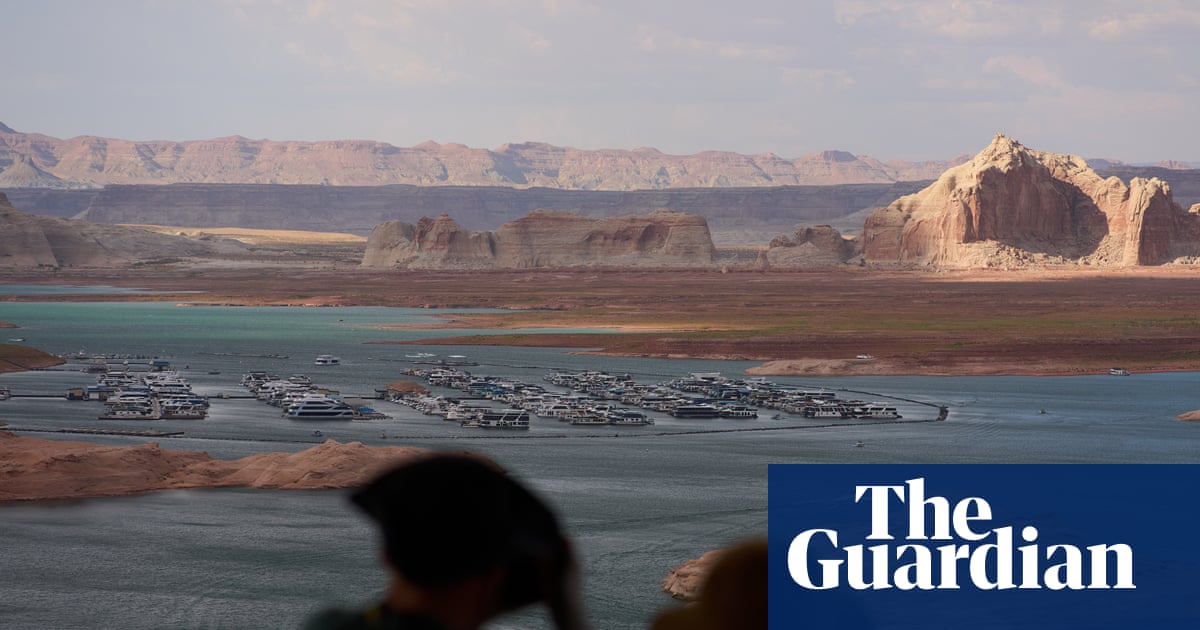
The Colorado River is a vital artery for the American West, stretching 1,450 miles from the Rocky Mountains to Mexico. It provides drinking water to roughly forty million people across seven states and supports dozens of Indigenous tribes. Beyond municipal supply, the river irrigates 5.5 million acres of farmland and fuels an estimated $1.4 trillion in economic activity. The large dams on Lake Mead and Lake Powell also generate hydroelectric power for millions of residents. The ecological significance of the basin is equally profound, providing critical habitat for more than 150 threatened or endangered species and supporting diverse ecosystems of birds, fish, plants, and animals.
The current crisis stems from a century of overdrawn resources, exacerbated by an outdated 1922 compact that allocated more water rights than the system could sustainably provide. This structural deficit has widened as climate change intensifies warm and dry conditions in the region, further straining the gap between demand and supply. Experts emphasize that the proposed cuts, while substantial, may not be enough to pull the entire system back from the brink. More than three million acre-feet of additional reductions are needed to bring the basin into balance, a figure that underscores the severity of the long-term challenge facing water managers.
Federal officials possess limited jurisdiction to force compliance or impose deeper cuts beyond what is outlined in the new plan. However, they retain control over Lake Powell and Lake Mead, allowing them to manage flow rates and influence how much water reaches the lower-basin states. This leverage provides a mechanism for enforcing conservation measures, but it does not resolve the underlying political tensions. Stakeholders across the basin agree that prolonged legal battles would be catastrophic, potentially delaying solutions and worsening the scarcity. The threat of litigation looms large, adding pressure on state leaders to find common ground before the current framework expires.
Water researchers have expressed concern that the federal plan merely delays rather than resolves the crisis. Noah Garrison, a researcher at UCLA’s Institute of the Environment and Sustainability, characterized the proposal as kicking the can down the road, noting that it leaves stakeholders with limited ability to move forward constructively. He warned of extremely serious consequences if the root causes of the overdraft are not addressed, emphasizing that the water supply for forty million people remains at risk. The lack of a steadfast solution means that the region must continue to navigate an uncertain future, with operating guidelines subject to frequent revision based on evolving conditions.
As the deadline approaches, the stakes remain exceptionally high for communities and industries dependent on the river. The proposed framework offers a temporary structure for managing scarcity, but it does not eliminate the need for difficult decisions about long-term sustainability. With little hope of immediate reprieve from dry conditions, the pressure is on state negotiators to bridge the divide between upper and lower basins. Failure to reach a consensus could result in further instability, threatening both the economic vitality and ecological health of the Colorado River basin. The coming months will be critical in determining whether this interim plan can hold or if deeper cuts and broader cooperation become unavoidable.
Sources behind this briefing
Go to the original reporting
- The Guardian US↗The US has a plan to save the Colorado River. Experts say it won’t be enough to stop the crisis

