The short version
- The D.C. Circuit Court of Appeals ordered a halt to aboveground construction of the White House ballroom, ruling that Congress must authorize such structural changes.
- The administration has two weeks to appeal to the Supreme Court before the injunction takes full effect, with President Trump vowing to challenge the decision as a national security threat.
- Underground work designated for national security purposes may proceed, reflecting a split in judicial opinion regarding the scope of executive authority over historic federal property.
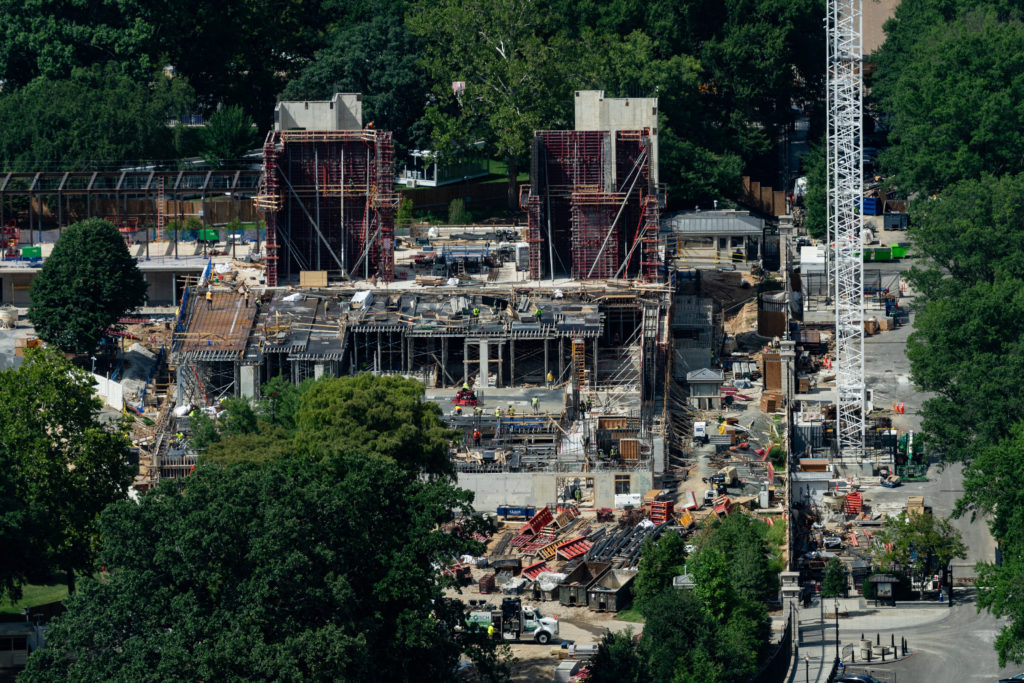
A federal appeals court has ordered the Trump administration to stop construction on the $400 million ballroom project at the White House, ruling that the president lacks the unilateral authority to alter the historic residence without congressional approval. The decision by a three-judge panel of the U.S. Court of Appeals for the District of Columbia Circuit represents a significant legal setback for the administration’s plan to replace the demolished East Wing with a 90,000-square-foot hospitality facility.
The majority opinion, issued in a 2-1 split, emphasized that presidents are temporary occupants rather than owners of the White House. Judges Patricia Millett and Bradley Garcia wrote that determining whether such a massive structure should be built is a matter for Congress, not executive self-help. The court clarified that its ruling does not judge the policy merits of the ballroom but strictly addresses the constitutional requirement for legislative authorization during ongoing litigation.
Despite the injunction against aboveground construction, the court allowed work on underground facilities to continue. These subterranean structures, which include bunkers and other security features, were deemed necessary for national security by a lower court earlier this year. Judge Richard Leon, who issued the initial preliminary injunction in April, permitted the underground components while blocking the visible ballroom expansion.
President Trump reacted swiftly to the appeals court’s decision, describing it as unjust and politically motivated. In a lengthy social media post, he argued that the ruling jeopardizes national security by delaying the construction of protective infrastructure for current and future presidents. He cited the dissenting opinion of Judge Neomi Rao, whom he appointed, to support his claim that the project falls within executive authority.
The administration has requested a two-week stay of the ruling to file an appeal with the U.S. Supreme Court. Trump stated that the military and Secret Service view the delay as a threat to the nation’s safety, framing the ballroom complex as essential for protection rather than mere entertainment. He characterized the facility as a gift to the American people, funded by private donations from corporations and wealthy individuals.
However, questions remain regarding the project’s financing. While Trump claims no public money is being used, the administration previously requested $1 billion for the ballroom from Congress, which was refused in May. Additionally, Democratic lawmakers have raised concerns that $350 million in funds from a tax cuts law may have been redirected to support the construction efforts.
The lawsuit was brought by the National Trust for Historic Preservation, which argued that the demolition of the East Wing and subsequent construction violated laws protecting historic sites. Brent Leggs, the organization’s president, stated that the decision affirms the public’s right to have a voice in preserving cherished historic places. The group maintains that only Congress can legally authorize such significant alterations to the White House.
This ruling coincides with other scrutiny of the administration’s construction plans. A recent assessment by the National Park Service indicated that a proposed 250-foot triumphal arch near the Lincoln Memorial could compromise the historical significance of dozens of nearby sites. The ballroom case highlights broader tensions between executive ambitions for federal property and legal constraints on presidential power.
The next phase of this legal battle will likely unfold at the Supreme Court, where the administration hopes to overturn the appeals court’s injunction. Until then, aboveground construction remains halted, while underground security work continues under the protection of the lower court’s earlier order. The outcome will set a precedent for how much structural control presidents hold over the Executive Residence.
As the litigation proceeds, the physical site shows signs of ongoing activity beneath the surface, even as the visible progress on the ballroom has paused. The dispute underscores the complex interplay between national security arguments, historic preservation laws, and constitutional checks on executive authority in Washington.
Sources behind this briefing
Go to the original reporting
- PBS NewsHour↗Appeals court rules Trump can't build White House ballroom without congressional approval
- The Guardian US↗Appeals court halts construction of Trump’s $400m White House ballroom

