The short version
- The Ninth Circuit Court of Appeals rejected a Justice Department request to set aside ballots from individuals suspected of being non-citizens, citing the logistical impossibility of segregating votes without harming the broader election system.
- The ruling represents a significant setback for federal efforts to intervene in state-run elections, with the majority opinion emphasizing that processed ballots are anonymized and cannot be reliably matched to specific voters.
- A dissenting judge argued that the state's refusal to separate ballots undermines federal interests in election integrity, while advocacy groups prepare to examine the disputed list of names for potential errors.
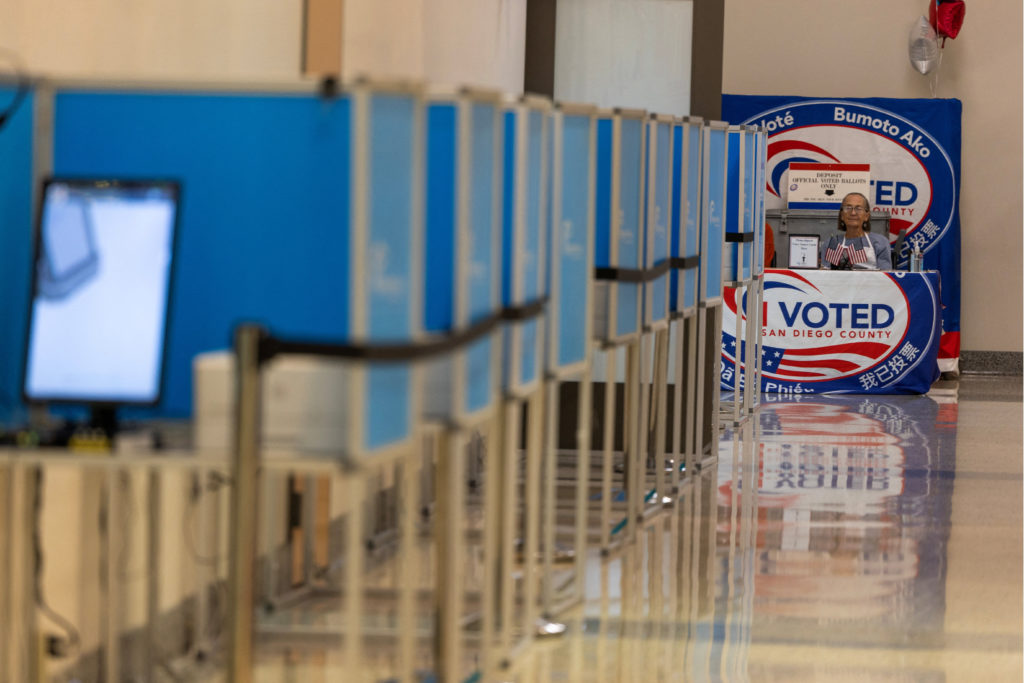
A federal appeals court has denied a request from the Justice Department to compel California officials to set aside ballots cast by individuals suspected of being non-citizens. The decision by a panel of the Ninth Circuit Court of Appeals marks a notable defeat for the Trump administration’s ongoing legal campaign to assert greater federal oversight over state election procedures. The ruling comes just days before the midterm elections, as millions of Californians have already submitted their votes.
The two-to-one majority opinion emphasized the practical impossibility of isolating specific ballots without causing widespread disruption to the voting process. Judges Mark J. Bennett and Gabriel P. Sanchez wrote that there is no feasible method to identify and segregate the votes of particular individuals without potentially catastrophic effects on the entire electoral system. They noted that hundreds of thousands of ballots have already been processed and anonymized, making it technically unworkable to match them back to the voters who submitted them.
The Justice Department had argued that California should withhold these ballots until citizenship could be verified, alleging that approximately 20,000 people on a federal list may not be U.S. citizens. Federal prosecutors contended that counting votes from non-citizens would dilute the voices of lawful voters and violate federal law. However, California officials have consistently maintained that the federal list is highly unreliable and likely contains many eligible citizens who could be wrongly disenfranchised if their votes were discarded.
Earlier in the week, a district court judge had already rejected the same request, warning that the Justice Department’s demands would wreak havoc on voting operations. The appeals court affirmed this lower ruling, finding no clear error in the district judge’s assessment. This sequence of decisions highlights the growing tension between federal authorities seeking to enforce strict voter eligibility standards and state election administrators prioritizing procedural stability and voter access.
Judge Patrick J. Bumatay issued a sharp dissent, arguing that California’s inability or unwillingness to separate the ballots encourages violations of federal law. He contended that logistical challenges should not prevent courts from addressing what he described as illegal voting undermining election integrity. Bumatay suggested that the state’s position dilutes lawful votes and fails to uphold the federal government’s interest in promoting accurate election outcomes.
The legal battle extends beyond California, reflecting a broader federal strategy to scrutinize local elections across multiple states. The Trump administration has issued subpoenas in Alaska regarding spoiler candidates and provided similar lists of alleged non-citizen voters to officials in Washington state. These actions are part of an expansive effort to challenge state-run election processes and assert federal authority over voter roll maintenance.
In a related development, a federal judge in Washington ordered the Trump administration to share the disputed list of names with lawyers for the Coalition for Humane Immigrant Rights and the UCLA Voting Rights Project. This order allows nongovernment organizations to examine the data for the first time, assessing its accuracy and potential impact on eligible voters. The groups had sued the Homeland Security Department earlier in October, arguing that federal data-matching methods risk disenfranchising citizens, particularly naturalized ones.
The plaintiffs in the Washington case cited examples from other states where federal data mistakenly included thousands of citizens. They argued that using such flawed lists to challenge voter rolls disproportionately targets naturalized citizens who are legally entitled to vote. The outcome of these interconnected cases will likely determine whether the Justice Department can continue using sweeping lists of suspected non-citizens to intervene in state elections nationwide.
Lawyers for the Justice Department have indicated they plan to appeal the Ninth Circuit’s decision, which would potentially bring the case before the U.S. Supreme Court. The final resolution of this dispute will have significant implications for election administration and federal-state relations. As the midterm elections approach, the legal uncertainty surrounding voter eligibility and ballot processing remains a central issue in American politics.
The Democratic candidate for California governor, Xavier Becerra, serves as an adviser to the UCLA Voting Rights Project, linking the legal challenge directly to high-profile political figures. The intersection of litigation, election administration, and political strategy underscores the stakes involved in this conflict. With millions of votes already cast, the focus now shifts to how courts will balance federal enforcement priorities with state election integrity.
Sources behind this briefing
Go to the original reporting
- PBS NewsHour↗Appeals court rejects Justice Department request for California to set aside disputed ballots