The short version
- The father of Nathalia Gadelha Filgueiras, the 20-year-old co-pilot who died in a Florida Learjet crash, held a press conference to defend her professional competence and training.
- Audio recordings reveal she calmly reported ice buildup and declared an emergency while descending rapidly, demonstrating composure that impressed aviation experts.
- The National Transportation Safety Board investigation remains in early stages, with no definitive cause established for the structural failure and rapid descent.
Allan Filgueiras, a pilot who taught his daughter to fly, addressed the media on Friday to discuss the final moments of Nathalia Gadelha Filgueiras, the 20-year-old co-pilot who perished in a Learjet crash in Florida. Speaking with visible emotion, he described listening to her final radio transmissions repeatedly, not to assign blame, but to understand the sequence of events that led to the tragedy. He expressed profound pride in how she managed the crisis, noting that her responses revealed a toughness and professionalism that exceeded his expectations.
The family’s public statement aims to counter online criticism questioning whether Filgueiras possessed sufficient experience for such a high-performance aircraft. Her attorney, Stuart Grossman, emphasized that she was at the top of her class in all endeavors and held the necessary certifications for the role. He clarified that there are no immediate plans to file legal action, stating instead that the goal is to preserve her memory and reputation against unfounded doubts regarding her qualifications.
According to the audio recordings, Filgueiras initially reported ice accumulation on the aircraft as it encountered a thunderstorm and severe turbulence. The situation deteriorated rapidly, with the plane dropping 700 feet in vertical oscillations. She then declared an emergency, identifying the aircraft by its tail number and reporting an overspeed condition while descending at 20,000 feet per minute. Aviation safety experts have noted that maintaining communication under such extreme stress is a sign of rigorous training and mental fortitude.
Filgueiras had accumulated more than 1,300 flight hours and completed extensive training to earn her commercial pilot license and specific certification for the Learjet model involved in the crash. Her father recalled taking her flying at age 12 and later instructing her personally. He described her entry into professional aviation as a moment of pure joy, noting that she was thrilled to be compensated for an activity she loved. This background underscores the depth of her preparation before the fatal incident.
John Cox, a retired airline pilot and current CEO of Safety Operating Systems, offered perspective on her career trajectory. He noted that his own professional flying began at age 19, similar to Filgueiras’s timeline. Cox remarked that securing a co-pilot seat in a Learjet 60 requires impressing hiring managers, suggesting that her presence in the cockpit was a testament to her skill rather than an anomaly. He praised her ability to handle the pressures associated with operating such sophisticated machinery.
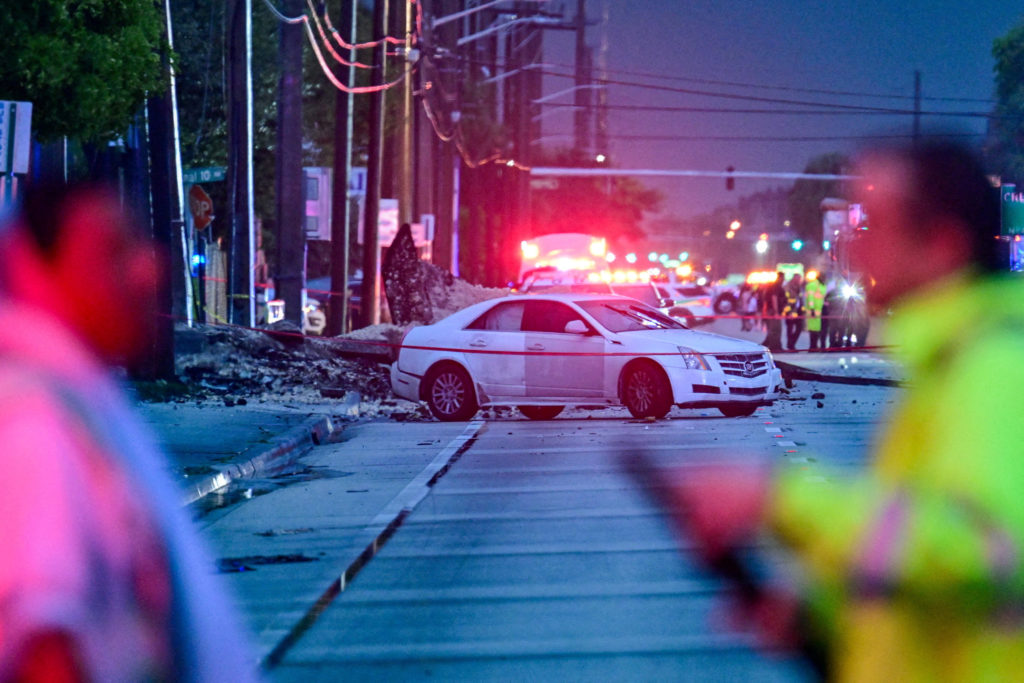
The crash claimed the lives of all nine people aboard the aircraft. Among the victims were technology entrepreneur Adam Robinson, his wife Helen Sharp, their two young children, and the family’s nanny, Ana María Ramírez Cetina. The sudden loss has drawn attention to the safety protocols surrounding private aviation, particularly in adverse weather conditions. The severity of the impact was evident from the debris field, with parts of the jet’s tail discovered more than a mile from the main crash site.
The National Transportation Safety Board is currently conducting an investigation into the cause of the accident. Officials have stated that it is too early to determine why the aircraft accelerated beyond its design limits and suffered structural failure. The rapid descent and subsequent breakup of the plane suggest complex aerodynamic or mechanical issues that require detailed analysis. Until the board releases its preliminary findings, speculation regarding the exact cause remains unconfirmed.
Filgueiras’s father expressed the deep personal toll of the event, describing the feeling as having his heart torn out. He acknowledged the difficulty of moving forward while grappling with the loss of his daughter. Despite the grief, he found solace in her final actions, viewing her composure under duress as heroic. He believes she fought to the end, demonstrating a level of resilience that he associates with elite military personnel, thereby reinforcing the family’s stance on her competence and character.
The incident has sparked broader discussions about pilot training standards and the risks associated with flying in severe weather. While some online commentators questioned the age and experience of the co-pilot, industry professionals have pointed to her credentials as evidence of proper vetting. The ongoing investigation will likely examine weather data, maintenance records, and flight recorder information to piece together the final moments of the flight. Until then, the focus remains on honoring the victims and awaiting official conclusions.
As the community mourns the nine individuals lost in the crash, the narrative surrounding Nathalia Gadelha Filgueiras continues to evolve from one of tragedy to one of professional respect. Her father’s efforts to highlight her qualifications serve as a reminder that young pilots can achieve high levels of expertise through dedicated training. The case underscores the importance of relying on verified data and expert analysis rather than assumptions when evaluating aviation safety incidents.
Sources behind this briefing
Go to the original reporting
- PBS NewsHour↗Dad of 20-year-old co-pilot in Florida jet crash says her final radio calls showed 'she's tough'


