The short version
- Nigel Farage did not attend the Clacton by-election count, citing police warnings of organized disruption that Essex Police have denied issuing.
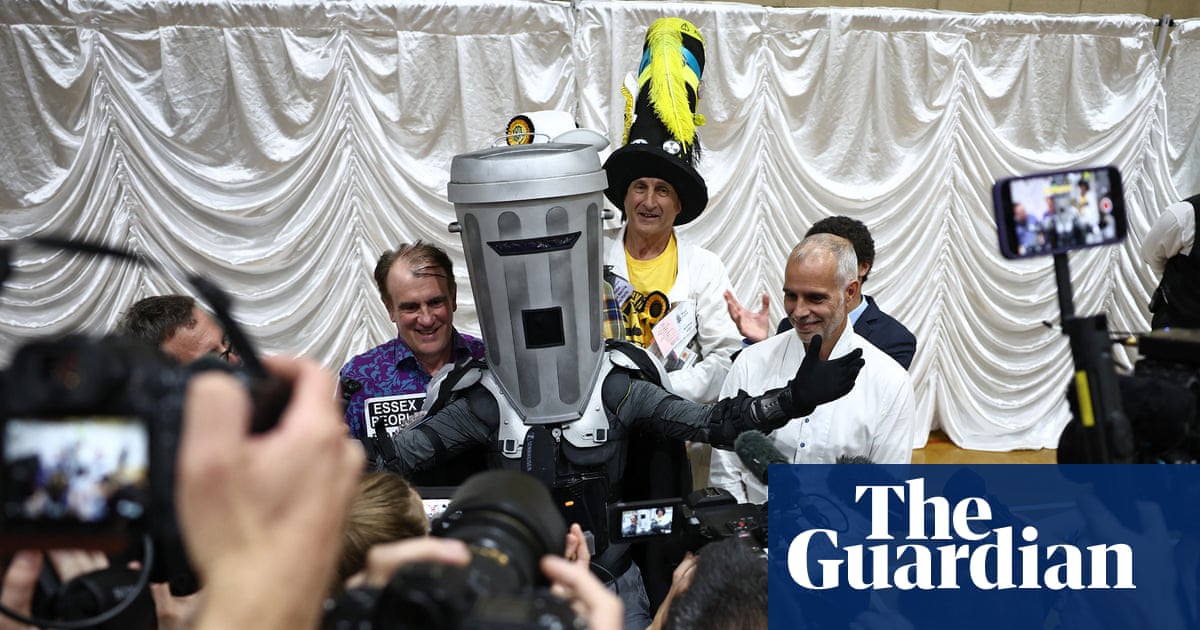
- Parody candidate Count Binface received nearly 27 percent of the vote, finishing second to Farage and drawing attention as a symbol of anti-establishment sentiment.
- The election was triggered by Farage's resignation to challenge parliamentary scrutiny, with major parties refusing to field candidates in response.
Nigel Farage, leader of Reform UK, did not appear at the leisure center in Clacton on England’s south coast to hear the results of the by-election that restored him to Parliament. Instead, he addressed supporters at an airfield event dubbed 'Farage Fest,' marking a rare absence for a winning candidate at a declaration ceremony. The last comparable instance involved Bobby Sands in 1981, who was imprisoned and on hunger strike during his victory. Farage’s decision to skip the official count has drawn scrutiny regarding the reasons behind his absence.
Reform UK officials stated that Essex Police advised Farage against attending due to credible threats of an organized campaign intended to disrupt and degrade the result. A party spokesperson emphasized that safety concerns were the primary driver for the leader’s non-appearance. However, Essex Police publicly contradicted this account, asserting that no such advice had been given to Farage or his team. This discrepancy has fueled debate over whether the absence was a security precaution or a strategic choice.
Lee Anderson, a prominent member of Reform UK, offered an alternative explanation shortly after the results were announced. He suggested that Farage chose to spend time with activists and supporters rather than face what he described as potential humiliation by 'nobodies' on stage. Anderson framed the decision as a matter of principle, arguing that it was appropriate for Farage to celebrate with his base. This narrative shifted focus from safety concerns to political theater.
The by-election in Clacton was triggered when Farage resigned his seat in July, framing the move as a challenge to parliamentary authorities investigating an undeclared £5 million gift from a crypto billionaire and other financial controversies surrounding Reform UK. Major political parties declined to field candidates, viewing the resignation as a stunt designed to test public support without genuine competition. This vacuum allowed independent and parody candidates to compete for votes.
Among those who ran was Count Binface, a parody candidate known for his satirical campaigns. Running as an 'independent space warrior' from the fictional planet Sigma IX, Binface secured 9,455 votes, representing 26.93 percent of the total ballot. Farage received 22,239 votes, or 63.34 percent, winning the seat but facing a notable share of opposition. The turnout was 44 percent, indicating moderate engagement in the contest.
Count Binface’s performance drew attention for its scale compared to previous elections. In a recent by-election in Makerfield, Greater Manchester, he received only 95 votes against then-candidate Andy Burnham, who is now Prime Minister. Binface highlighted this contrast, noting that his vote share against Farage was significantly higher. He interpreted this as evidence that a substantial portion of the constituency preferred a satirical figure over the Reform UK leader.
The election cost approximately £250,000 from public funds, raising questions about the value of the exercise given the lack of major party participation. Critics argued that the by-election served more as a political statement than a genuine democratic contest. Supporters of Farage viewed the result as a mandate against media and establishment criticism, while opponents saw it as an opportunity to highlight divisions within the electorate.
Reactions to the outcome varied widely. Reform UK allies celebrated the victory as a rejection of what they termed a 'witch-hunt' by media and political elites. Anderson accused broadcasters of rudeness and bias, reinforcing the party’s narrative of being under siege. Meanwhile, observers noted the unusual nature of having a parody candidate finish second, suggesting deeper dissatisfaction with traditional political options.
The incident underscores growing tensions between populist movements and institutional authorities in British politics. Farage’s absence from the count, coupled with the denial of police involvement, leaves ambiguity about the true motivations behind his decision. Whether driven by safety concerns or strategic positioning, the event has become a focal point for discussions on political legitimacy and public trust.
Looking ahead, the implications of this by-election remain unclear. Farage’s return to Parliament may intensify scrutiny of Reform UK’s financial practices and leadership. Meanwhile, Count Binface’s success could inspire similar satirical campaigns in future elections, challenging parties to address voter disillusionment. The outcome highlights the complex interplay between political strategy, public sentiment, and institutional response.
Sources behind this briefing
Go to the original reporting
- The Guardian US↗‘Disgraceful’: what one election photo tells us about British politics in 2026

