The short version
- Research indicates that countries heavily dependent on oil revenues face imminent fiscal crises as global demand is expected to peak in the early 2030s.
- Nations such as Nigeria, Algeria, and Angola lack the economic diversification or capital reserves to absorb the shock of rapidly declining income from fossil fuels.
- Analysts argue that failing to manage this transition through coordinated international policy could result in widespread social unrest, migration flows, and regional security conflicts.
A comprehensive study released by the E3G thinktank highlights a growing disconnect between the accelerating global shift away from oil and the preparedness of nations that depend on it for survival. The report warns that without urgent intervention from international bodies and wealthy governments, the decline in fossil fuel revenues could precipitate severe economic upheaval, political instability, and increased migration across several vulnerable regions.
Global demand for crude is projected to plateau within the next decade, with a likely peak occurring in the early 2030s. This trend is being driven by the expansion of renewable energy infrastructure and exacerbated by recent geopolitical disruptions, including supply constraints linked to conflicts involving Iran. As the pool of buyers shrinks, producers will face intense competition, with those possessing lower extraction costs and advanced infrastructure, such as Saudi Arabia and the United Arab Emirates, better positioned to maintain market share than their less developed counterparts.
The fiscal impact on heavily dependent states is expected to be drastic. In seventeen countries worldwide, oil income accounts for more than forty percent of government revenue, while in nations like Iraq and Libya, it represents between seventy and ninety percent of total state funds. The E3G analysis forecasts that Algeria could see an eighty-seven percent drop in these revenues by 2030, with Nigeria facing a decline of over sixty percent. These figures represent not just budget shortfalls but existential threats to the provision of basic public services.
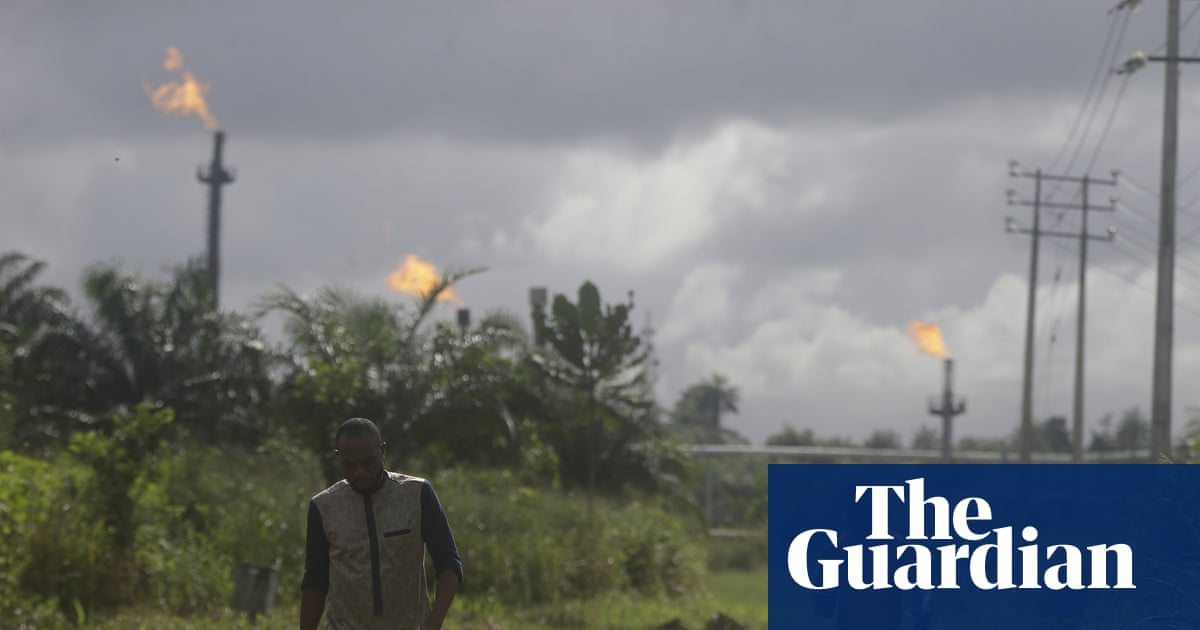
Countries such as Nigeria, Iran, Angola, and Algeria are identified as particularly at risk due to their limited economic diversification and insufficient capital buffers. The report notes that these nations rely on oil proceeds to fund essential government operations and social programs. Without alternative revenue streams, the sudden contraction in income could leave massive gaps in public spending, destabilizing social structures and increasing the burden of existing public debt. Angola and Mexico, for instance, already allocate more than a quarter of their government revenue to servicing debt.
The security implications of these fiscal crises extend beyond national borders. Beth Walker, a co-author of the report, cautioned that producer fragility poses a significant global security risk. She described a scenario where individual national crises manifest as distinct security problems: potential unrest and migration pressures from Algeria toward Europe, a fragile political settlement in Iraq affecting Gulf stability, weakened state capacity in Nigeria impacting the broader African continent, and heightened military competition over infrastructure in Libya.
The situation in Venezuela serves as a cautionary tale for other producer nations. Already grappling with economic collapse and political turmoil, including partial government takeover by external forces and damage from seismic activity, Venezuela illustrates the dangers of failing to adapt to changing energy markets. The report suggests that the challenges facing larger or more strategically located oil-dependent states could be even more significant in scale and consequence.
Experts emphasize that delaying the transition away from fossil fuels is not a viable solution given the worsening climate crisis. Maria Pastukhova, another co-author, argued that a slow but chaotic transition could prove just as destabilizing, if not more so, than a rapid one. The urgency lies in managing the decline rather than preventing it. Developed nations, including those with high-cost production sectors like the North Sea, will also feel the economic shock as market prices adjust to lower demand.
Addressing these risks requires a coordinated international response involving the International Monetary Fund, the World Bank, private financial institutions, and major economies. Current policy tools exist but are often siloed; integrating development assistance, climate policy, and foreign strategy is essential. Major consumer nations must communicate clearly about future demand trajectories to help producers plan for adjustment. Without such cooperation, the transition risks unraveling just as European and British capacities to manage live conflicts are already strained.
The research was compiled over two years through scenario planning exercises involving more than one hundred public servants and experts globally. Bob Ward of the Grantham Research Institute noted that many oil-producing governments have been in denial regarding the pace at which supply and demand must fall to avoid dangerous climate change. The highest-cost producers will likely be the first to experience the shock, underscoring the need for proactive rather than reactive measures.
Ultimately, the report frames the energy transition not merely as an environmental imperative but as a complex geopolitical challenge. The interplay between declining revenues, debt burdens, and social stability creates a volatile mix that could lead to widespread disruption. Proactive management of this decline is presented as critical to preventing a series of cascading crises that could overwhelm global security architectures.
Sources behind this briefing
Go to the original reporting
- The Guardian US↗Global move away from oil could lead to conflict and migration, experts say

