The short version
- Local residents reported hundreds of men converging on Preston-next-Wingham before the Dover blockade, contradicting claims the event was spontaneous.
- Warnings about planned attacks on Muslims were passed to authorities but reportedly received little attention prior to the disruption.
- Lawmakers and anti-fascist groups are demanding answers regarding police inaction despite evidence of coordinated logistics and vehicle staging.
New accounts from residents and local officials challenge the official narrative that the recent blockade of Dover was a spontaneous gathering. Instead, emerging details suggest the disruption was carefully organized, with far-right agitators using a small Kent village as a logistical hub. The discrepancy between police descriptions of the event and witness testimony has sparked fresh scrutiny of how authorities handled intelligence leading up to the incident.
Preston-next-Wingham, a community with just over 920 residents, became a focal point for these activities. On the afternoon before the unrest, hundreds of men arrived in the village, effectively taking control of local spaces. Witnesses described scenes of widespread and illegal parking, with vehicles occupying roads, junctions, a primary school car park, a butcher’s lot, and the local recreation ground. The sheer volume of arrivals transformed the quiet settlement into a staging area for the subsequent action in Dover.
Concerns about potential violence were raised before the blockade occurred. According to reports from the anti-fascist group Hope Not Hate, individuals overheard far-right activists boasting in a local pub that they intended to travel to Dover to attack Muslims. At least one person attempted to pass this information to counter-terrorism police. However, those who received the tipoff reportedly showed little interest, and no immediate action was taken based on these warnings.
Roger Gale, the Member of Parliament for Herne Bay and Sandwich, lives in Preston-next-Wingham and witnessed the unusual buildup firsthand. He noted that the village was unusually full of cars on Friday night, with approximately 50 vehicles remaining in the car park and recreation ground by Saturday morning. This observation prompted him to call emergency services at around 9:30 a.m. Two officers arrived quickly, but Gale expressed frustration that the significance of the vehicle concentration was not fully investigated at the time.
Gale argued that the presence of these vehicles indicates coordination rather than spontaneity. He suggested that participants were likely transported from the village to Dover in Luton vans, a method consistent with organized mobilization. A local councillor had taken photographs of license plates, which Gale believes could help authorities trace vehicle ownership and establish the identities of those involved. He plans to write to the chief constable to demand an explanation for how this information was handled.
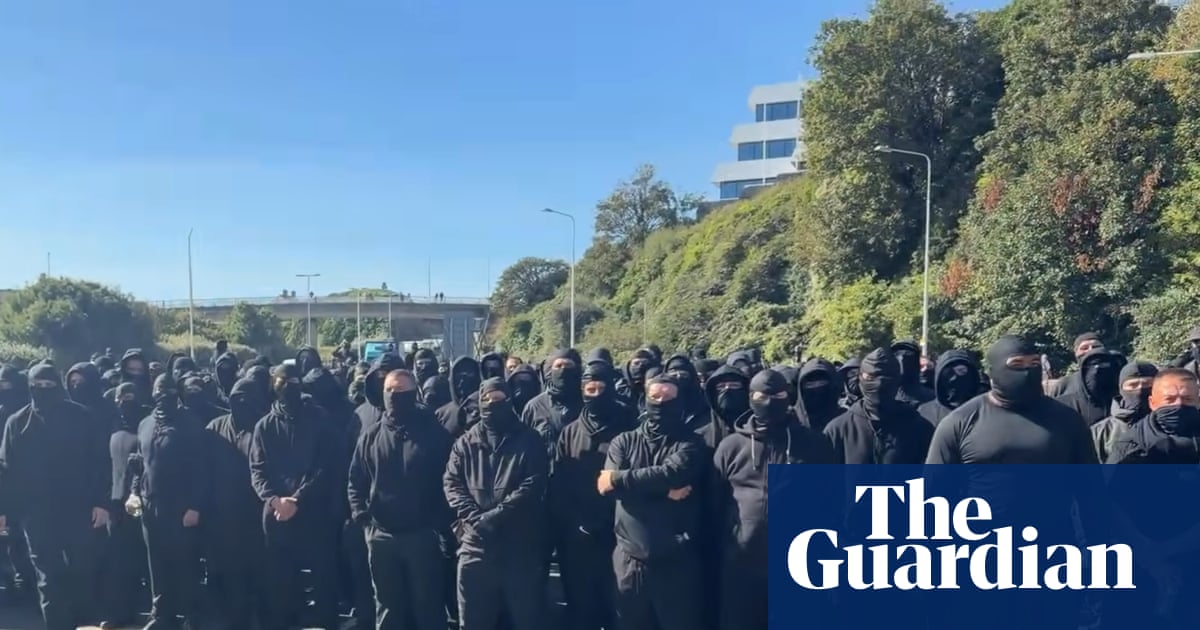
Kent Police have maintained that the unrest involved about 200 people and developed rapidly. The force stated that they treated the protest as spontaneous based on the information available to them at the time, in line with national guidance. No arrests were made during the action, which saw hundreds of black-clad, masked men standing in the middle of roads and blocking access to the port for several hours. This stance has drawn criticism from those who believe prior intelligence should have triggered a different response.
The organization behind the blockade appears to be linked to established far-right networks. Daniel Thomas, a long-term associate of activist Tommy Robinson, is identified as having organized the action through an umbrella grouping called Patriot Platform. Thomas was also linked to a similar blockade in Portsmouth the following day, suggesting a pattern of coordinated disruption across multiple locations. Video footage from Dover showed men disembarking from the back of vehicles, supporting claims that transport logistics were pre-planned.
The incident has raised broader questions about public safety and police preparedness. Residents reported careless parking and a general sense of being overrun by outsiders who did not belong in their community. The failure to act on specific threats regarding violence against Muslims adds a layer of urgency to the calls for accountability. As investigations continue, the contrast between the official description of a spontaneous event and the evidence of prior coordination remains a central point of contention.
Local authorities face pressure to clarify why warnings were dismissed and how such a large-scale mobilization went unchecked until it reached Dover. The use of Preston-next-Wingham as a launchpad highlights the vulnerability of small communities to being used as bases for larger political actions. With no arrests made during the initial disruption, the focus now shifts to whether retrospective investigations can identify those responsible and prevent similar coordinated blockades in the future.
The situation underscores the challenges law enforcement faces in distinguishing between spontaneous public disorder and organized activism. While police cite limited information at the time of the event, residents and lawmakers argue that visible signs of coordination should have prompted earlier intervention. The outcome of this scrutiny may influence how future gatherings are monitored and managed, particularly when intelligence suggests potential for violence or significant disruption to critical infrastructure.
Sources behind this briefing
Go to the original reporting
- The Guardian World↗Police were told night before Dover unrest that far-right agitators had converged on village

