The short version
- Everton executives describe missing European qualification last season as a failure, contradicting manager David Moyes' view that stability was the primary goal.
- Moyes insists the squad lacks sufficient depth and quality to compete effectively, urging owners to make additional signings before the window closes.
- The club has secured several new players this summer, but uncertainty remains regarding whether further investment will occur or if key assets like Iliman Ndiaye will be retained.
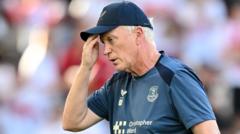
A distinct divide in expectations has emerged at Everton Football Club as the transfer window nears its conclusion. The Friedkin Group, which completed its takeover of the club in December 2024, has explicitly characterized the team's failure to secure a place in European competition last season as unacceptable. Chief Executive Angus Kinnear stated that the ownership group views winning as essential and considers missing out on continental football a clear shortcoming. This stance contrasts sharply with the perspective held by manager David Moyes, who suggested that no such high-pressure mandate was communicated to him during the campaign.
Moyes expressed surprise at the characterization of last season's performance. He noted that the primary objective set for the squad was to ensure a safe transition into the new stadium without enduring excessive difficulty in the league standings. Under his guidance, Everton finished 13th in the Premier League, avoiding relegation battles but also missing out on European spots despite being in contention late in the season. The manager emphasized that stability was achieved, framing the outcome as a success relative to the initial goals rather than a failure.
The disagreement highlights broader questions about the club's direction under American ownership. The Friedkin Group, which also owns AS Roma in Italy, appears to be pushing for higher competitive standards immediately following their acquisition of the English club. Kinnear indicated that discussions have taken place regarding how cup competitions like the Carabao Cup and FA Cup can be leveraged to engage fans and build momentum. However, Moyes remains cautious about interpreting early season results as indicators of long-term success, warning supporters against becoming overly optimistic after initial victories.
Squad depth remains a central point of contention. Moyes has publicly stated that the current roster is insufficient for maintaining competitiveness throughout a demanding Premier League schedule. He argued that more players are needed to bolster specific areas of the team, particularly given the collapse in form seen during the final stretch of last season when Everton failed to win any of their last seven league matches. While Kinnear described the squad as being in a good place, he acknowledged that work remains to be done, leaving room for interpretation on how much further investment is planned.
Everton has made several moves in the transfer market this summer to address these concerns. The club signed Hayden Hackney from Middlesbrough, bringing in the PFA Championship Player of the Year. Christian Norgaard arrived from Arsenal to provide midfield experience, replacing veteran Idrissa Gueye who departed the club. Additionally, deals were confirmed for Merlin Rohl and Tyrique George, with the latter returning from a loan spell. Brennan Johnson joined from Crystal Palace in a swap deal involving Dwight McNeil. Despite these acquisitions, Moyes maintains that they do not fully resolve the issues regarding squad size and quality.
The pressure on the ownership group is compounded by external commentary and internal urgency. Local political figures, including Prime Minister Andy Burnham, have weighed in on specific positional needs, such as securing a right-back. Moyes, who is in the final year of his contract, faces critical decisions regarding both incoming talent and retaining key existing players. Iliman Ndiaye, a forward instrumental to Moyes' tactical plans, is among those whose future at the club remains uncertain. The manager's ability to implement his vision depends heavily on whether the owners will provide the financial backing he deems necessary.
Former player Leon Osman offered a nuanced perspective on the conflicting narratives. He suggested that while missing European qualification was disappointing, labeling it a failure might be too harsh given the club's recent history of fighting for survival in the Premier League. Osman pointed to clubs like Brighton and Bournemouth, which have built steadily over years before achieving European status, as models for sustainable growth. He implied that Everton's recent improvements under Moyes represent progress, even if they fall short of immediate elite contention.
As the transfer deadline approaches, the alignment between Moyes and the Friedkin Group will be tested. The manager has made it clear that he wants more support to strengthen the squad, but there is no guarantee that additional funds will be released. The coming days will reveal whether the ownership group prioritizes immediate reinforcement or adheres to a different financial strategy. For fans, the resolution of this standoff will determine not only the team's composition for the upcoming season but also the long-term relationship between the manager and the board.
The situation underscores the challenges faced by clubs undergoing significant structural changes. Balancing short-term competitive needs with long-term strategic goals is difficult, especially when expectations differ between leadership tiers. Everton's position in 13th place last season was a step up from previous years of instability, yet it fell short of the European ambitions now voiced by executives. Whether Moyes can bridge this gap through further recruitment or must adapt to a leaner squad remains one of the most pressing questions in English football this summer.
Ultimately, the outcome will hinge on communication and compromise. If Moyes receives the reinforcements he seeks, Everton may be better positioned to challenge for higher finishes and potentially return to European competition. If not, the manager must work with existing resources while navigating the complexities of a squad that showed signs of fatigue late last season. The stakes are high for all parties involved, with the club's trajectory in the Premier League likely to be influenced by these final decisions.
Sources behind this briefing
Go to the original reporting
- BBC Sport↗Are Moyes and Everton's owners on same page?
