The short version
- Hui Ka Yan received a life sentence and asset confiscation after pleading guilty to embezzlement and bribery charges related to Evergrande's operations.
- The Shenzhen court fined former Evergrande entities billions of yuan for falsifying records and concealing debt, while other executives faced varying prison terms.
- The case highlights the severe regulatory crackdown on Chinese property developers following a sector-wide slump that has significantly impacted national economic growth.
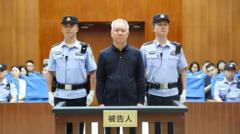
A Chinese court has sentenced Hui Ka Yan, the founder of Evergrande Group, to life in prison and ordered the confiscation of all his personal assets. The ruling by the Shenzhen Intermediate People's Court represents a significant legal milestone in the prolonged unraveling of one of Asia’s largest property developers. Hui pleaded guilty in April to multiple charges, including the embezzlement of corporate assets and bribery. The court determined that his actions seriously disrupted the domestic property market and caused substantial economic losses.
In addition to the prison term for its founder, the judiciary imposed heavy financial penalties on Evergrande’s former corporate entities. The companies were fined a total of 15.82 billion yuan, approximately $2.35 billion, for crimes that included falsifying business records and concealing debt obligations. Other executives within the organization also faced justice, with Hui’s two sons receiving sentences ranging from twenty-two months to eighteen years. These penalties reflect the broad scope of misconduct identified by investigators during the company’s collapse.
The legal proceedings shed light on specific financial irregularities that contributed to the firm’s downfall. Court documents revealed that Evergrande had diverted millions of dollars in pre-sale funds from homebuyers away from construction projects. Instead of using this capital to complete housing developments, the money was channeled into new property ventures. This misallocation resulted in hundreds of unfinished projects, leaving many buyers without homes and exacerbating public anxiety regarding the stability of the real estate sector.
Evergrande’s trajectory offers a stark contrast between its peak influence and its eventual implosion. Founded by Hui in 1996 after he left his rural upbringing to enter property development, the company grew rapidly through aggressive expansion fueled by significant borrowing. At its height, Evergrande was valued at more than $50 billion, and Hui was ranked as Asia’s richest person. The firm became the largest real estate developer in China, a country where the property sector once accounted for roughly one-third of gross domestic product.
The turning point for the company arrived in 2020 when Beijing introduced strict measures to control debt levels within the property industry. These regulatory changes severely constrained Evergrande’s ability to service its massive interest payments. In an attempt to remain solvent, the developer began selling properties at steep discounts. Despite these efforts, the company collapsed in 2021, triggering a broader slump in China’s housing market that has continued to weigh heavily on the national economy.
Prior to his criminal sentencing, Hui faced significant regulatory sanctions for financial misreporting. In March 2024, he was fined $6.5 million and banned from China’s capital markets for life after it was discovered that Evergrande had overstated its revenue by $78 billion. This revelation further eroded investor confidence and contributed to a dramatic decline in the company’s market value. Evergrande’s stock price fell by 99 percent before its shares were delisted from the Hong Kong exchange in August 2025, ending more than fifteen years of trading.
The collapse of Evergrande has had repercussions far beyond the company itself. The property sector was a critical driver of economic growth and a major revenue source for local governments across China. The ongoing distress in this industry has complicated efforts to stabilize the world’s second-largest economy. Several other major developers have faced similar financial woes, suggesting that Evergrande’s failure was symptomatic of deeper structural issues within the market rather than an isolated incident.
While the sentencing provides a degree of closure regarding individual accountability, it does not resolve the broader economic challenges stemming from the crisis. The confiscation of Hui’s assets and the fines levied against the company are part of a larger effort to address the fallout from the collapse. However, the impact on domestic banks, investors, and homebuyers remains significant. The case serves as a cautionary tale about the risks associated with rapid, debt-fueled expansion in a tightly regulated economic environment.
Looking ahead, the legal resolution of Evergrande’s leadership cases may influence how regulators approach future insolvencies in the sector. The emphasis on punishing financial misconduct and protecting consumer interests could shape new standards for corporate governance in Chinese real estate. Nevertheless, the path to recovery for the property market remains uncertain, with lingering effects on economic growth and public confidence in housing investments.
Sources behind this briefing
Go to the original reporting
- NPR↗Chinese court sentences founder of property developer Evergrande to life in prison
- BBC World↗Founder of collapsed Chinese property giant Evergrande sentenced to life in prison

