The short version
- The recent total solar eclipse was mainland Europe's first in more than twenty-five years, drawing millions of viewers despite supply shortages of safety glasses in the UK.
- Environmental experts highlight that standard household recycling cannot process these mixed-material items, though cardboard frames can be separated for disposal.
- Astronomers recommend retaining certified glasses for a significant total eclipse visible in 2027 or donating them to educational institutions and astronomical societies.
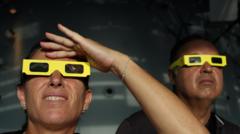
Mainland Europe experienced its first total solar eclipse in more than twenty-five years on Wednesday, a celestial event that captivated millions across the continent. The spectacle prompted a surge in demand for specialized eye protection, leading to noticeable shortages of certified solar viewing glasses in parts of the United Kingdom. As the immediate excitement fades, attention is shifting toward the practical management of these single-use items and their potential utility for future astronomical events.
The environmental impact of this sudden consumption has drawn criticism from waste management experts. Dr. Renee Tonkin, founder of the environmental education organization Science Owl, described the glasses as a stark illustration of disposable culture. Because the spectacles are constructed from mixed materials, they present significant challenges for standard recycling processes. Recycle Now, an advisory body on waste disposal, confirms that these items cannot be processed entirely through household recycling streams.
Proper disposal requires manual separation of components. The cardboard frames can be recycled if detached from the lenses, which are composed of materials that are difficult to recycle conventionally. This limitation underscores the difficulty in managing post-event waste for large-scale public scientific events. Without proper segregation, these items risk ending up in landfills, contributing to broader issues regarding single-use plastics and composite materials.
Despite the waste concerns, there is a strong argument for retaining the glasses for future use. A major total solar eclipse is scheduled for August 2, 2027, which some astronomers have dubbed the 'eclipse of the century' due to its duration. This event will feature a totality lasting six minutes and twenty-three seconds on land, marking the longest such occurrence since 1991. The next comparable event visible from land will not happen until 2114.
The 2027 eclipse will be visible from southern Spain, including cities like Malaga, as well as northern Africa and the Arabian peninsula. Viewing conditions in northern Africa are expected to be particularly favorable due to typically clear skies during that season. Dr. Ed Bloomer, an astronomer at the Royal Observatory Greenwich, noted the remarkable length of the upcoming totality. However, he clarified that this event will not be visible from the UK, limiting its direct relevance for British observers.
For those in the UK who cannot travel to view the 2027 spectacle, other opportunities exist. The next partial solar eclipse visible in the region is expected in January 2028. Dr. Bloomer emphasized that modern glasses meeting ISO safety standards are manufactured differently than older versions, allowing them to remain safe for longer periods if stored correctly. Preservation requires keeping the lenses free from tears, wear, or damage to the protective coating, which would render them unsafe for future use.
Donation offers another viable path for extending the life of these items. Dr. Tonkin suggested contacting local schools, libraries, and after-school science clubs, noting that passing items to those who will use them more frequently is a simple way to reduce waste. Dr. Bloomer added that local astronomical societies often accept donations to distribute at future public events. The Federation of Astronomical Societies maintains a searchable list of its approximately 200 affiliated members, providing a resource for locating potential recipients.
The filter material from these glasses also has applications in photography and education. Modern smartphone cameras can capture images of solar activity, such as sunspots, when fitted with a cut-out square of the solar filter material mounted over the lens. Dr. Tonkin’s organization encourages children to repurpose waste materials for such projects. However, caution is advised; prolonged exposure to sunlight can damage phone sensors, and viewers must remain wary of ultraviolet radiation risks even when using filters.
As interest in solar phenomena remains high, the management of viewing equipment becomes a secondary but important aspect of public engagement with astronomy. Whether kept for personal use, donated to educational groups, or carefully recycled, the glasses from this historic event offer lessons in both scientific appreciation and environmental responsibility. The upcoming eclipses provide a clear timeline for when these tools may be needed again, ensuring their value extends beyond the initial spectacle.
The convergence of public enthusiasm and logistical challenges highlights the growing intersection of astronomy and sustainability. While the eclipse itself was a rare natural phenomenon, the aftermath involves human decisions about waste and resource allocation. Experts continue to stress the importance of proper handling and disposal, ensuring that the pursuit of scientific wonder does not come at an unnecessary environmental cost.
Sources behind this briefing
Go to the original reporting
- BBC News↗You got hold of eclipse glasses just in time - here's what to do with them now

