The short version
- European leaders warn that reliance on US and Chinese technology creates significant strategic vulnerabilities in the face of potential AI crises.
- The absence of major European AI developers has marginalized the continent from high-level safety discussions dominated by American and Chinese interests.
- Policymakers advocate for increased investment in data infrastructure and a shift toward pragmatic consumer protections rather than solely chasing frontier model capabilities.
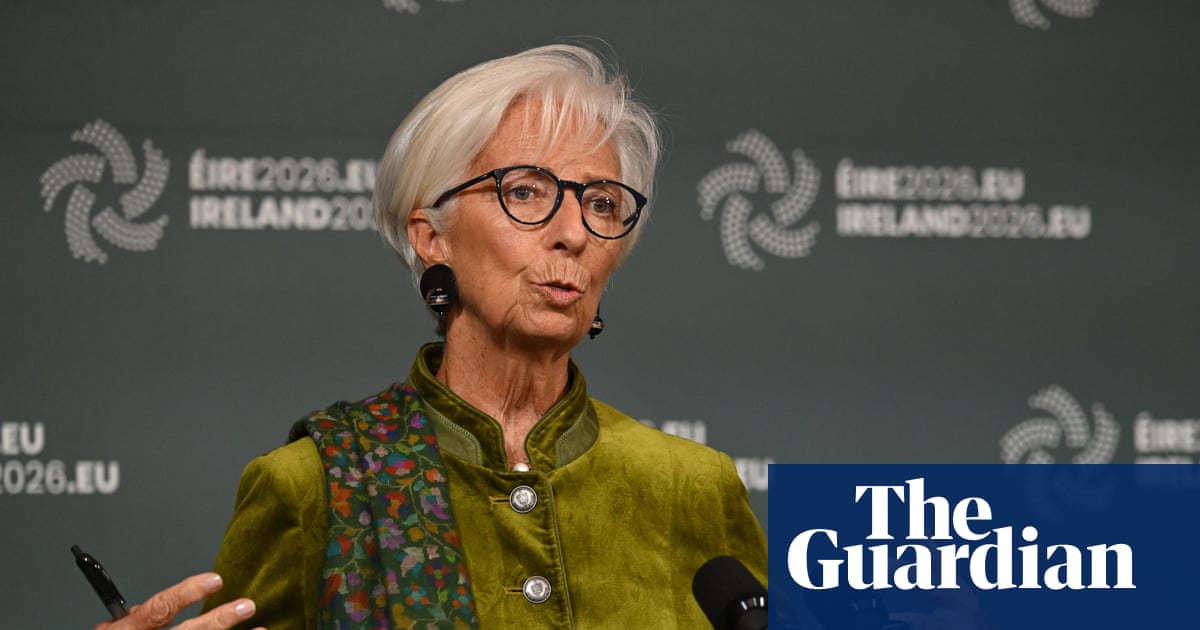
A stark strategic dilemma has emerged for Europe regarding artificial intelligence, characterized by a choice between technological isolation and deepening dependence on foreign powers. Christine Lagarde, president of the European Central Bank, recently outlined these limited options, suggesting that shunning AI development would result in lost economic growth, while embracing it without domestic capacity would render the continent reliant on tools engineered in the United States and China. This binary framing underscores a growing anxiety among European officials about their diminishing agency in a sector increasingly defined by geopolitical rivalry rather than collaborative innovation.
The urgency of this position is amplified by the intensifying global debate over AI safety, a conversation from which Europe has been largely absent at the highest levels. Unlike the United States and China, which host the dominant firms driving rapid advancements in generative models, the European Union lacks a homegrown titan comparable to Apple, Google, or OpenAI. This structural deficit has significantly weakened the continent’s voice in discussions concerning existential risks and safety protocols, leaving it to react to developments shaped by external actors rather than helping to define them.
Efforts to reassert influence have met with limited success thus far. Ursula von der Leyen, president of the European Commission, recently proposed inviting leading AI laboratories to discuss methods for pacing frontier development. However, these diplomatic overtures have failed to gain substantial traction compared to the more assertive stances taken by Washington and Beijing, both of which have dismissed calls for slowing down innovation. Without the backing of either superpower, any attempt by Europe to enforce or encourage a slowdown in AI advancement appears practically unfeasible, highlighting the limits of regulatory power when detached from technological leverage.
In response to these vulnerabilities, Lagarde has emphasized the necessity of building domestic capacity. She argued that investing in local AI technology and expanding data center infrastructure is essential to neutralize the threat of being cut off from critical digital services by foreign governments. By achieving a degree of self-sufficiency, Europe could not only secure its economic interests but also develop independent frameworks for addressing safety crises. This approach aims to transform the continent from a passive consumer of technology into an active participant capable of setting its own standards and mitigating risks associated with external dependencies.
Support for this strategy extends beyond monetary policy circles. Margrethe Vestager, former EU competition commissioner, co-authored a report titled A Transformative AI Strategy for Europe, which echoes Lagarde’s concerns about the economic and social consequences of decisions made abroad. The report highlights that European citizens are already bearing the brunt of choices dictated by foreign tech ecosystems. To counter this trend, Vestager advocates for robust investments in data centers, describing them as the central nervous system of AI, and calls for building resilience against potential crises such as models escaping control or causing widespread disruption.
Despite these warnings, Europe does possess some leverage through its existing regulatory framework. The EU AI Act stands out as a rare piece of legislation that mandates developers of high-risk systems to report safety incidents and address specific dangers, including the possibility of advanced models evading human oversight. Vestager acknowledges that while this legal structure provides a voice in safety matters, it is insufficient on its own. She insists that Europe must cultivate its own AI ecosystem to retain talent, inspire innovation, and strengthen its position in global negotiations, particularly regarding existential threats that require solutions beyond the scope of US-China rivalry.
Critics of the prevailing narrative argue that the focus on frontier models may be misplaced. Frederike Kaltheuner, an adviser to the AI Now Institute, suggests that Europe’s perceived lag is partly a result of aggressive marketing by American tech executives who promote a narrow view of AI progress. She notes that many companies are hesitant to adopt cutting-edge models due to high costs and data security concerns. This market reality implies that Europe might not be as disadvantaged as commonly portrayed, especially if the industry shifts away from an exclusive focus on the most powerful and potentially risky systems.
Instead of chasing the frontier, some experts believe Europe’s strength lies in pragmatic regulation that addresses everyday interactions with AI. The EU AI Act includes measures for labeling AI-generated content and governing the use of algorithms in sensitive areas like healthcare and hiring. Itxaso Dominguez de Olazabal, a policy adviser at EDRI, acknowledges the continent’s competitiveness challenges but argues that US tech leaders often blame European laws for these issues while promising that deregulation would solve them. This perspective suggests that Europe’s approach to balancing innovation with consumer protection may offer a viable alternative to the unchecked acceleration favored by other major powers.
Looking ahead, the path forward requires navigating complex geopolitical tensions while fostering domestic technological growth. Vestager has called for a supranational body capable of addressing existential threats without ceding power to either Washington or Beijing. She emphasized the need to move beyond the current rivalry narrative and create space for broader human interests in global AI governance. As the debate continues, Europe’s ability to define its role will depend on whether it can successfully bridge the gap between regulatory ambition and technological reality.
Sources behind this briefing
Go to the original reporting
- The Guardian World↗Why Europe has been absent from the great AI safety debate

