The short version
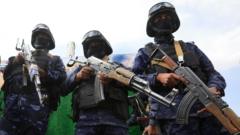
- Coordinated Houthi strikes on military camps in central Yemen have killed at least thirty government forces, with some reports suggesting the death toll exceeds forty.
- The attacks mark a significant escalation following a largely held ceasefire since 2022, driven by Houthi claims of retaliation against Saudi-led blockades and military buildups.
- International bodies and regional powers are urging restraint as fears grow that renewed fighting could reverse humanitarian gains and destabilize Red Sea shipping routes.
A fragile period of reduced violence in Yemen has been shattered by a series of coordinated attacks launched by Houthi rebels against government-held military positions. On Thursday morning, ballistic missiles and unmanned aerial vehicles struck several camps located in the central provinces of Marib and Hadramawt. The assaults resulted in significant casualties among Yemeni government forces, marking one of the most severe breaches of the de facto truce that has held since 2022.
Casualty figures remain inconsistent across different reporting channels, reflecting the chaotic nature of the conflict zone. Yemen’s defense ministry confirmed that personnel were killed and injured but declined to provide an exact count, describing the strikes as treacherous acts of aggression. In contrast, medical sources cited by international news agencies reported at least thirty-eight deaths and twenty-nine injuries. Other military sources linked to pro-government media outlets claimed the death toll surpassed forty soldiers.
The Houthis, who control much of northwestern Yemen and receive support from Iran, asserted that their operations targeted large-scale Saudi military preparations. Yahia Sarea, a Houthi military spokesperson, stated that the strikes aimed at dismantling what he described as enemy mercenaries and destroying weapons caches in areas including al-Ruwaik, al-Abr, and al-Thaniyah. He framed the attacks as a necessary response to imminent threats against liberated provinces, alleging that Saudi-backed forces were preparing for an offensive.
This surge in violence follows weeks of heightened tensions initiated by a maritime embargo declared by the Houthis against Saudi Arabia in late July. The rebel group justified this move as retaliation for what they characterize as a blockade of their ports and airports, as well as an airstrike on Sanaa airport that they attributed to Riyadh. In response, Saudi Arabia has conducted counter-strikes on Houthi positions and established a new naval coalition involving representatives from forty-three countries to protect shipping lanes in the Red Sea and Gulf of Aden.
The international community has expressed deep concern over the rapid deterioration of security conditions. Farhan Haq, deputy spokesperson for the United Nations, called on all parties to exercise restraint, warning that renewed fighting risks undoing years of progress toward reducing violence. The U.S. mission in Yemen condemned the attacks as cowardly acts of terrorism against the Yemeni people, highlighting the ongoing humanitarian crisis that has left millions in need of aid.
The broader context of this escalation is rooted in a civil war that began in 2014 when Houthi forces ousted the recognized government from the capital. The conflict intensified in 2015 with the intervention of a Saudi-led coalition aimed at restoring state authority. According to United Nations estimates, the prolonged war has resulted in more than 150,000 deaths and created one of the world’s most severe humanitarian emergencies, affecting over twenty-two million people.
While the UN-brokered ceasefire had largely held for several years, recent weeks have seen a marked increase in hostilities. The Houthis have expanded their operations beyond land-based targets to include missile and drone strikes on Saudi airports, oil facilities, and commercial tankers. This shift has raised alarms about potential spillover effects into global trade routes and the possibility of a wider regional conflict involving multiple state actors.
Looking ahead, the immediate priority for diplomatic efforts will be de-escalation and preventing further retaliation from the Saudi-led coalition. The newly formed naval alliance has emphasized its defensive mandate, stating it does not target any specific country or organization. However, the destruction of military infrastructure and the loss of life in central Yemen underscore the volatility of the situation and the urgent need for renewed dialogue to prevent a full-scale resumption of war.
As investigations into the attacks continue, discrepancies in casualty reports and conflicting narratives regarding the intent behind the strikes highlight the challenges of verifying information in active conflict zones. The defense ministry has vowed to respond at an appropriate time, leaving uncertainty about whether further retaliatory measures will follow. Meanwhile, humanitarian organizations remain on high alert, fearing that increased fighting could disrupt aid delivery and exacerbate suffering for civilians already struggling with food insecurity and lack of medical care.
The incident serves as a stark reminder of the precarious balance maintained in Yemen over the past few years. With both sides accusing each other of violating agreements and escalating tensions, the path toward lasting peace appears increasingly obstructed. International observers are closely monitoring developments to assess whether diplomatic channels can still prevent a return to the devastating levels of violence seen during the peak of the civil war.
Sources behind this briefing
Go to the original reporting
- BBC World↗Houthi attacks reportedly kill at least 30 Yemeni government forces

