The short version
- The European Space Agency is proceeding with its Venus orbiter mission independently after NASA determined it could not fulfill its commitment to provide a synthetic aperture radar instrument.
- European industrial teams in the United Kingdom and Italy have begun designing a replacement radar system to maintain the mission's scientific objectives regarding surface mapping and volcanism detection.
- The shift reflects broader tensions in US space policy, where proposed budget cuts under the Trump administration have jeopardized NASA's contributions to several major international partnerships.
The European Space Agency has committed to advancing its robotic mission to Venus without the hardware originally promised by NASA. This strategic pivot comes after US officials concluded they were unlikely to deliver a critical radar instrument intended for the Envision spacecraft. The decision marks a significant realignment in international space cooperation, forcing Europe to rely on its own industrial base to complete a mission that was previously structured as a joint venture between the two major space powers.
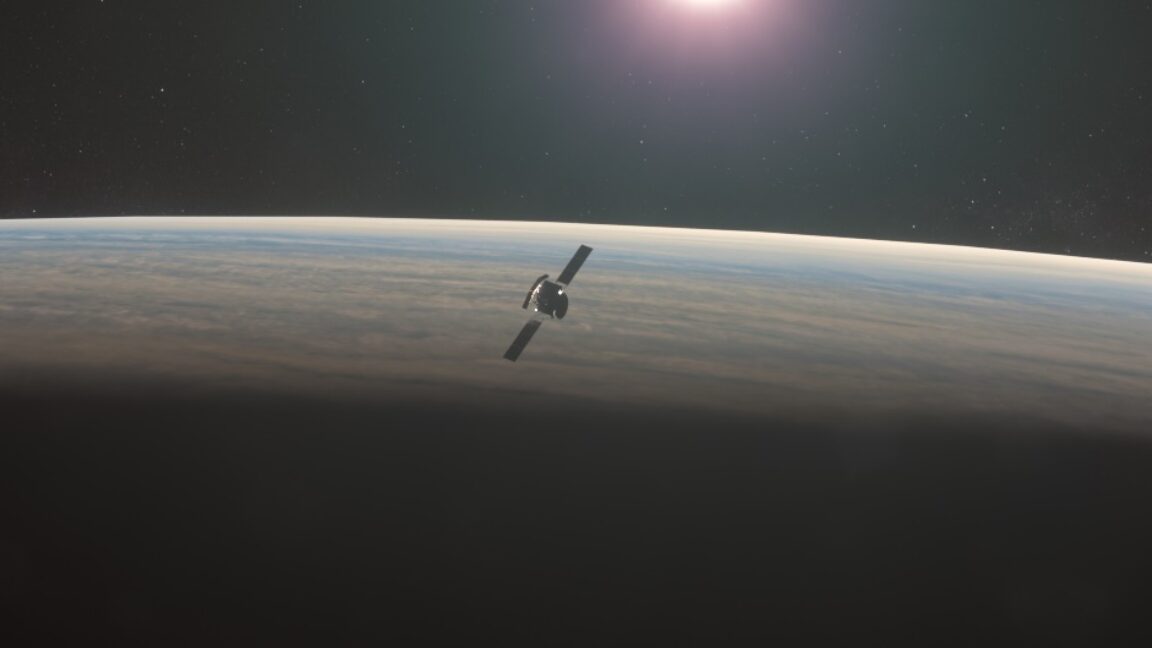
Envision is designed to orbit Venus and map its surface with unprecedented clarity. Because the planet is permanently shrouded in thick clouds of sulfuric acid, optical cameras cannot see the terrain below. Radar technology is essential for penetrating this atmospheric veil. The mission aims to achieve resolution ten times higher than that of the last NASA radar mission to Venus, which operated in the 1990s. Scientists intend to use these high-resolution maps to search for signs of active volcanism and better understand the geological history of Earth’s closest planetary neighbor.
The partnership was formalized through a memorandum of understanding signed in 2024. Under that agreement, NASA was to supply the synthetic aperture radar, which serves as the primary tool for surface mapping, along with tracking and communications support via the Deep Space Network. In return, ESA agreed to include American researchers on the science team. Europe was responsible for building the spacecraft, providing the remaining scientific instruments, and securing launch services using an Ariane 6 rocket. Contracts for these components were already awarded before the uncertainty surrounding NASA’s contribution emerged.
The withdrawal of US support is linked to broader budgetary pressures facing NASA. The Trump administration proposed significant reductions to the agency’s science funding for fiscal years 2026 and 2027, suggesting cuts that would have nearly halved the budget. While Congress rejected the most severe portions of these proposals, passing a budget that allocated $2.54 billion to planetary science, the final figure remained approximately $220 million below the previous year’s funding level. This shortfall has compelled NASA managers to prioritize internal missions and reduce support for international collaborations.
NASA’s own Venus mission, DAVINCI, was spared from cancellation due to congressional intervention. DAVINCI is designed to send a probe into the dense atmosphere of Venus to analyze its composition. However, the remaining budget constraints have made funding for operating extended missions and supporting foreign partnerships difficult to sustain. Consequently, NASA has moved away from contributing to three major European-led projects: Envision, the LISA gravitational wave observatory, and the New Athena X-ray telescope. The latter two were scheduled for launch in the late 2030s but now face uncertain futures regarding US involvement.
In response to the loss of the American radar, ESA has issued contracts to begin technology development for a European-built alternative. Industrial teams based in the United Kingdom and Italy are currently studying radar designs that meet the same scientific requirements as the original NASA-funded instrument. The goal is to replicate the capabilities of the device that was to be constructed at the Jet Propulsion Laboratory in California. Project scientists emphasize that while the final design may differ in technical details, the core scientific modes and objectives will remain unchanged.
Anne Grete Straume-Lindner, ESA’s project scientist for Envision, indicated confidence that the European-built radar would allow the mission to achieve its intended goals. She noted that the team expects to conduct the same science despite potential differences in the hardware’s specific implementation. This assurance is critical for maintaining the mission’s scientific value, particularly regarding the detection of volcanic activity and surface deformation, which require precise radar measurements.
The financial landscape for ESA remains challenging but stable. The agency’s 23 member states recently agreed to increase the science budget by 3.5 percent annually through 2028, adjusted for inflation. This commitment provides the necessary funds to initiate work on the new radar payload. However, ESA’s annual science budget averages around 750 million euros, which is significantly smaller than NASA’s total allocation. The agency must therefore manage resources carefully to ensure that the additional development costs do not derail other ongoing projects.
Time remains a critical factor for the Envision mission. Originally slated for launch in 2031, the timeline has already been pushed back by one year to 2032 to accommodate the transition to a European radar system. Further delays could jeopardize the mission’s ability to meet its scientific objectives within the planned operational window. ESA officials are awaiting formal notification from NASA regarding the final status of its contribution, but internal planning assumes the US will not fulfill its part of the agreement.
This development highlights the fragility of international space partnerships in the face of domestic political shifts. As the White House attempts to reshape NASA’s priorities, European agencies are being forced to become more self-reliant. The success of Envision will depend on the ability of UK and Italian industrial teams to deliver a complex radar instrument on time and within budget. If successful, the mission will provide valuable data about Venus regardless of the absence of American hardware, demonstrating the resilience of European space capabilities.
Sources behind this briefing
Go to the original reporting
- Ars Technica↗Europe will go it alone on Venus mission after NASA yanks radar instrument

