The short version
- Longtime Likud supporters in Kiryat Shmona are questioning their loyalty to Prime Minister Benjamin Netanyahu due to perceived failures in securing the northern border against Hezbollah.
- The city remains economically depressed and partially empty three years after evacuation, with residents citing broken promises regarding safety and reconstruction as key drivers of political discontent.
- While a total collapse of support is unlikely, even minor shifts in this conservative stronghold could determine whether Netanyahu retains power or if opposition leader Gadi Eisenkot gains the advantage.
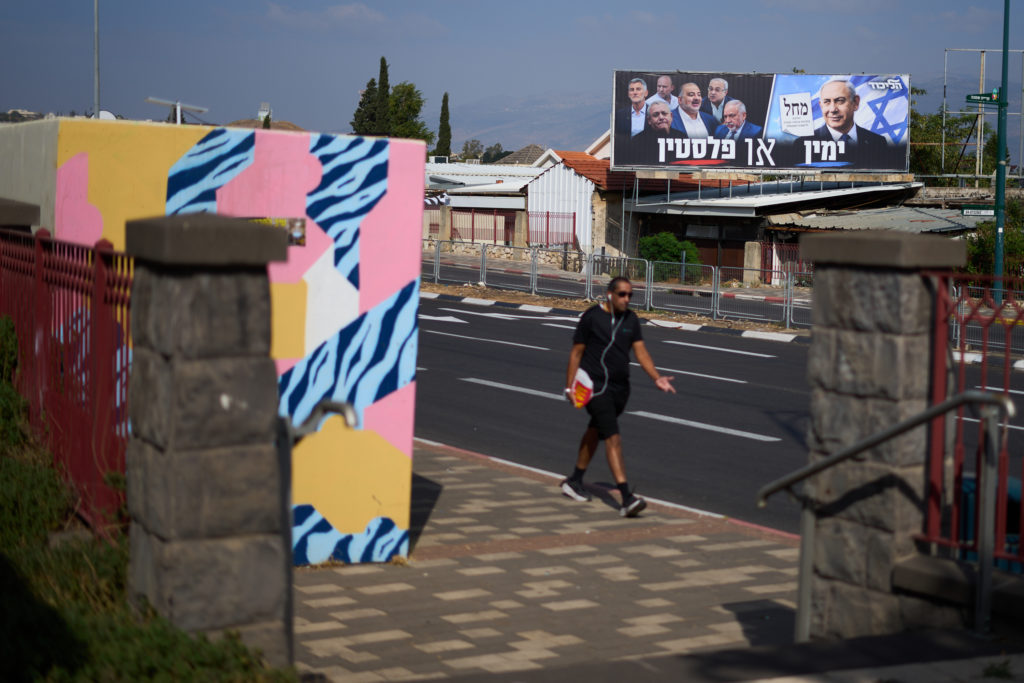
Kiryat Shmona, located at Israel’s northernmost edge, has historically served as a reliable voting base for Prime Minister Benjamin Netanyahu and his Likud party. However, ahead of Tuesday’s national election, signs of dissent are emerging within this conservative stronghold. The city, which was temporarily evacuated three years ago due to rocket fire from Lebanon, still bears the scars of conflict. Although hostilities have largely subsided, the town feels significantly depopulated, and residents are expressing increasing dissatisfaction with the government’s management of the war against Hezbollah.
The erosion of trust stems largely from unmet expectations regarding security. Netanyahu had promised to dismantle Hezbollah’s capabilities and ensure safety for northern communities. Yet, despite a bombing campaign and two invasions of Lebanon since 2023, the militant group remains active. Some residents argue that Israel should have adopted even harsher measures, while others feel abandoned by a leadership they no longer believe prioritizes their well-being. This sentiment is particularly acute given that Hezbollah missiles resumed striking the region in March, following international military actions against Iran.
Eti Ben Shabat, a 64-year-old resident who has traditionally voted for Likud without hesitation, describes a breaking point reached in recent years. She points to Netanyahu’s failure to deliver on security guarantees as the primary reason for her shift in allegiance. Her experience reflects a broader trend among long-time supporters who are reevaluating their political choices after decades of unwavering loyalty. The emotional toll of prolonged insecurity has led some to view continued support for the prime minister as complicity in ongoing instability.
The socioeconomic impact of the conflict further complicates the political landscape. Kiryat Shmona claims that nearly 80 percent of its 22,000 residents have returned since the evacuation ended in late 2024. However, local observers suggest the actual figure is closer to 50 percent. Main commercial streets remain dotted with shuttered shops, and those that are open often lack customers. This economic stagnation exacerbates feelings of neglect, reinforcing the perception that the government has failed to address the root causes of the region’s vulnerability.
Despite these challenges, Likud retains a significant foothold in Kiryat Shmona. In the 2021 and 2022 elections, approximately half of the city’s voters chose Likud, compared to just 25 percent nationwide. Sami Malul, a retired Likud councilor and former acting mayor, attributes this loyalty to the city’s socioeconomic and religious demographics, which align naturally with right-wing politics. He defends the government’s handling of the evacuation, arguing that resident safety was prioritized and that Netanyahu is not solely responsible for the current security situation.
Nevertheless, the political calculus in Kiryat Shmona could influence the national outcome. A small dip in support here might tip a closely contested election toward Gadi Eisenkot, the candidate aiming to replace Netanyahu. Alternatively, it could empower far-right parties that would likely back Netanyahu’s continuation as prime minister but demand greater leverage within the ruling coalition. The stakes are high, as even marginal shifts in traditional strongholds can reshape the balance of power in Israel’s fragmented parliamentary system.
Nissan Zeevi, a third-generation resident running for parliament with the opposition Beyachad party, embodies the growing frustration among northern residents. He founded Lobby 1701 to advocate for enhanced security measures and criticizes Netanyahu for abandoning the north. Zeevi argues that residents have endured three years of unresolved conflict and deserve new leadership. His campaign highlights a shift toward greater political awareness among voters who previously took their allegiance for granted.
As election day approaches, the atmosphere in Kiryat Shmona remains subdued, with little visible campaigning. The lack of overt political activity underscores the deep-seated disillusionment felt by many residents. While some remain steadfast in their support for Netanyahu, citing his role in maintaining national security during crises, others are ready to make way for change. The outcome in this northern city may serve as a bellwether for broader trends affecting Likud’s prospects in the upcoming vote.
The implications extend beyond local politics. If Netanyahu loses ground in Kiryat Shmona, it could signal a wider realignment of voter priorities across Israel. Conversely, if he retains his base, it may indicate that security concerns continue to outweigh dissatisfaction with governance. Either way, the election will reflect the complex interplay between historical loyalty and contemporary grievances in one of Israel’s most strategically significant regions.
Sources behind this briefing
Go to the original reporting
- PBS NewsHour↗Signs of fraying loyalty emerge in Netanyahu stronghold before Israeli election


