The short version
- The 2026 Sustainable Farming Incentive ran out of allocated funds within six hours of its launch, excluding many eligible farmers from receiving payments.
- Producers report that financial pressure may force a reversal of biodiversity efforts, with some planning to return to monoculture crops to ensure survival.
- Government officials stated that additional funding was added to meet high demand, while agricultural unions are calling for immediate clarity on future scheme availability.
A significant shift in England’s agricultural support landscape occurred this week when the government’s Sustainable Farming Incentive (SFI) program exhausted its available budget in just six hours. The rapid depletion of funds, which some observers compared to high-demand ticket sales, has created immediate uncertainty for thousands of farmers who rely on these payments to maintain their operations. This event marks a critical juncture for producers who have transitioned away from traditional subsidy models toward schemes that reward environmental stewardship rather than land ownership alone.
The SFI is designed to replace the European Union’s Common Agricultural Policy, offering financial incentives for managing soil health, protecting wildlife, and delivering other public goods. However, the speed at which the 2026 funding window closed has left many applicants in limbo. Reports indicate that up to 10,000 farmers with agreements expiring in March 2027 either failed to apply or were unable to secure funding due to the sudden closure of the application portal. For those who missed out, the loss of income threatens not only their financial stability but also the continuity of environmental improvements they have implemented over recent years.
Technical difficulties compounded the frustration among applicants. Several farmers reported encountering error messages when attempting to log in during the launch window. One producer from Cambridgeshire described spending hours preparing his application, only to find that the funds were gone by the time technical issues were resolved. Another farmer, who was attending a market at the start of the day, rushed home to submit his request but received an error message indicating the fund was depleted. These experiences highlight the logistical challenges faced by producers trying to navigate complex digital systems under tight deadlines.
The financial strain on English agriculture has intensified due to a combination of factors beyond the immediate funding shortage. Farmers are grappling with the aftermath of three consecutive poor harvests, driven by extreme weather patterns including heavy rainfall in 2024 and severe drought conditions in 2025. Current temperatures remain unusually high for late September, adding further stress to crops. Additionally, soaring costs for fertilizers and fuel, partly linked to global conflicts such as the war in Iran, have squeezed profit margins. These pressures make the loss of SFI funding particularly devastating for businesses already operating on thin margins.
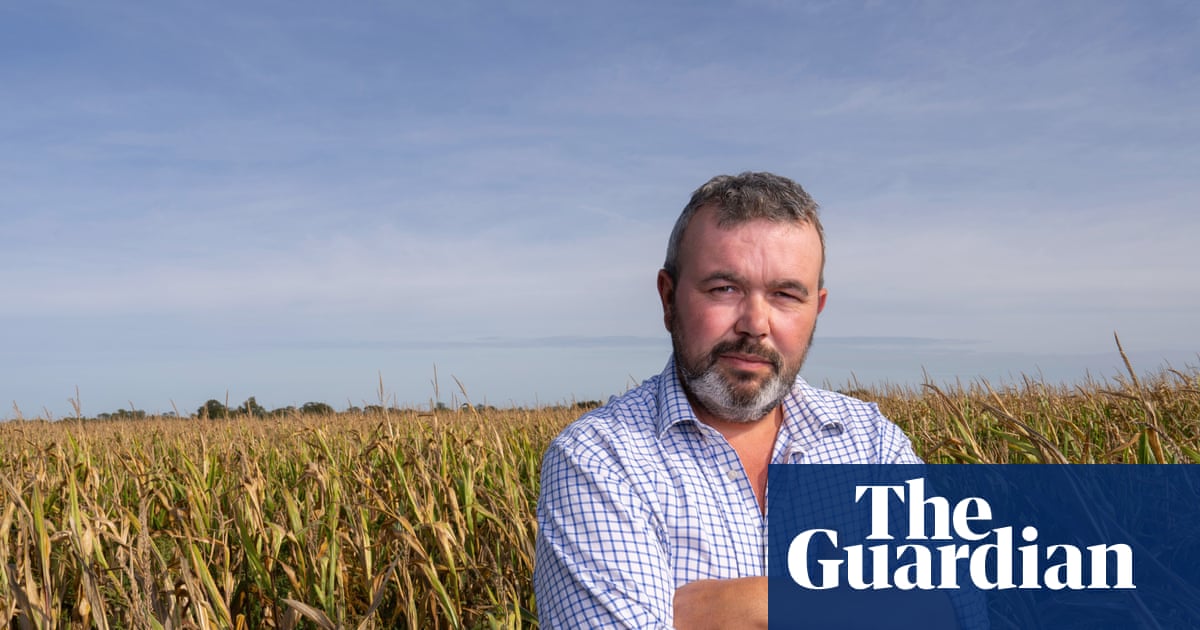
In response to the financial squeeze, some farmers are considering reversing years of environmental work to ensure their survival. One producer indicated that without the incentive payments, he would be forced to abandon biodiversity initiatives and revert to monoculture maize farming. He noted that while this decision contradicts his long-term goals for nature conservation, it is a necessary step to meet mortgage obligations and support his family. This sentiment reflects a broader tension between ecological ambitions and economic realities, as farmers struggle to balance public expectations for environmental protection with the need to remain financially viable.
Agricultural organizations have criticized the handling of the funding distribution. The Nature Friendly Farming Network described the rapid exhaustion of funds as evidence of desperation among producers. Meanwhile, the National Farmers’ Union is urging the government to provide clear commitments regarding the 2027 SFI scheme. Union representatives argue that certainty is essential for food-producing businesses that are already questioning their ability to survive the coming year. Without guaranteed support, many farmers fear they will be unable to continue investing in hedgerows, grasslands, and water quality improvements.
Government officials have defended their approach, stating that priority was given to small farms and new applicants during an earlier summer window. A spokesperson for the Department for Environment, Food and Rural Affairs (Defra) noted that an additional £20 million was allocated to the fund in anticipation of high demand, bringing the total available for new agreements to £310 million across both windows. Despite these measures, the rapid closure of the second window has raised questions about whether the allocation strategy adequately accounted for the scale of need among established participants.
The situation underscores the broader challenges facing English agriculture as it transitions post-Brexit. The phase-out of the Basic Payment Scheme has introduced a more complex system of environmental funds that are prone to running out or being unexpectedly suspended. As climate change continues to disrupt traditional farming cycles, the reliability of these new support mechanisms becomes increasingly critical. Farmers who have invested in sustainable practices now face the risk of having their efforts undermined by funding shortages, potentially leading to a rollback of ecological gains made over the past two decades.
Looking ahead, the resolution of this crisis will depend on whether the government can provide timely clarity on future funding availability. Until then, many producers remain in a state of uncertainty, unsure if they can sustain their current operations or continue their environmental commitments. The outcome of this period will likely influence not only the economic health of individual farms but also the broader trajectory of England’s agricultural policy and its ability to meet both food security and biodiversity goals.
Sources behind this briefing
Go to the original reporting
- The Guardian US↗‘We can’t ride this storm’: the English farmers facing uncertainty after sustainability funding runs dry

