The short version
- At least 183 homes have been demolished on England's east coast since 2010 due to severe erosion and landslide risks.
- The Environment Agency projects that thousands more properties and significant infrastructure will face similar threats by the end of the century.
- Residents face financial ruin as insurers refuse coverage for coastal retreat, viewing it as an inevitable outcome rather than an accidental event.
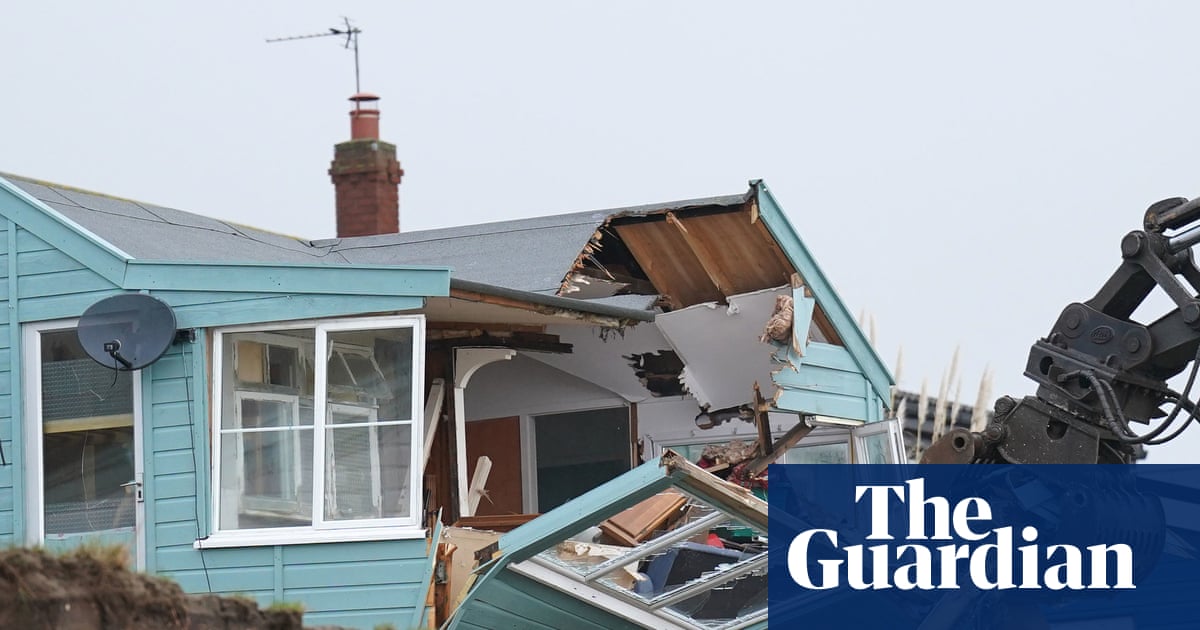
Seaside communities along the eastern coastline of England are experiencing a rapid and irreversible loss of residential property. Data obtained from nine local councils reveals that at least 183 homes have been demolished over the past sixteen years because they were deemed too vulnerable to remain safely occupied. These demolitions were not the result of sudden disasters but rather proactive measures taken by authorities after determining that the structural integrity of the properties could no longer be guaranteed against the encroaching sea.
The financial burden of these removals has been shared unevenly among various entities. The total cost for clearing these sites reached approximately £1.1 million. The Environment Agency contributed roughly £482,000 toward the demolition of 61 specific homes identified as being at immediate risk of collapse. The remaining expenses were covered by local councils and, in some instances, by the homeowners themselves. This distribution of costs underscores the limited availability of centralized funding for managing the long-term retreat of the shoreline.
The rate of destruction has intensified in recent years, particularly in areas with soft geological compositions. Great Yarmouth Borough Council reported that 64 homes were demolished since 2010, all located in the village of Hemsby. A significant portion of this activity occurred recently, with 41 properties removed since December 2025 alone. Officials noted that winter storms caused erosion equivalent to half of what was predicted for the next three decades, resulting in the loss of more than ten meters of land in just over twelve months.
East Riding of Yorkshire Council has seen the highest number of demolitions among the surveyed authorities, with 66 homes removed since 2010. These properties were located in vulnerable communities such as Skipsea, Aldbrough, and Mappleton. North Norfolk Council recorded 21 proactive demolitions over the same period. East Suffolk Council, which only maintained data for the last six years, observed a sharp increase in activity, with 16 homes demolished between May of last year and April of this year, compared to just eight in the preceding four years.
The human impact of these structural losses is severe and often financially devastating. Because coastal erosion is considered a natural process rather than an accidental event, standard insurance products do not cover the damage. The House of Commons Environment, Food and Rural Affairs Committee noted that insurers treat coastal retreat as a virtual certainty for certain seaside homes, leaving residents without financial protection. One resident in Thorpeness reported losing £650,000 in property value and being forced to dip into pension savings and take on debt to secure new housing.
Looking ahead, the scale of the threat is expected to grow significantly. The Environment Agency estimates that 3,500 properties in England are at risk from coastal erosion by 2055. This number is projected to rise to more than 10,000 properties by 2105. Beyond residential buildings, critical infrastructure is also under threat. More than six miles of major roads, 107 miles of minor roads, and 3.5 miles of railway lines serving small coastal communities are at risk over the next eighty years.
Experts attribute the acceleration of erosion to a combination of geological vulnerability and climate change. The east coast is composed largely of sandy, gravelly, and silty materials that are inherently unstable. Scientists indicate that wetter winters, made more likely by the climate crisis, saturate these soft cliffs, making them prone to collapse. Increased storminess and rising sea levels further exacerbate the issue by reducing the time beaches have to recover between high tides.
Current strategies for managing this retreat are shifting from defense to adaptation. While councils have historically invested in sea defenses, experts argue that these measures create an illusion of permanence in the face of accelerating erosion. There is a growing consensus that planning must focus on accepting the loss of homes and infrastructure rather than attempting to prevent it indefinitely. This approach requires closer engagement with communities to help residents navigate the difficult process of relocation and adaptation.
Local authorities are beginning to test new approaches through government innovation programs, investing in short-term measures designed to slow erosion and provide residents with more time to prepare. However, officials acknowledge that there are currently limited mechanisms to support the wider costs associated with adaptation and relocation. The challenge remains not only physical but also social and economic, requiring skilled personnel to guide individuals through the reality of losing their homes to a changing landscape.
Sources behind this briefing
Go to the original reporting
- The Guardian World↗Coastal erosion in England has claimed at least 183 homes in past 16 years