The short version
- Severe drought conditions driven by El Niño have caused a sharp increase in fire activity across the central and eastern Amazon basin since September 2026.
- Heavy smoke has degraded air quality to hazardous levels in major cities like Manaus, forcing school closures and disrupting daily life for millions of residents.
- Scientists predict the fire risk will expand northward into Venezuela and Guyana by late 2026 before shifting south toward Paraguay in mid-2027.
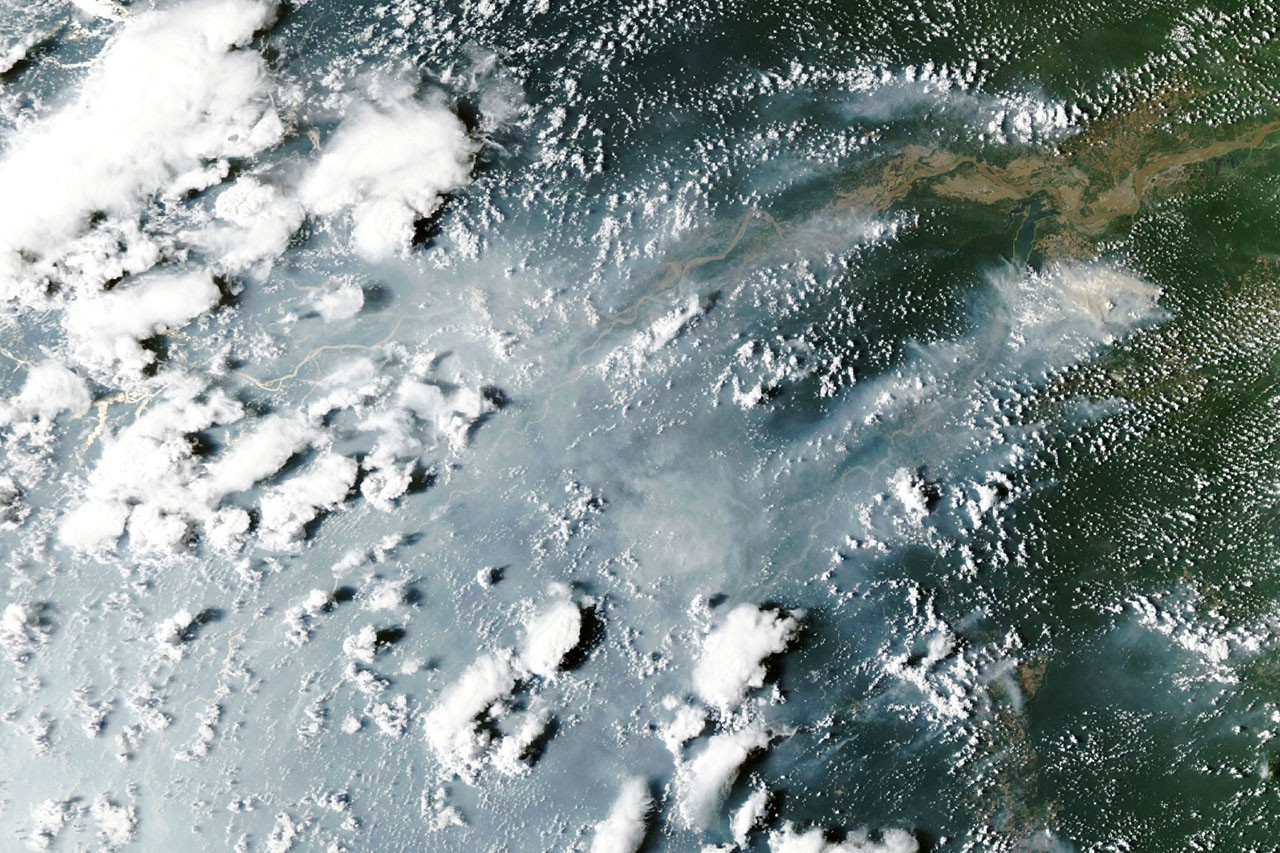
A significant escalation in wildfire activity has emerged across the central and eastern Amazon rainforest, driven by intense drought conditions associated with the current El Niño climate pattern. Satellite monitoring systems detected a sharp rise in fire counts and smoke emissions beginning in September 2026. The affected area spans from the forests surrounding key commercial hubs like Manaus and Santarém to the mouth of the Amazon River. This surge represents the early stages of what researchers describe as a prolonged and severe fire season, distinct from sudden weather events due to its gradual, months-long development.
The immediate impact on human populations has been severe. On October 12, 2026, heavy smoke enveloped Manaus, the capital of Amazonas state, leading to extremely poor air quality. Officials reported fine particulate matter levels exceeding 135 micrograms per cubic meter, a rating classified as the second-worst on regional indices. The hazardous conditions forced the closure of schools and the cancellation of citywide events and youth sports leagues in a metropolitan area home to more than two million people. Daily life was significantly disrupted as residents faced health risks from the thick pall of smoke.
Earth system scientists characterize this event as part of a predictable tropical fire cascade triggered by El Niño. This pattern typically begins with drought and peat fires in equatorial Asia, such as Indonesia, before shifting to elevated fire activity in the Amazon. Researchers observed this sequence during the 2015–2016 El Niño and again in 2023. The current situation mirrors those previous events, with Indonesia experiencing smothering smoke and hundreds of homes destroyed since August 2026. The Amazon fires represent the second phase of this domino effect, following the initial disruptions in Southeast Asia.
The origins of these blazes are largely anthropogenic. In the Brazilian Amazon, lightning ignites less than one percent of fires due to the region's typical humidity. Instead, most fires start as management burns intended for clearing pastures or crops. However, the intense drought has allowed these controlled burns to escape containment and spread freely through the parched understory. Satellite analysis indicates that between 50 and 70 uncontrolled fires are currently burning in the Santarém region alone. The dry conditions have transformed routine agricultural practices into widespread environmental hazards.
Ecological concerns are heightened because many Amazonian species are not adapted to fire. Forests that burned during previous El Niño events in 2015 and 2023 are experiencing renewed burning, which compounds the damage. Earlier fires partially charred trees, degrading the forest structure and making the remaining vegetation more susceptible to ignition. Scientists warn that this time, the fires may burn even more intensely due to this pre-existing degradation. The recurrence of fire in the same areas poses a serious threat to biodiversity and carbon storage capacity.
Looking ahead, experts anticipate the fire risk will shift geographically as the El Niño pattern evolves. The next wave is expected to hit northern regions, including the Brazilian states of Roraima, northern Pará, and Amapá, as well as parts of Venezuela, Guyana, and Suriname, during November and December 2026. Following this northward expansion, drought and fire risk are projected to peak in southern Amazon regions of Brazil and Paraguay around August and September 2027. This timeline provides a window for preparation in areas not yet affected.
Current fires around Manaus and Santarém are expected to continue burning until the rainy season arrives in December 2026 or January 2027. Meteorological data underscores the severity of the drought, with rainfall in Manaus dropping by 95 percent below normal levels in August and 60 percent below normal in September. Given the intensity of the current El Niño, scientists emphasize the critical need to avoid any new burning activities. The situation highlights the vulnerability of tropical ecosystems to climate-driven weather patterns and the urgent need for fire prevention strategies.
The monitoring of these fires relies on advanced satellite technology, including NASA's Fire Information for Resource Management System and the Global Fire Emissions Database. These platforms allow researchers to track fire hotspots and smoke plumes in real-time. The data reveals the scale of the crisis, showing how quickly managed agricultural burns can spiral out of control under extreme drought conditions. As the fire season progresses, continued observation will be essential for assessing the full extent of ecological damage and informing emergency response efforts.
Sources behind this briefing
Go to the original reporting
- NASA↗Fires Arrive in the Amazon Rainforest

