The short version
- Seven people died and over one hundred were injured when two passenger trains collided south of Cairo on Sunday.
- Investigators found that a moving train struck the rear of a stationary service, highlighting ongoing operational challenges.
- President Abdel Fatah al-Sisi has mandated a swift probe while emergency crews work to clear debris and restore transit.
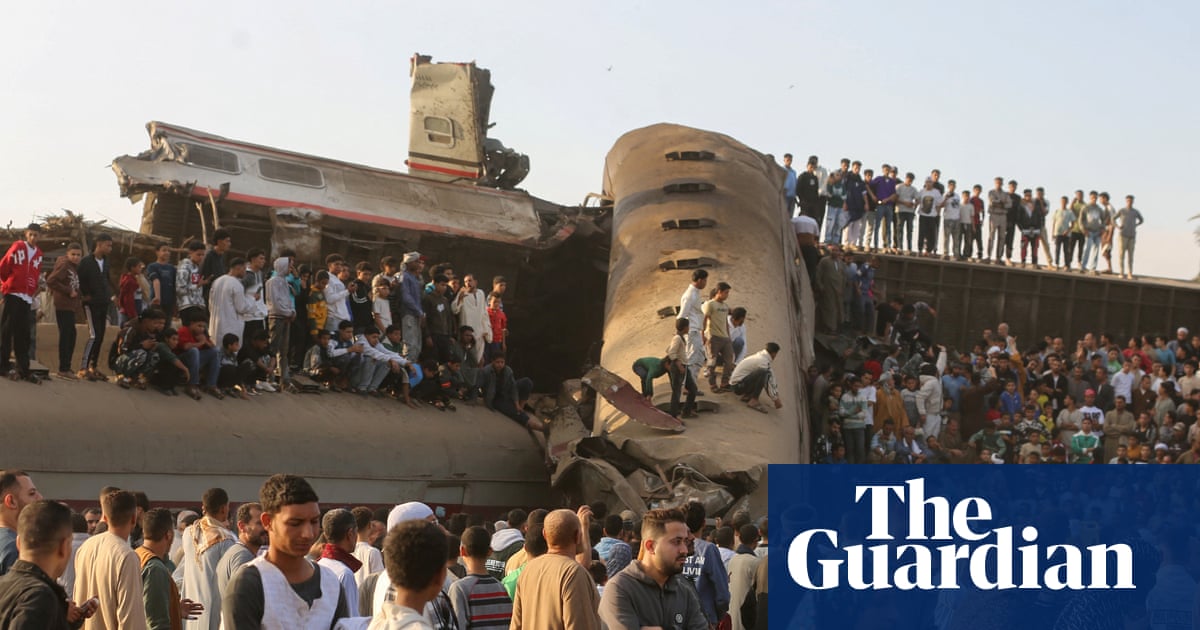
A collision between two passenger trains in Egypt resulted in seven fatalities and more than one hundred injuries on Sunday, according to official statements from the Chief Prosecutor’s office and the Ministry of Transport. The incident occurred in the al-Ayyat district of Giza province, located approximately thirty miles south of the capital city of Cairo. This event marks another significant safety failure for a national railway network that has long struggled with maintenance issues and operational mismanagement.
Authorities described the mechanics of the crash as involving two trains traveling in the same direction on a single track. One service was en route to the southwestern province of Fayoum, while the other was heading toward the southern province of Aswan. Inspections conducted at the scene indicated that the Cairo-to-Aswan train had come to a halt on the tracks before being struck from behind by the approaching Fayoum-bound service. The impact caused severe damage to the carriages involved.
The human toll of the accident was immediate and severe. Eyewitnesses reported that local residents rushed to the site to assist those trapped inside the wreckage. Ayman Gamal, a resident of Kafr Girza near the crash zone, described how community members pulled survivors from the damaged trains and summoned emergency medical services. He estimated that roughly eighty injured individuals were transported by ambulance to nearby hospitals for treatment.
Among the deceased was the conductor of one of the trains, according to the prosecutor’s office. Gamal noted that some passengers remained trapped within the carriages of the stationary train and were found dead when rescuers finally accessed them. The speed of the local response appears to have been critical in saving lives, as professional emergency teams arrived shortly after the initial community efforts began.
President Abdel Fatah al-Sisi responded to the tragedy by issuing a directive for a prompt investigation into the causes of the collision. He announced this order via a social media post, emphasizing the need for accountability and clarity regarding the failure. The Egyptian Railway Authority stated that heavy machinery, including cranes, was deployed to the site to remove wreckage and facilitate the restoration of normal train schedules as quickly as possible.
This incident is not an isolated occurrence in the region. Just last September, two freight trains collided in the same al-Ayyat district, resulting in injuries to a driver and his assistant. These recurring accidents underscore the persistent vulnerabilities within Egypt’s rail infrastructure. Despite government announcements in recent years regarding modernization initiatives aimed at improving safety and efficiency, the system continues to experience frequent derailments and crashes.
The history of railway disasters in Egypt casts a long shadow over current events. The deadliest incident on record occurred in 2002, when a fire broke out on an overnight train traveling from Cairo to southern Egypt, killing more than three hundred people. That tragedy highlighted the catastrophic potential of failures in the rail network. Current officials face pressure to demonstrate that recent modernization efforts are yielding tangible improvements in safety standards.
Investigators from the Chief Prosecutor’s office have arrived at the scene to begin their examination of the physical evidence. Their findings will likely focus on why the rear train failed to stop and whether signaling systems or human error contributed to the collision. Until those details emerge, the exact cause remains uncertain, though the pattern of incidents suggests systemic issues rather than a singular anomaly.
The disruption to rail services in the Giza province is expected to persist while cleanup operations continue. Commuters who rely on these lines for daily travel face significant delays and uncertainty regarding when normal operations will resume. The incident has drawn renewed attention to the need for comprehensive reform in Egypt’s transportation sector, as public confidence in the safety of rail travel remains fragile.
As emergency teams work through the night, the focus shifts from immediate rescue to long-term prevention. The government’s ability to implement effective changes will be tested by this latest tragedy. Without substantial investment and rigorous oversight, similar accidents may continue to occur, posing ongoing risks to passengers and staff alike. The coming weeks will reveal whether the promised modernization translates into measurable safety gains.
Sources behind this briefing
Go to the original reporting
- The Guardian US↗Collision of two trains in Egypt kills at least seven
- PBS NewsHour↗Collision between 2 trains in Egypt kills 7 and injures more than 100


