The short version
- The head of EDF Energy asserts that developing existing North Sea licenses supports the transition to low-carbon power rather than hindering it.
- Ministers are poised to rule on the Rosebank and Jackdaw projects, balancing economic benefits against environmental concerns raised by green groups.
- Political support for limited extraction spans across party lines, reflecting a pragmatic approach to energy security during the decarbonization period.
The executive leadership of EDF Energy has entered the debate over British fossil fuel production, arguing that approving new North Sea oil and gas projects is consistent with national climate targets. Simone Rossi, who leads the UK arm of the French utility giant, described the development of these resources as an obvious choice that does not conflict with the pursuit of net zero emissions. His intervention adds significant industry weight to the argument for continued extraction in the region, coming as government officials prepare to make final determinations on two major proposals.
Rossi’s position rests on the premise that the United Kingdom cannot immediately sever its dependence on fossil fuels. He emphasized that the transition away from oil and gas will span decades, necessitating a strategy that utilizes domestic reserves rather than relying on imports from distant markets. According to this view, locally produced energy carries a lower carbon footprint because it avoids the extensive transportation emissions associated with global supply chains. This logic suggests that maintaining local production is a necessary interim measure while the country accelerates the deployment of electric vehicles and heat pumps.
The specific projects under consideration are the Rosebank and Jackdaw fields. Both initiatives already hold exploration licenses issued during the previous Conservative administration. Because these permits were granted prior to the current government’s term, approving them would not violate the Labour Party’s election manifesto commitment to halt new licensing for exploration. The manifesto allows for development in areas that already have licenses or are adjacent to existing infrastructure, a provision that applies to both Rosebank and Jackdaw.
Rossi highlighted the economic advantages of proceeding with these developments. He noted that greenlighting the projects would generate employment opportunities and increase tax revenues for the state. These funds could potentially be redirected to support households facing high energy costs, providing a social safety net during the transition period. This argument aligns with broader political sentiments that view domestic energy production as a tool for economic stability and affordability.
The stance taken by EDF Energy mirrors that of other prominent figures in the renewable sector. Leaders such as Greg Jackson of Octopus Energy, Jürgen Maier, formerly of GB Energy, and Tara Singh of RenewableUK have also advocated for continued North Sea production. Their collective position suggests a growing consensus among industry experts that a complete immediate halt to fossil fuel extraction is neither practical nor beneficial for the broader energy transition strategy.
Political support for this pragmatic approach extends beyond the business community. Several politicians, including former Chancellor Rachel Reeves, Defence Secretary Wes Streeting, and Liberal Democrat leader Ed Davey, have voiced approval for maintaining some level of North Sea output. Even figures from the left, such as former Scottish Labour leader Anas Sarwar, and leaders of major trade unions have expressed similar views. This cross-party alignment reflects a recognition that energy security remains a critical component of national policy.
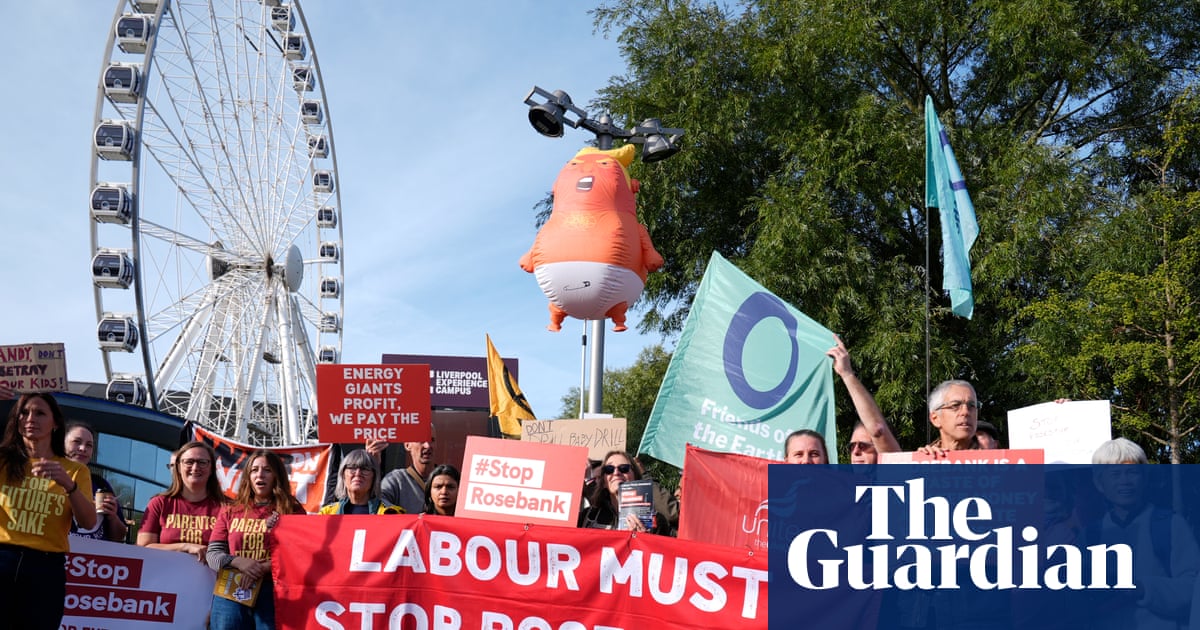
Despite this broad support, the government faces intense pressure from environmental organizations and Green Party leader Zack Polanski to reject the final consents for Rosebank and Jackdaw. Critics argue that approving new fossil fuel projects undermines climate commitments, particularly in the wake of recent extreme weather events linked to global warming. The volatility of international oil and gas prices has further complicated the debate, with opponents warning against locking in long-term dependencies on finite resources.
The timing of the government’s decision appears influenced by upcoming political events. Reports indicate that ministers have delayed their ruling until after the Holborn and St Pancras byelection on October 8, where Polanski is a candidate. The applications for Rosebank and Jackdaw were resubmitted earlier this year following a court order requiring developers to provide more detailed assessments of the climate impact associated with burning the extracted fuels.
Prime Minister Keir Starmer has signaled a willingness to take a pragmatic approach to North Sea energy, a stance reportedly reinforced by early conversations with US President Donald Trump, who urged increased drilling activity. As the deadline for the decision approaches, the government must balance the immediate economic and security benefits of domestic production against the long-term environmental goals outlined in its climate strategy.
EDF Energy itself plays a substantial role in the UK’s low-carbon infrastructure, generating approximately one-fifth of the nation’s clean electricity. Its portfolio includes eight nuclear plants with a combined capacity of 6 gigawatts, alongside 2 gigawatts of wind, solar, and battery storage. The company is also constructing the Hinkley Point C nuclear station in Somerset. Rossi’s advocacy for fossil fuel development thus comes from an entity deeply invested in the expansion of low-carbon generation, framing oil and gas as a complementary rather than competing resource during the transition era.
Sources behind this briefing
Go to the original reporting
- The Guardian World↗New UK gas and oil projects are a ‘no-brainer’, says EDF boss