The short version
- Dutch public broadcaster Avrotros has withdrawn from the 2027 Eurovision Song Contest, arguing that the event can no longer be viewed as neutral while participating nations remain engaged in large-scale military conflicts.
- The decision follows recent rule changes by the European Broadcasting Union that prevent countries involved in armed conflict from hosting the contest if they win, a measure Avrotros deems insufficient to restore impartiality.
- While Avrotros steps aside, the umbrella organization for Dutch public media is exploring whether another broadcaster within the system could take its place to ensure continued national representation.
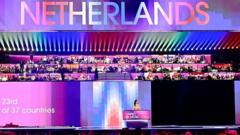
Dutch public broadcaster Avrotros has announced its withdrawal from the 2027 Eurovision Song Contest, marking a significant escalation in the cultural and political tensions surrounding the annual music competition. The organization stated that it can no longer regard the event as neutral given the participation of countries involved in active large-scale military conflicts. This move underscores growing divisions within the European broadcasting community regarding how to balance artistic expression with geopolitical realities.
In a statement released on Monday, Avrotros highlighted a lack of clarity from the European Broadcasting Union, the contest’s governing body, concerning the criteria for determining which nations are eligible to compete. The broadcaster expressed concern that recent humanitarian crises and restrictions on press freedom have fueled increasing polarization around the event. These factors, according to Avrotros, have eroded the trust necessary for the competition to function as a unifying cultural platform.
The European Broadcasting Union recently updated its regulations to address these concerns. The new rules stipulate that if a country involved in an armed conflict wins the contest, it will be ineligible to host the following year’s event. Additionally, winning nations may be disqualified from hosting duties if sensitive geopolitical situations threaten the security or stability of their state or immediate region. Despite these amendments, Avrotros argued that they do not provide sufficient confidence that the independent and neutral character of the Eurovision Song Contest has been restored.
Taco Zimmerman, director general of Avrotros, emphasized that the contest was originally designed to bring people and countries together but has increasingly become a platform for division. He noted that international conflicts are undermining the event’s neutral character, forcing the broadcaster to step away despite its deep affection for the competition. Zimmerman stated that their commitment to public service values guides their actions, even when those decisions involve withdrawing from an event they cherish.
The withdrawal does not necessarily mean the Netherlands will be absent from the 2027 contest. Unlike some other nations with a single public broadcaster, the Dutch public broadcasting system comprises multiple entities. Martin Green, director of the Eurovision Song Contest, indicated that the European Broadcasting Union would continue dialogue with NPO, the umbrella organization for Dutch public service media, to explore opportunities for another broadcaster to participate. Green expressed hope that audiences and artists in the Netherlands could still be represented.
This development follows a pattern of boycotts and protests related to Israel’s participation in recent years. Last November, five broadcasters, including major European powers such as Spain and Ireland, announced they would boycott the competition after a failed attempt to suspend Israel. The Netherlands also boycotted the previous year’s contest held in Vienna, Austria. Despite these protests, Israeli artist Noam Bettan secured second place with his song Michelle, marking the second consecutive year an Israeli entry finished as runner-up.
The new hosting restrictions are widely seen as targeting Israel, given the ongoing conflict in Gaza and broader regional tensions. However, the rules also apply to Ukraine, which has been engaged in a protracted war since Russia’s invasion in 2022. Ukrainian group Kalush Orchestra won the contest in 2022, a victory that was viewed by many as a symbolic show of public support for the nation under attack. The application of these rules to both nations highlights the complex diplomatic challenges faced by the European Broadcasting Union.
Martin Green defended the contest’s mission, stating that it has always been a place to celebrate diverse communities and demonstrate that a better world is possible even during difficult times. He expressed regret over Avrotros’s decision but respected the broadcaster’s views. As the 2027 contest approaches in Burgas, Bulgaria, the European Broadcasting Union faces continued pressure to navigate the intersection of entertainment and international politics while maintaining the participation of its member nations.
Sources behind this briefing
Go to the original reporting
- BBC News↗Dutch broadcaster Avrotros pulls out of 2027 Eurovision Song Contest

