The short version
- Novak Djokovic describes feeling trapped by his own drive for improvement, stating he is his harshest critic despite holding the record for most Grand Slam singles titles.
- His wife Jelena notes that tennis serves as a sanctuary where he feels worthy, contrasting with his persistent belief that his achievements are never sufficient.
- Djokovic links his competitive resilience to childhood trauma during the 1999 NATO bombings in Belgrade and early financial struggles, viewing these hardships as foundational rather than resentful.
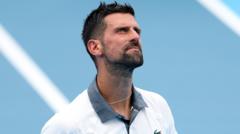
Novak Djokovic stands at the apex of professional tennis, yet he remains deeply unsatisfied with his own accomplishments. In a new documentary released on Amazon, the Serbian star articulates a profound sense of internal conflict, describing himself as his own most severe skeptic. Despite possessing more Grand Slam singles titles and Masters 1,000 crowns than any other male player in history, Djokovic insists that contentment is elusive for him. He expresses a constant desire to be better, faster, and stronger, admitting that this relentless pursuit often feels like self-imprisonment.
This psychological tension defines his current era. At thirty-nine years old, Djokovic has achieved nearly every milestone available in the sport. He tied Margaret Court’s record of twenty-four Grand Slam singles titles with his victory at the 2023 US Open and became the oldest man to reach an Australian Open final earlier this year. Yet, rather than resting on these laurels, he continues to challenge himself aggressively. He describes a mindset where he actively tries to disprove his own capabilities, driven by a fear that success is never truly enough.
His wife, Jelena Djokovic, provides insight into this complex relationship with achievement. She observes that her husband carries a heavy burden, believing that no amount of success will ever satisfy his internal standards. For him, the tennis court is not merely a place of competition but a space where he derives a sense of worthiness. This dynamic suggests that his continued participation in the sport is less about external validation and more about maintaining an internal equilibrium that only elite performance can provide.
The roots of this intense drive trace back to Djokovic’s early years in Belgrade. Born during a period of significant geopolitical turmoil, he experienced the NATO bombings of 1999 as a young child. He recalls fleeing his building, which lacked a bomb shelter, and witnessing bombs drop near a hospital. These traumatic events, along with the daily struggles of waiting in line for basic necessities like bread and milk, shaped his worldview. Rather than fostering resentment, Djokovic views these hardships as essential building blocks that forged his resilience and character.
His entry into professional tennis was also marked by adversity. Coming from a background that did not fit the traditional elite mold of the sport, Djokovic’s family faced financial difficulties. His father borrowed money from questionable sources to fund Novak’s early training. This outsider status influenced his playing style and on-court demeanor, making him more emotive and vocal than his contemporaries like Roger Federer and Rafael Nadal. He has acknowledged that he suppressed many emotions during his youth, which later manifested in his intense competitive presence.
As the careers of his long-time rivals have concluded, Djokovic finds himself navigating a new landscape. Federer retired in 2022 and Nadal in 2024, both citing injury struggles in their final years. Djokovic has adjusted his schedule accordingly, focusing primarily on Grand Slam tournaments to preserve his physical condition. He has admitted that competing at the highest level often feels like operating with limited resources, yet he refuses to set an expiration date for his career. His motivation remains tied to his ability to prove he is still among the best players in the world.
Looking ahead, Djokovic’s ambitions extend beyond the current season. After securing Olympic gold in Paris in 2024, a long-sought achievement, he has set his sights on the 2028 Games in Los Angeles. He expresses confidence that he can remain competitive for another four years, aiming to conclude his career with the Serbian flag draped over his shoulders. This goal underscores his desire to end on a high note, wrapping up a career defined by both extraordinary success and persistent self-criticism.
The documentary offers a rare glimpse into the mind of a player who has dominated the sport for decades. It highlights the duality of his existence: a public figure celebrated as one of the greatest athletes in history, and a private individual grappling with the pressure to continually exceed his own high standards. As he approaches the twilight of his career, Djokovic’s story is not just about records and titles, but about the psychological cost of perfectionism and the enduring power of personal drive.
Sources behind this briefing
Go to the original reporting
- BBC Sport↗'I feel I am imprisoning myself' - Djokovic on drive & doubts
