The short version
- Former Defence Minister Mykhailo Fedorov has publicly called for immediate presidential elections, arguing that democracy should not be suspended due to the war with Russia.
- The appeal follows Fedorov’s abrupt dismissal in July and subsequent protests that also led to the removal of Army Commander-in-Chief Oleksandr Syrskyi.
- While polls suggest Fedorov could defeat President Zelensky in a runoff, logistical hurdles regarding displaced citizens and active combat zones make holding a vote highly complex.
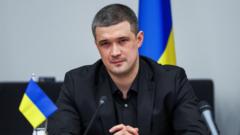
A significant political rift has emerged within Ukraine’s leadership as former Defence Minister Mykhailo Fedorov issued a direct challenge to President Volodymyr Zelensky by calling for immediate presidential elections. In a video address released online, the thirty-five-year-old politician argued that democratic processes must continue despite the ongoing war with Russia, stating that democracy cannot be held hostage by the conflict. This appeal represents the most substantial public confrontation with Zelensky’s authority since the full-scale invasion began in February 2022.
Fedorov was unexpectedly removed from his post as defence minister in late July, just six months after his appointment. His dismissal sparked widespread protests across the country and contributed to a broader crisis of governance that eventually led to the replacement of Army Commander-in-Chief Oleksandr Syrskyi several weeks later. Although Fedorov did not name Zelensky in his recent statement, he criticized the current administration for fostering an environment where personal loyalty appears to outweigh professionalism and results in government appointments.
The former minister emphasized that Ukraine is fighting precisely to remain a free European state and that citizens should not have to live indefinitely without understanding why certain reforms are blocked while others proceed. He described the situation as a systemic crisis, noting that corruption continues to hinder the war effort. Fedorov proposed the need for a legal, safe, and realistic mechanism to restore full democratic processes even amidst prolonged hostilities, suggesting that the current suspension of elections under martial law is unsustainable.
Zelensky has yet to respond publicly to Fedorov’s video. The president recently nominated Yevhen Khmara, a career intelligence official with a low political profile, to serve as acting defence minister permanently. Khmara’s nomination requires confirmation by Ukraine’s parliament, with a vote expected in the coming days. Other government positions were offered to Fedorov, including deputy prime minister for military innovation, but he has stated he would only return if reinstated as defence minister.
Fedorov’s tenure was marked by a focus on technological warfare and anti-corruption measures. Previously serving as digital transformation minister, he helped establish the volunteer IT Army of Ukraine and led fundraising campaigns for drone procurement. As defence minister, he implemented data-driven performance analysis for frontline units and engaged with international tech leaders to disrupt Russian operations. His supporters credit him with energizing the ministry and introducing innovative approaches to modern warfare.
Public sentiment regarding elections remains divided. While Fedorov argues that holding a vote is essential for legitimacy, many Ukrainians believe elections should wait until the active phase of the war concludes. Political analysts note that there is no clear consensus on how to ensure voter safety given continued Russian bombing campaigns. Protests demanding Fedorov’s reinstatement have persisted in Kyiv, with recent rallies drawing thousands of participants chanting his name, though attendance has fluctuated.
Recent polling data indicates that if an election were held, the outcome could be unpredictable for Zelensky. Surveys conducted by the Socis Centre for Social Research suggest Fedorov would secure approximately thirteen percent of the vote in a first round, placing him behind both Zelensky and former military commander Valerii Zaluzhnyi. However, the same polls project that Zelensky would lose to either candidate in a second-round runoff, highlighting the potential electoral vulnerability of the current administration.
Logistical challenges complicate any immediate move toward voting. Millions of Ukrainians remain displaced or exiled, and over one million citizens are currently serving in the armed forces, many on the front lines. Additionally, roughly twenty percent of the country’s territory remains under Russian occupation, raising serious questions about how to conduct a fair and inclusive national poll. These factors contribute to the uncertainty surrounding whether wartime elections are practically feasible at this time.
The situation underscores broader tensions within Ukraine regarding governance, accountability, and democratic norms during wartime. As protests continue and political pressure mounts, the debate over when and how to restore electoral processes is likely to intensify. Fedorov’s stance has galvanized a segment of the population demanding transparency and reform, while others remain cautious about the risks associated with holding elections amid active combat.
Sources behind this briefing
Go to the original reporting
- BBC News↗Sacked Ukrainian defence minister calls for presidential election
- The Guardian World↗Ukraine’s dismissed defence minister calls for wartime presidential election

