The short version
- Negotiations between Oman and Iran are nearing completion regarding a shared responsibility framework for the Strait of Hormuz, though no immediate reopening is guaranteed.
- Tehran maintains that full restoration of traffic depends on US concessions, including compensation for alleged treaty violations and the lifting of naval blockades.
- Commercial shipping faces continued risks as Iranian forces strike an Emirati tanker and another vessel suffers projectile damage near Oman despite diplomatic efforts.
Diplomatic channels between Oman and Iran have yielded positive developments regarding the security of maritime traffic through the Strait of Hormuz, even as Tehran maintains that a full reopening of the waterway remains contingent on unresolved geopolitical conditions. Officials in Muscat indicated that discussions are progressing toward an agreement that would establish joint oversight for shipping routes, aiming to stabilize a critical artery for global energy supplies. However, Iranian leadership has cautioned that any such arrangement does not automatically translate into immediate access for international vessels, emphasizing that broader strategic prerequisites must be satisfied first.
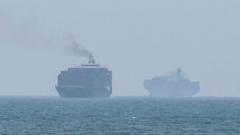
The Strait of Hormuz has been effectively blockaded by Iran since February, following the commencement of military operations by the United States and Israel against Iranian targets. This disruption has severely impacted global energy markets, as the narrow passage typically facilitates approximately twenty percent of the world’s oil and natural gas trade. The current diplomatic push focuses on creating a structured mechanism for safe passage, potentially managed jointly by Oman and Iran, which could serve as a precursor to broader normalization efforts. Despite these advances, the timeline for finalizing any deal remains undefined, with both parties acknowledging that significant work remains to be done.
Iranian Foreign Minister Abbas Araghchi stated that negotiations are in their final stages but stressed that the resumption of normal shipping operations is subject to other conditions. These conditions include compensation from the United States for what Tehran describes as violations of a June Memorandum of Understanding intended to cease hostilities and advance peace talks. That initial agreement collapsed quickly, leading to a resumption of tit-for-tat military strikes just days after its signing. Araghchi’s comments underscore the fragility of current diplomatic progress and the deep mistrust that continues to characterize US-Iran relations.
Further complicating the path to resolution, Mohammad Baqer Zolqadr, Iran’s security chief, outlined six specific demands that must be met before the strait can reopen. These requirements include a halt to threats against Iran, the removal of the US naval blockade on Iranian ports, and the release of frozen Iranian assets. The persistence of these demands highlights the gap between diplomatic engagement and substantive policy shifts in Washington. While Oman seeks to de-escalate tensions through mediation, Tehran appears unwilling to compromise on core security and economic grievances without tangible concessions from American officials.
In Washington, the administration presents a mixed picture of confidence and caution regarding the outcome of these talks. President Donald Trump suggested that a deal could be imminent, signaling optimism about diplomatic breakthroughs. Conversely, Vice-President JD Vance expressed skepticism, noting that the situation is far from resolved and that multiple tools—diplomatic, economic, and military—are being employed to secure favorable outcomes for the United States. Vance dismissed reports that Iran intends to impose tolls on shipping traffic, asserting that Tehran has indicated no such plans, although earlier reporting suggested Iran was seeking fees ranging from five to seven percent of cargo values.
Despite diplomatic overtures, violence continues to disrupt maritime commerce in the region. The United Arab Emirates reported that a tanker affiliated with its state-owned oil company, Adnoc, was struck by a missile while transiting the strait. The attack resulted in no casualties but underscored the ongoing risks faced by commercial vessels. Separately, the UK Maritime Trade Operations agency reported that another ship was hit by an unknown projectile off the coast of Oman, causing a fire that was subsequently extinguished. It remains unclear whether these incidents involve the same vessel or represent distinct attacks, but both events highlight the persistent threat to shipping safety.
The broader regional context further complicates efforts to restore stability. Yemen’s Iran-backed Houthi rebels have imposed a blockade on Saudi Arabian ports in the Red Sea since late July, adding another layer of disruption to global supply chains. This dual-front pressure on maritime routes exacerbates economic concerns and limits the effectiveness of localized diplomatic solutions. While Oman works to facilitate dialogue between Iran and Western powers, the interconnected nature of regional conflicts means that progress in one area may be quickly undermined by developments elsewhere.
Looking ahead, the success of these negotiations will likely depend on whether Washington is willing to address Iran’s stated conditions or if Tehran will accept a limited agreement focused solely on shipping safety. The absence of a clear timeline and the continuation of military incidents suggest that any resolution will be incremental rather than immediate. Global markets remain sensitive to developments in the strait, with oil prices fluctuating in response to news of diplomatic progress or renewed hostilities. As talks continue, the focus remains on establishing a reliable mechanism for safe passage while navigating the complex web of regional alliances and adversarial postures.
The situation illustrates the delicate balance between diplomacy and coercion in modern conflict resolution. While Oman’s mediation efforts provide a pathway for dialogue, the underlying tensions between Iran and the United States remain unresolved. The potential for further escalation exists if diplomatic channels fail to produce tangible results, particularly given the strategic importance of the Strait of Hormuz to global energy security. Stakeholders worldwide are watching closely to see whether these talks can yield a sustainable framework for maritime stability or if the region will continue to experience periodic disruptions driven by geopolitical rivalries.
Sources behind this briefing
Go to the original reporting
- BBC News↗Hormuz talks positive, Oman says, as Iran warns deal would not open strait

